

Flying With a Dog From the UK: Crate Guide
Short Answer
Flying with a dog requires current airline and destination rules, an approved travel container and veterinary planning well before departure. Airline requirements change, so verify them directly. Crate familiarity can help, but air travel may be unsuitable for some dogs, particularly when heat, health or severe anxiety is involved.
Key Takeaways
- Use crates and kennels as welfare-led management tools, never as punishment.
- Fit, ventilation, temperature, mobility and the dog’s behaviour matter more than product labels.
- Reward voluntary use and reduce difficulty at the first sign of distress.
- Normal access to water, toileting, movement, exercise and social contact must continue.
- Panic, sudden behaviour change or physical discomfort warrants veterinary or qualified behaviour support.
Quick Decision Checklist
| Check | What to look for |
|---|---|
| Purpose | A clear welfare-led use rather than punishment or convenience |
| Fit and setup | Enough room, safe materials, ventilation and a stable location |
| Behaviour | Loose body language, voluntary approach and normal eating |
| Daily needs | Water, toileting, movement, rest and social contact remain available |
| Warning signs | Pain, panic, repeated escape attempts or sudden behaviour change |
Key takeaways
- Flying with dogs from the UK requires careful planning, especially around airline-approved crates
- A well-sized, familiar crate helps reduce stress before and during travel
- Preparation should begin weeks or months in advance, not days before departure
- Comfort items must be safe, minimal and airline compliant
- Not every dog is suited to air travel, and alternatives should always be considered
Understanding how dogs fly from the UK
Most dogs flying from the UK travel in the aircraft hold rather than in the cabin. UK regulations and airline policies generally restrict in-cabin travel to assistance dogs, meaning pet owners must focus heavily on crate safety and suitability.
Airlines follow international guidelines for animal transport, but each carrier has its own rules on crate size, materials and documentation. Before booking anything, always confirm the airline’s current pet travel requirements directly. Rules can vary based on destination, aircraft type and even seasonal conditions.
While we cannot guarantee outcomes, proper preparation significantly improves the experience for both dogs and owners.
Is your dog suitable for flying?
This is an important and often overlooked question. Flying is not appropriate for every dog.
Factors to think about include:
- Age and general health
- Anxiety levels and previous confinement experience
- Size and breed related considerations
- Ability to remain calm in unfamiliar environments
If your dog struggles with crate training or becomes highly distressed when separated from you, air travel may not be in their best interests. In these cases, alternative options such as ground transport or professional pet relocation services may be worth exploring.
Why the travel crate matters more than anything else
When dogs fly from the UK, the crate effectively becomes their temporary environment. It is where they rest, move, drink and seek security. Choosing the right crate is not just about meeting airline rules. It is about protecting your dog physically and emotionally.
Choosing the right size
A flight crate must allow your dog to:
- Stand without their head touching the roof
- Turn around naturally
- Lie down comfortably
Crates that are too small restrict movement and increase stress. Crates that are too large can allow excessive shifting during turbulence. Balance is essential.
Our dog crate collection includes sizes suitable for small, medium and large breeds, making it easier to match your dog’s measurements accurately.
Materials and design considerations for air travel
Airlines typically require hard-sided crates made from rigid plastic or metal. Soft-sided crates are not suitable for checked-in pets.
When assessing a crate for flying, look for:
- Strong locking mechanisms that cannot be pushed open
- Adequate ventilation on multiple sides
- Secure door construction with metal fixings
- A stable base that does not flex under weight
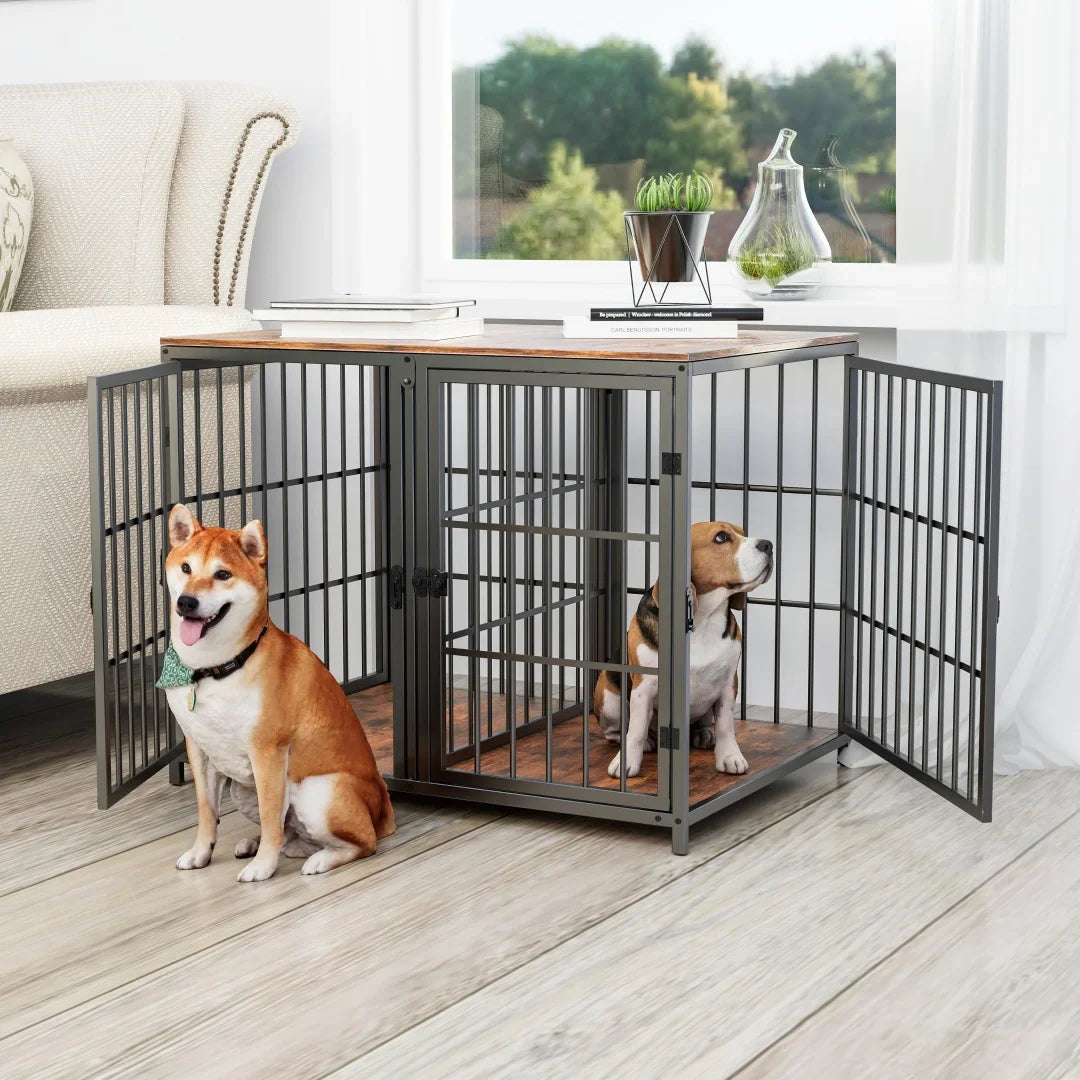
Furniture-style crates, while excellent for home use, are usually not appropriate for flights. If your dog uses one at home, transition them gradually to a travel-appropriate crate well in advance.
Preparing your dog for the crate
Crate training should never begin close to the flight date. Ideally, preparation starts weeks or even months beforehand.
Steps we commonly suggest include:
- Introducing the crate as a positive, calm space at home
- Feeding meals inside the crate with the door open
- Gradually increasing the duration the door is closed
- Practising short periods of separation
For owners working with older dogs, our blog on crate training adult dogs responsibly explains how to take a slow, confidence-based approach.
Bedding and comfort inside the crate
Airlines usually restrict what can be placed inside a flight crate. Loose toys, thick bedding or items that can shift are often prohibited.
A thin, well-fitted crate mat is typically the safest option. It provides cushioning without interfering with airflow or stability. Avoid anything bulky or unfamiliar that could cause discomfort or anxiety.
Some dogs find reassurance in familiar scents. If allowed, a lightly worn item such as a small blanket can help, provided it fits securely and cannot bunch up.
Hydration and feeding before the flight
Most airlines require attached water containers that can be refilled externally. These should be secured firmly to prevent spills.
Feeding is usually recommended several hours before departure rather than immediately before the flight. A full stomach combined with stress and movement can increase the risk of discomfort.
Always follow veterinary advice when planning feeding schedules for travel. Sedation is generally discouraged unless specifically prescribed by a qualified professional for medical reasons.

Getting to the airport safely
The journey to the airport sets the tone for the rest of the trip. A calm, secure car journey helps reduce overall stress.
Using a secure car restraint or travel seat is strongly advised. Our dog car travel collection is designed to keep dogs stable and supported during road journeys, which is especially important on travel days.
If your dog is already familiar with calm car travel, this consistency can make a noticeable difference.
Check-in and handover expectations
Airports can be noisy, busy and unpredictable. Allow extra time so you are not rushed.
At check-in, staff will inspect the crate, documentation and sometimes the dog’s condition. Remaining calm and organised helps your dog pick up on your cues.
Once your dog is handed over, there is often limited interaction until arrival. This can be emotionally difficult, but preparation and trust in the process are key.
Arrival and recovery time
After landing, dogs may appear tired, quiet or unsettled. This is normal.
Give your dog:
- Time to rest in a quiet environment
- Access to fresh water
- Gentle reassurance without overwhelming stimulation
Avoid long walks or intense activity immediately after arrival. Let your dog adjust gradually.
Learning from similar travel scenarios
While flying is unique, many principles overlap with other forms of pet travel. Our guide on keeping dogs safe during car journeys explores restraint, comfort and stress management in detail and can help reinforce good habits.
When flying may not be the right choice
It is important to say this clearly. Flying is not always the best option for every dog.
Short-term holidays, highly anxious dogs or dogs with underlying health concerns may be better served by trusted carers or alternative transport. Responsible ownership sometimes means choosing not to travel together.
Speak to us before you travel
If you are unsure which crate, mat or travel setup suits your dog’s needs, we are here to help. Every dog is different, and general advice does not replace personalised guidance.
You can contact our team directly via our contact page. We are always happy to talk through options and help you prepare responsibly.
Final Verdict
Flying with a dog requires current airline and destination rules, an approved travel container and veterinary planning well before departure. Airline requirements change, so verify them directly. Crate familiarity can help, but air travel may be unsuitable for some dogs, particularly when heat, health or severe anxiety is involved.
FAQ
What should you know about key takeaways flying with dogs from the uk requires careful planning, especially around airline-approved crates a well-sized, familiar crate helps reduce stress before and during travel preparation should begin weeks or months in advance, not days before departure comfort items must be safe, minimal and airline compliant not every dog is suited to air travel, and alternatives should always be considered understanding how dogs fly from the uk?
Most dogs flying from the UK travel in the aircraft hold rather than in the cabin. UK regulations and airline policies generally restrict in-cabin travel to assistance dogs, meaning pet owners must focus heavily on crate safety and suitability.
Is your dog suitable for flying??
This is an important and often overlooked question. Flying is not appropriate for every dog.
Why the travel crate matters more than anything else?
When dogs fly from the UK, the crate effectively becomes their temporary environment. It is where they rest, move, drink and seek security. Choosing the right crate is not just about meeting airline rules. It is about protecting your dog physically and emotionally.
What should you know about choosing the right size?
A flight crate must allow your dog to:
What should you know about materials and design considerations for air travel?
Airlines typically require hard-sided crates made from rigid plastic or metal. Soft-sided crates are not suitable for checked-in pets.
What should you know about preparing your dog for the crate?
Crate training should never begin close to the flight date. Ideally, preparation starts weeks or even months beforehand.