
-
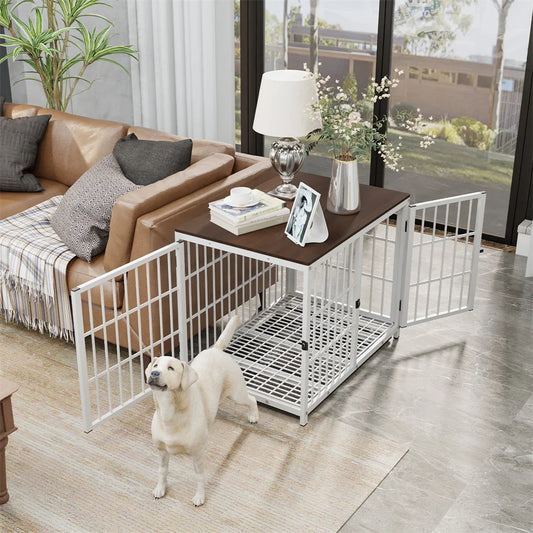
Three-Door Furniture-Style Dog Crate with Removable Tray
Regular price From £139.00 GBPRegular priceUnit price per£299.00 GBPSale price From £139.00 GBPSale -
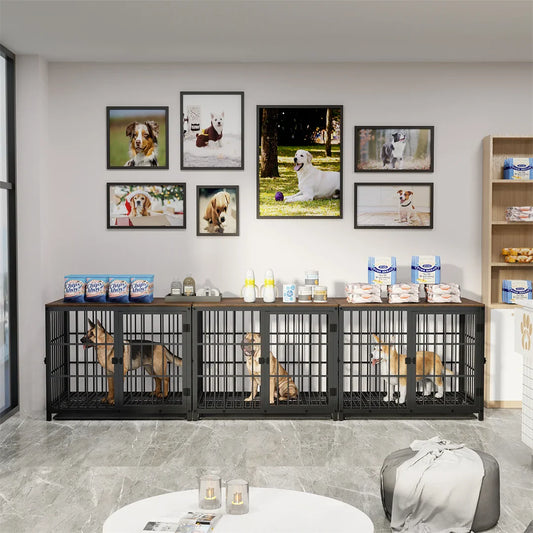
Heavy-Duty Furniture-Style Dog Crate with Four Doors and Divider
Regular price £219.00 GBPRegular priceUnit price per£399.00 GBPSale price £219.00 GBPSale -
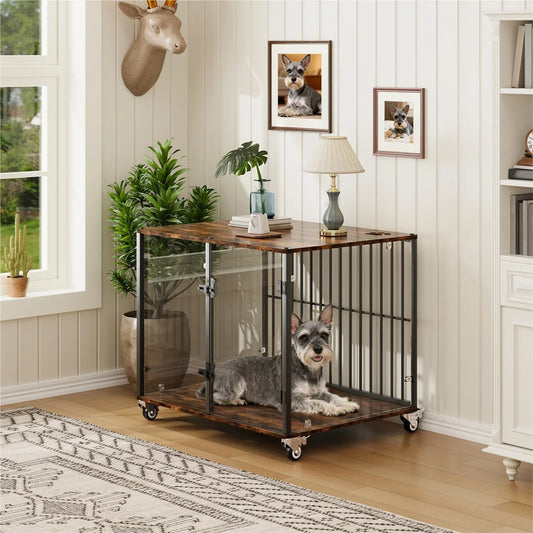
Tempered Glass Furniture-Style Dog Crate with Wheels
Regular price £129.00 GBPRegular priceUnit price per£129.00 GBPSale price £129.00 GBP -
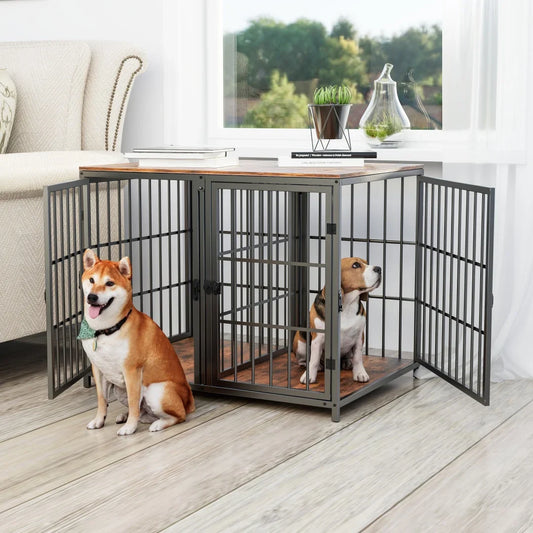
Spacious Wooden Dog Crate End Table with Removable Tray
Regular price From £99.00 GBPRegular priceUnit price per£199.00 GBPSale price From £99.00 GBPSale -
Mobile Heavy-Duty Dog Cage with 3 Locking Doors and Tray
Regular price From £179.00 GBPRegular priceUnit price per£369.00 GBPSale price From £179.00 GBPSale -
High-End Wooden Dog Crate End Table with Removable Tray
Regular price From £99.00 GBPRegular priceUnit price per£199.00 GBPSale price From £99.00 GBPSold out -
2-in-1 Heavy-Duty Dog Cage with Divider – Optional Cover
Regular price From £49.00 GBPRegular priceUnit price per£89.00 GBPSale price From £49.00 GBPSale




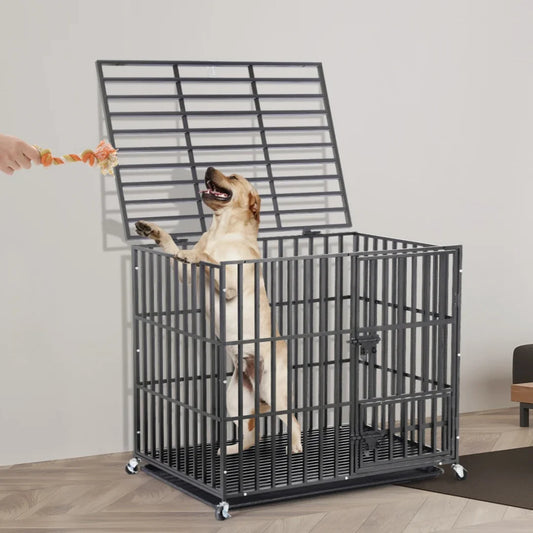
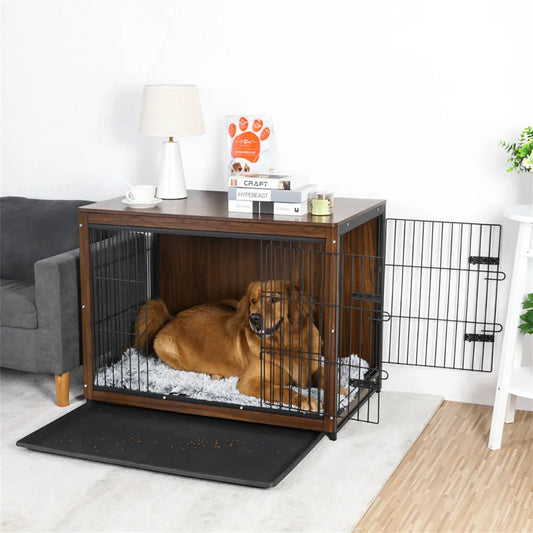
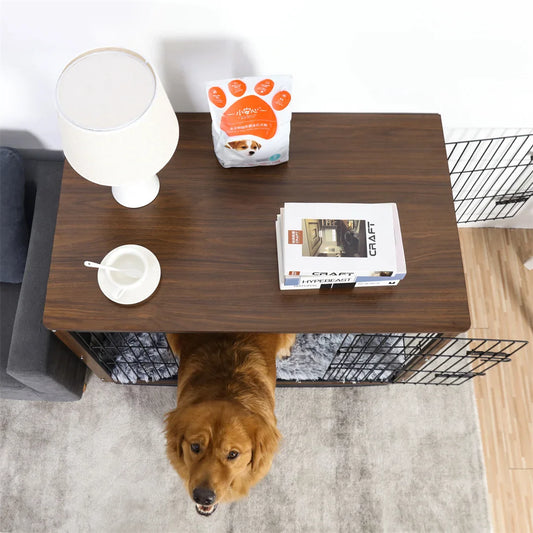


How to choose the right dog crate
A good dog crate gives your dog enough usable space to stand naturally, turn around and lie comfortably. Start with your dog’s measurements, then compare the internal length, width and height of the selected model. Size names such as Medium, Large, XL and XXL are not standard across manufacturers, so the label alone is not a reliable fit guide.
Use our dog crate size calculator and breed size chart before ordering. If a product page lists only external measurements, ask us for the internal dimensions rather than estimating from the photographs.
Compare dog crate types
| Crate type | Best considered for | Check before buying |
|---|---|---|
| Metal dog crate or cage | Ventilation, visibility and practical cleaning | Bar spacing, door layout, locks, tray and wheels |
| Furniture-style crate | Crate-trained dogs resting in living spaces | Internal height, ventilation and stated tabletop load |
| Crate with divider | Adjusting usable space or separating compatible dogs | Each compartment’s dimensions and secure divider fitting |
| Heavy-duty cage | Owners comparing stronger frames and secure doors | Construction, latch design and the dog’s confinement behaviour |
Browse small dog crates, medium dog crates or our combined large, XL and XXL dog crates. For home-focused designs, compare dog crate furniture and wooden dog crates.
Doors, trays, dividers and wheels
Choose the door arrangement around the room rather than assuming more doors are automatically better. A side door can help beside a sofa, while front access may suit a hallway or utility room. Confirm that every door can open fully without blocking a walkway. Removable trays make routine cleaning easier; wheels can help reposition heavier models, but all brakes must be engaged before use.
A divider is useful only when it creates a safe, correctly sized space. For a two-dog configuration, assess each compartment separately. The external width of a double crate is not the usable width available to each dog.
Crate training and safe everyday use
Introduce a crate gradually with calm, positive associations. It should be a comfortable resting place, not punishment or a substitute for exercise, interaction and toilet breaks. Place it on a level surface away from radiators, strong direct sun and trailing cables. Check the frame, connectors, locks, tray and wheels regularly.
No dog crate is guaranteed chew-proof or escape-proof. Repeated escape attempts, panic, drooling or distress mean the setup and training plan need reassessment; seek qualified behavioural or veterinary advice where appropriate. For a more open supervised area, compare our dog pens and playpens.
UK delivery and product support
Products are dispatched from our UK local warehouse, normally within 1–2 business days, with estimated transit of 3–7 business days after dispatch. Check the individual product page for the selected variant’s dimensions, included parts and availability.
Frequently asked questions about dog crates
What size dog crate should I buy?
Measure your dog’s standing height and body length, then choose internal dimensions that allow comfortable standing, turning and resting. Do not rely only on a breed name or size label.
Is a dog cage the same as a dog crate?
The terms often overlap. “Dog cage” usually describes a metal enclosure, while “dog crate” is the broader term and can include metal, wooden, glass-panel or furniture-style designs.
Should I choose a crate or a dog pen?
A crate provides a smaller enclosed resting area. A pen creates a larger supervised activity area. Some modular products can serve both purposes, but their stability and usable space must be assessed in each configuration.
Can a dog sleep in a crate overnight?
Many crate-trained adult dogs can rest overnight in a correctly sized crate, provided their exercise, comfort, health and toileting needs are met. Introduce overnight use gradually.