

Can You Crate Train a Dog With Separation Anxiety?
Short Answer
Do not close an older dog with separation anxiety inside a crate without professional guidance. Dogs Trust warns that confinement can increase fear and injury risk. A crate may sometimes remain open as part of a tailored safe-space plan, but treatment must focus on changing how the dog feels about being left.
Key Takeaways
- Use crates and kennels as welfare-led management tools, never as punishment.
- Fit, ventilation, temperature, mobility and the dog’s behaviour matter more than product labels.
- Reward voluntary use and reduce difficulty at the first sign of distress.
- Normal access to water, toileting, movement, exercise and social contact must continue.
- Panic, sudden behaviour change or physical discomfort warrants veterinary or qualified behaviour support.
Quick Decision Checklist
| Check | What to look for |
|---|---|
| Purpose | A clear welfare-led use rather than punishment or convenience |
| Fit and setup | Enough room, safe materials, ventilation and a stable location |
| Behaviour | Loose body language, voluntary approach and normal eating |
| Daily needs | Water, toileting, movement, rest and social contact remain available |
| Warning signs | Pain, panic, repeated escape attempts or sudden behaviour change |
Why Crate Training Helps with Separation Anxiety
Many dog owners associate crates with “confinement,” but in reality, crates can serve as a den-like retreat. For anxious dogs, especially those prone to destructive behaviour when left alone, a crate can offer:
-
Security and comfort: A quiet space that’s just theirs.
-
Routine and structure: Dogs feel safer when they know what to expect.
-
Safety: Prevents chewing on wires, furniture, or dangerous household items.
For older dogs, a crate can be the equivalent of a bedroom—where they relax, nap, and decompress when they feel stressed.
Step 1: Choose the Right Crate for an Older Dog
Some excellent choices include:
-
Mobile Heavy Duty Metal Dog Crate – Perfect for larger or strong dogs. With three locking doors and a sturdy design, it ensures safety while making cleaning simple thanks to the bottom tray.
-
2-in-1 Large Heavy Duty Metal Dog Cage with Removable Divider – Ideal if you have two dogs or want flexibility. The removable divider allows you to adjust space, and the included cover helps create a more den-like, calming environment.
-
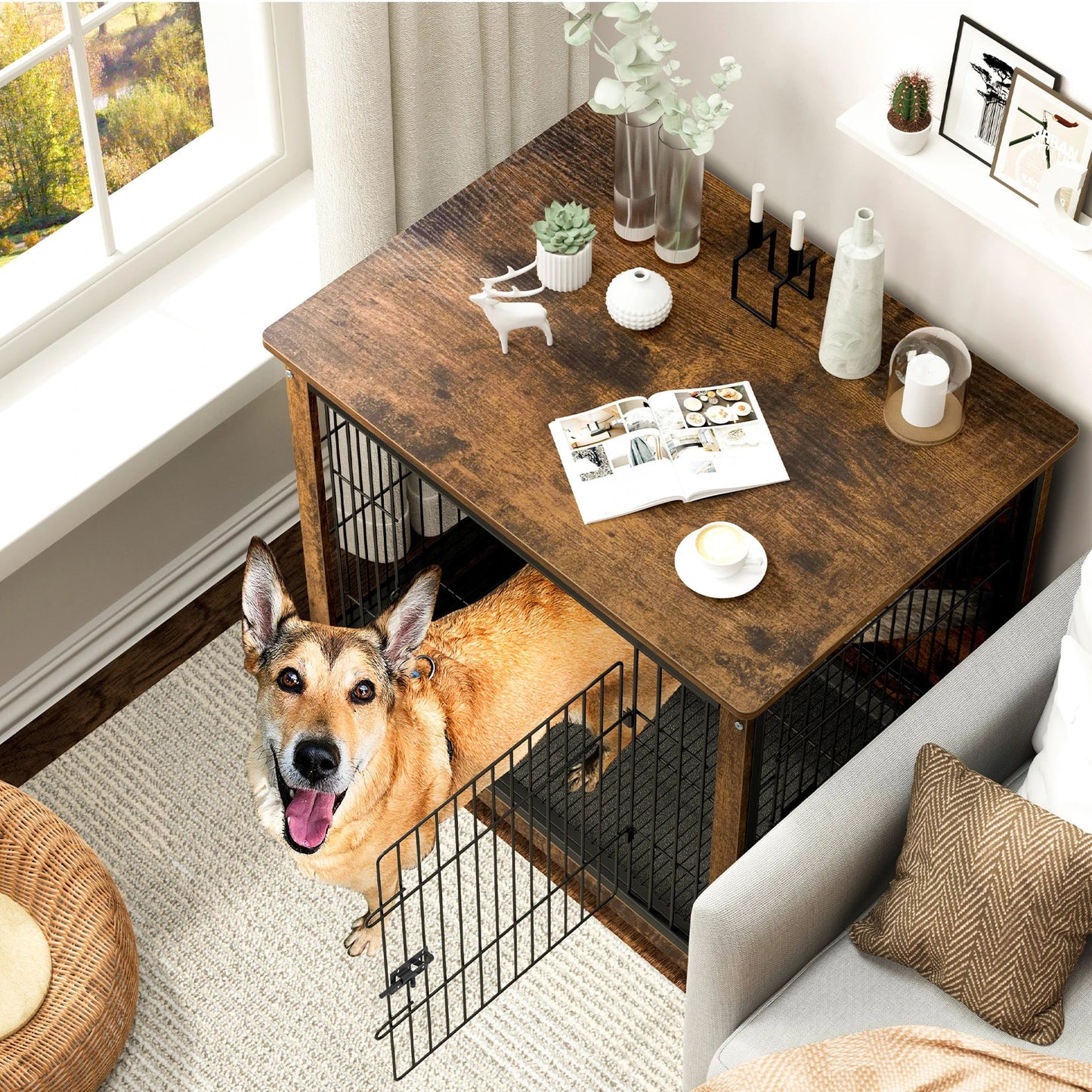
High-End Wooden Dog Crate – A stylish option that doubles as furniture, blending seamlessly into modern UK homes while giving your dog a secure, cosy retreat.
Step 2: Make the Crate a Positive Space
Older dogs with anxiety may resist crates at first. The trick is to make the crate inviting:
-
Start slow: Leave the door open and encourage your dog to explore.
-
Use treats and praise: Reward them whenever they enter voluntarily.
-
Add comfort: Line the crate with soft bedding, and consider using a blanket that smells like you.
-
Keep it calm: Never use the crate as punishment—it should always be associated with safety.
In UK homes, where space can sometimes be limited, crates that double as furniture (like the wooden option above) are especially useful for blending practicality with aesthetics.
Step 3: Gradual Alone-Time Training
The biggest hurdle for dogs with separation anxiety is being alone. Here’s how to ease them into it:
-
Short sessions – Begin with just a few minutes of leaving your dog in the crate while you remain in another room.
-
Increase gradually – Extend the time slowly over days or weeks.
-
Keep goodbyes low-key – Dogs pick up on emotional cues, so avoid making departures dramatic.
-
Consistency is key – Stick to a routine. Feeding, playtime, and crate time should happen around the same time each day.
Step 4: Use Calming Tools
To help with anxiety, pair crate training with soothing aids:
-
Interactive toys: Fill a Kong with peanut butter or treats to keep them occupied.
-
Background noise: Leave the radio or TV on at a low volume to mimic company.
-
Covers: Using a crate cover can help block out stimuli that trigger barking or stress.
Step 5: Be Patient and Compassionate
Crate training an older dog with separation anxiety isn’t a quick fix. It can take weeks, even months, for your dog to feel truly comfortable. Patience, consistency, and empathy are your greatest tools.
If progress feels slow, celebrate small wins—like your dog choosing to nap in the crate without encouragement. Remember, the goal isn’t to force your dog into a box, but to give them a safe, trusted sanctuary.
Final Thoughts
Crate training an older dog with separation anxiety can feel challenging, but the rewards are worth it. A well-chosen crate, paired with positive reinforcement and patience, can transform your dog’s emotional wellbeing—and give you peace of mind when you need to leave the house.
If you’re looking for strong, stylish, and practical crates designed for UK homes, Paw Comfort UK offers a range of options, from heavy-duty metal crates to furniture-style wooden designs. A good crate is more than a tool—it’s an investment in your dog’s happiness and your own peace of mind.
Final Verdict
Do not close an older dog with separation anxiety inside a crate without professional guidance. Dogs Trust warns that confinement can increase fear and injury risk. A crate may sometimes remain open as part of a tailored safe-space plan, but treatment must focus on changing how the dog feels about being left.
FAQ
Why Crate Training Helps with Separation Anxiety?
Many dog owners associate crates with “confinement,” but in reality, crates can serve as a den-like retreat. For anxious dogs, especially those prone to destructive behaviour when left alone, a crate can offer:
What should you know about step 1: choose the right crate for an older dog?
Some excellent choices include:
What should you know about step 2: make the crate a positive space?
Older dogs with anxiety may resist crates at first. The trick is to make the crate inviting:
What should you know about step 3: gradual alone-time training?
The biggest hurdle for dogs with separation anxiety is being alone. Here’s how to ease them into it:
What should you know about step 4: use calming tools?
To help with anxiety, pair crate training with soothing aids:
What should you know about step 5: be patient and compassionate?
Crate training an older dog with separation anxiety isn’t a quick fix. It can take weeks, even months, for your dog to feel truly comfortable. Patience, consistency, and empathy are your greatest tools.
Resources
- RSPCA: Crate training
- PDSA: Crate training your dog
- Dogs Trust: Separation anxiety
- DEFRA: Code of practice for dog welfare