
-
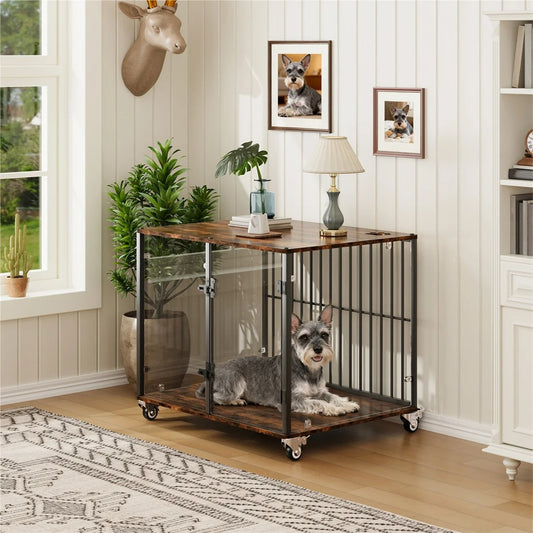
Tempered Glass Furniture-Style Dog Crate with Wheels
Regular price £129.00 GBPRegular priceUnit price per£129.00 GBPSale price £129.00 GBP -
2-in-1 Heavy-Duty Dog Cage with Divider – Optional Cover
Regular price From £49.00 GBPRegular priceUnit price per£89.00 GBPSale price From £49.00 GBPSale -
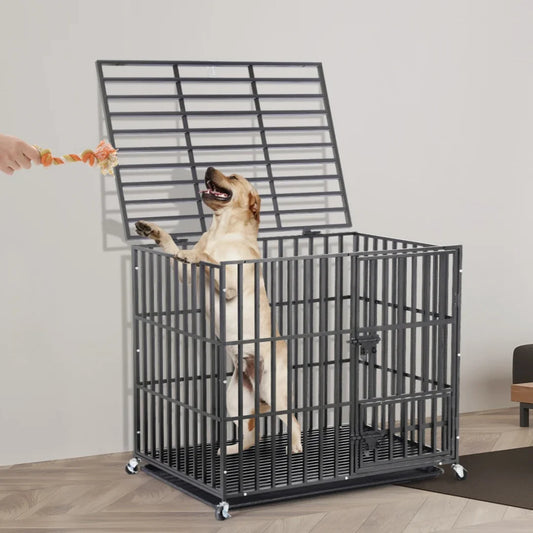
Mobile Heavy-Duty Dog Cage with 3 Locking Doors and Tray
Regular price From £179.00 GBPRegular priceUnit price per£369.00 GBPSale price From £179.00 GBPSale



Choosing a secure metal dog cage
A dog cage should be selected by usable internal space, door security and the dog’s behaviour. Measure your dog and confirm that the chosen cage allows natural standing, turning and resting. A heavy frame or high load rating does not prove that a cage fits a particular breed.
For measurement help, use our dog crate size calculator. If you need a broader choice of materials and styles, start with the main dog crate collection.
Features worth comparing
- Doors and locks: check door-opening dimensions, latch position and whether access suits the intended room.
- Removable tray: confirm how the tray is removed and whether the dog can reach its edges.
- Divider: verify the usable space on each side rather than relying on total external width.
- Wheels: useful on heavier cages, but the brakes must be locked before the dog enters.
- Bar spacing and frame: compare with the dog’s size, chewing behaviour and risk of catching a paw, collar or jaw.
Dog cage, crate or kennel?
A metal dog cage prioritises visibility and airflow. A furniture-style dog crate may blend more easily into a living room, while an outdoor dog kennel is intended for a different environment and needs weather, ground and shelter considerations. For roomy sizes, compare large, XL and XXL dog crates.
Fit, flooring and cleaning
Allow space around the cage for ventilation, safe door movement and tray removal. On wood or laminate, use a protective surface that will not slide or create chewable edges. Remove loose hair and debris regularly, clean only with pet-appropriate products, and dry the tray and frame completely before the dog returns.
Compare what is included with each option. Covers, pads and dividers may be separate variants rather than included accessories. Our UK warehouse normally processes orders in 1–2 business days, followed by an estimated 3–7 business days in transit.
Safe setup and introduction
Assemble the cage on a level surface and inspect every joint, door, tray and wheel. Remove collars or dangling tags where they could catch. Introduce the space gradually and positively. Heavy-duty does not mean escape-proof; a dog showing confinement distress needs a different management and training approach.
Frequently asked questions about dog cages
Are heavy-duty dog cages escape-proof?
No. Stronger construction may improve resistance, but no cage can be guaranteed escape-proof for every dog. Behaviour, correct sizing, assembly and supervision remain important.
Do I need a removable tray?
A removable tray can make cleaning easier, but it must sit securely and remain undamaged. Check it regularly for sharp edges, cracks or movement.
Can a dog cage be used indoors?
Yes, when the model is intended for indoor use and is placed on a stable floor with adequate ventilation and clearance. Protect delicate floors under heavy frames or wheels.