

Dog Pram Safety Tips for Busy UK Streets
Short Answer
For safer use on busy UK streets, secure the dog with a correctly fitted body harness, use the parking brake whenever stopped, keep the canopy ventilated and approach kerbs, traffic and crowds slowly. The dog should be trained to remain calm before travelling in a busy area.
Key Takeaways
- Choose from the dog’s measurements, weight, mobility and the routes you use.
- A pram should supplement appropriate walking, sniffing and activity unless a vet advises otherwise.
- Check brakes, stability, ventilation, harness attachment points and heat.
- Introduce the pram gradually while stationary before moving.
- Unexplained pain, fatigue or mobility loss needs veterinary assessment.
Quick Decision Checklist
| Check | What to look for |
|---|---|
| Purpose | A clear welfare-led use rather than punishment or convenience |
| Fit and setup | Enough room, safe materials, ventilation and a stable location |
| Behaviour | Loose body language, voluntary approach and normal eating |
| Daily needs | Water, toileting, movement, rest and social contact remain available |
| Warning signs | Pain, panic, repeated escape attempts or sudden behaviour change |
Key takeaways
- Dog prams must be used with awareness of traffic and pedestrians
- Stability, visibility and restraint are essential for safety
- Busy pavements require slower movement and better positioning
- Choosing the right pram design reduces everyday risks
- Preparation and routine make urban pram use safer and calmer
Why dog pram safety matters in urban areas
UK streets are designed primarily for people and vehicles, not pets. Narrow pavements, parked cars, cyclists and sudden changes in surface height all increase the chance of accidents if a pram is not handled carefully.
Dogs inside prams rely entirely on the owner for safety. Unlike walking dogs, they cannot adjust their position quickly to avoid hazards. This makes thoughtful handling and setup essential, particularly in high-footfall areas.
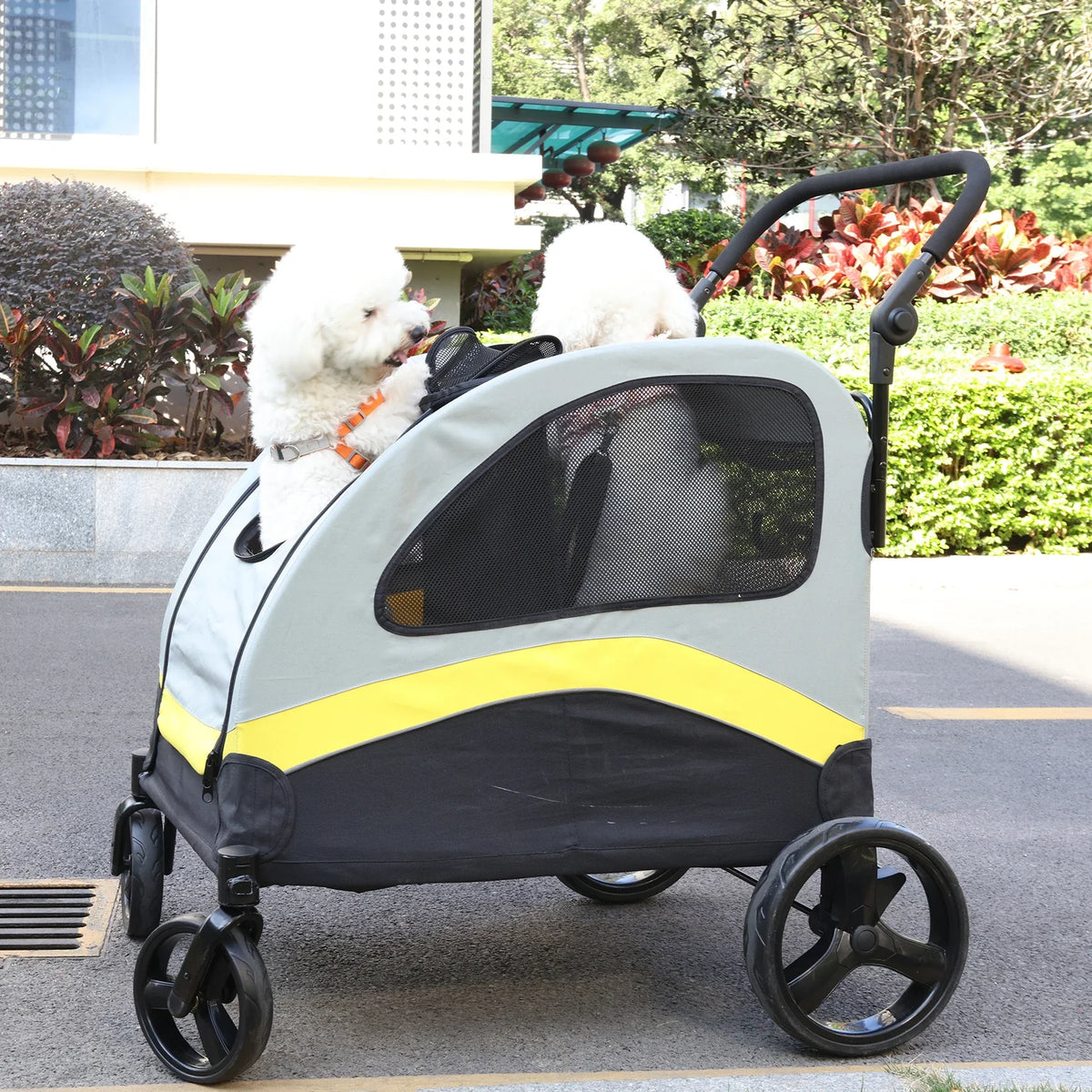
Choose a pram built for street conditions
Not all dog prams are equally suited to busy streets. Stability and control matter far more than appearance.
When choosing a pram for urban use, look for:
- A wide, stable wheelbase
- Smooth steering with reliable brakes
- Secure internal harness attachment
- Durable wheels that handle uneven pavements
Our pet stroller collection includes designs intended for everyday use rather than occasional novelty outings.
For owners navigating rougher pavements or longer routes, products like the one-click folding pet stroller with shock absorbers help reduce vibration and improve control.
Always secure your dog inside the pram
One of the most common safety mistakes is leaving dogs unrestrained inside a pram. Even calm dogs may shift suddenly if startled by noise, traffic or other animals.
A secure internal tether attached to a harness helps prevent:
- Sudden jumps or falls
- Loss of balance when stopping abruptly
- Accidental escape in crowded areas
Never attach pram tethers to collars. Harnesses distribute pressure more safely and reduce strain.
Positioning on busy pavements
Where you position your pram matters, especially during peak times.
Best practices include:
- Keeping the pram on the inside of the pavement, away from the road
- Avoiding kerb edges when waiting at crossings
- Staying visible to cyclists and pedestrians
Crowded pavements require slower movement. Give yourself extra space to stop safely if someone steps in front of you.
Crossing roads safely with a dog pram
Crossings are one of the highest-risk points when using a pram. Traffic noise, impatient drivers and short signal times can all create pressure.
Before crossing:
- Check that your dog is settled inside the pram
- Ensure brakes release smoothly
- Maintain a steady pace rather than rushing
Avoid crossing between parked cars where visibility is reduced. Use designated crossings whenever possible, even if it adds a few minutes to your route.
Managing uneven surfaces and obstacles
UK streets often include dropped kerbs, cracked paving stones and raised edges. These can cause prams to jolt or tip if approached incorrectly.
Helpful habits include:
- Slowing down before kerbs or ramps
- Pushing forward rather than pulling backward
- Lifting the front wheels slightly when needed
Larger, well-balanced designs such as the large 4-wheel dog carrier pram offer improved stability on uneven ground.
Visibility and awareness in traffic-heavy areas
Busy streets mean competing for space. Making yourself and your pram visible helps reduce risk.
Consider:
- Choosing prams with reflective trim or accents
- Avoiding dark colours during low-light conditions
- Making eye contact with drivers at crossings
Staying alert is especially important during school runs, rush hours and market days when pavements are crowded and unpredictable.
Weather considerations for street safety
UK weather can change quickly. Rain, wind and heat all affect pram safety.
In wet conditions:
- Ensure wheels maintain traction
- Avoid sharp turns on slick surfaces
In warmer weather:
- Monitor airflow inside the pram
- Avoid stopping in direct sun for long periods
Mesh panels and breathable fabrics help maintain comfort, particularly in built-up areas where heat reflects off buildings and roads.
Integrating prams into wider travel routines
Many owners use dog prams alongside cars, buses or trains. Safe transitions matter just as much as pavement use.
If combining prams with car travel, our guide on transporting dogs and prams together explains how to manage space and stability effectively.
When parking or stopping, always apply brakes fully before removing your dog.
Common mistakes to avoid on busy streets
Even experienced owners can develop habits that increase risk.
Avoid:
- Hanging heavy bags on pram handles
- Letting children push the pram in traffic areas
- Using prams not designed for outdoor surfaces
- Moving too quickly in crowded spaces
Simple adjustments often make a significant difference.
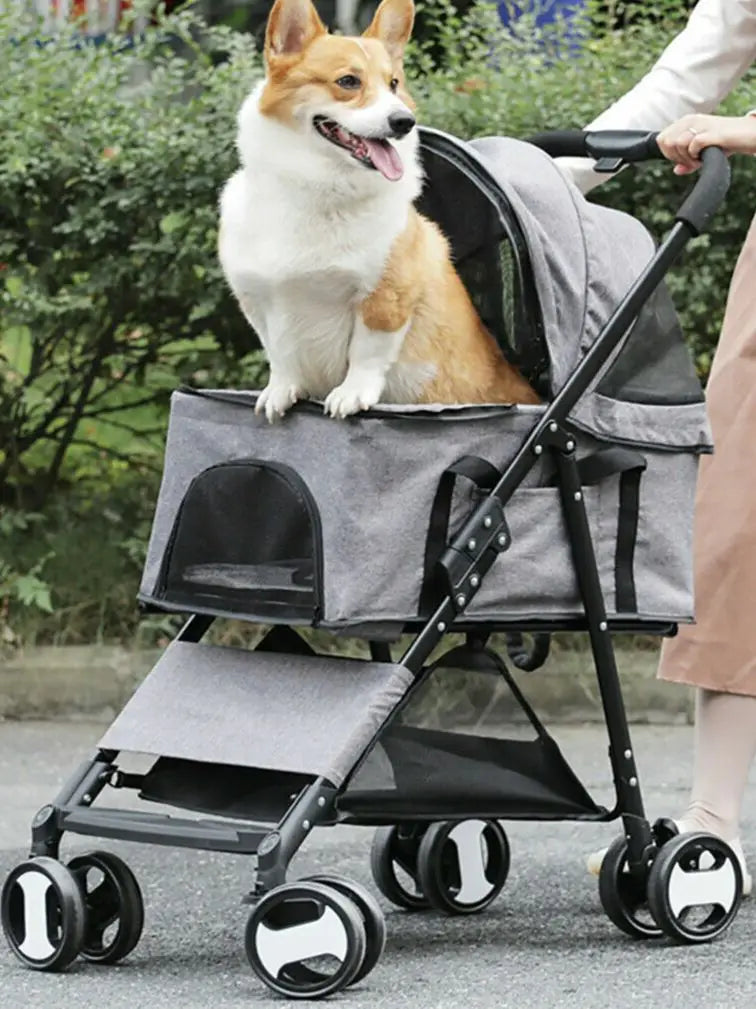
Supporting your dog’s confidence inside the pram
Dogs that feel secure are less likely to shift or panic in busy environments. Introducing the pram gradually helps build trust.
Allow your dog to:
- Explore the pram at home first
- Sit inside without movement initially
- Experience short, quiet routes before busier streets
If your dog is already familiar with structured spaces, our article on creating positive associations with confined areas offers transferable tips.
When a dog pram may not be suitable
While prams are helpful for many situations, they are not ideal for every environment. Extremely crowded events or narrow pavements with heavy vehicle traffic may require alternative arrangements.
Always assess the environment before heading out and adjust plans if conditions feel unsafe.
We are here to help you stay safe
Using a dog pram in busy UK streets should feel controlled and calm, not stressful. Choosing the right equipment and developing safe habits makes everyday outings far more enjoyable.
Final Verdict
For safer use on busy UK streets, secure the dog with a correctly fitted body harness, use the parking brake whenever stopped, keep the canopy ventilated and approach kerbs, traffic and crowds slowly. The dog should be trained to remain calm before travelling in a busy area.
FAQ
What should you know about key takeaways dog prams must be used with awareness of traffic and pedestrians stability, visibility and restraint are essential for safety busy pavements require slower movement and better positioning choosing the right pram design reduces everyday risks preparation and routine make urban pram use safer and calmer why dog pram safety matters in urban areas?
UK streets are designed primarily for people and vehicles, not pets. Narrow pavements, parked cars, cyclists and sudden changes in surface height all increase the chance of accidents if a pram is not handled carefully.
What should you know about choose a pram built for street conditions?
Not all dog prams are equally suited to busy streets. Stability and control matter far more than appearance.
What should you know about always secure your dog inside the pram?
One of the most common safety mistakes is leaving dogs unrestrained inside a pram. Even calm dogs may shift suddenly if startled by noise, traffic or other animals.
What should you know about positioning on busy pavements?
Where you position your pram matters, especially during peak times.
What should you know about crossing roads safely with a dog pram?
Crossings are one of the highest-risk points when using a pram. Traffic noise, impatient drivers and short signal times can all create pressure.
What should you know about managing uneven surfaces and obstacles?
UK streets often include dropped kerbs, cracked paving stones and raised edges. These can cause prams to jolt or tip if approached incorrectly.