

Eco-Friendly Chicken Coop Design: UK Guide
Short Answer
An eco-friendly chicken coop uses durable repairable materials, safe finishes, good daylight, rainwater-aware drainage and a design that reduces bedding and cleaning waste. Sustainability must not compromise predator security, ventilation, cleanability or the hens’ usable space.
Key Takeaways
- Prioritise dry shelter, ventilation, hygiene, security and enough usable space.
- UK rainfall, wind, drainage and predator pressure should shape the setup.
- Inspect the flock and housing daily for changes in health, behaviour or damage.
- Avoid dusty, damp, sharp, toxic or difficult-to-clean materials.
- Check current local rules and seek veterinary advice for illness or welfare concerns.
Quick Decision Checklist
| Check | What good looks like |
|---|---|
| Dryness | No persistent leaks, pooling water or damp bedding |
| Ventilation | Fresh air above bird level without a direct draught |
| Security | No gaps, weak latches or exposed digging edges |
| Hygiene | Surfaces and fittings can be inspected and cleaned |
| Flock behaviour | Birds can feed, drink, rest and move without crowding |
Start with Durability: The Most Sustainable Coop Is One That Lasts
Before getting into specific materials and features, it is worth establishing a foundational principle: the most eco-friendly coop is one that does not need replacing for a long time. A cheap coop that rots within three years and ends up in a skip has a far worse environmental footprint than a well-built structure - even one made from conventional materials - that lasts a decade or more.

Durability should therefore be the first lens through which any coop purchase or build is assessed. This applies to the frame, the roofing material, the wire mesh on the run, the hardware, and the floor construction. Cutting corners on any of these to save money upfront usually results in higher replacement costs and more waste over time.
Sustainable Timber: The Foundation of an Eco-Friendly Build
For keepers building their own coop or buying a timber structure, the source and treatment of the wood matters from an environmental perspective.
FSC-certified timber carries certification from the Forest Stewardship Council, indicating it has been sourced from responsibly managed forests. In the UK, FSC timber is widely available from most major builders' merchants and is the most accessible way to ensure the wood in your coop comes from a verified sustainable source.
Reclaimed timber is the most sustainable option of all, repurposing wood that would otherwise be discarded. Old scaffold boards, pallet timber, and salvaged floorboards can all be used in coop construction provided they are structurally sound and have not been treated with chemicals harmful to poultry. It is worth researching which wood treatments are safe before using any reclaimed material, as some older preservation treatments contain compounds that should not come into contact with birds or their bedding.
Pressure-treated timber is widely used in outdoor structures because it resists rot and extends the life of the coop significantly. Modern pressure treatments available in the UK have moved away from the most toxic compounds used historically, though it is still advisable to check the product data sheet and allow treated timber to dry fully before birds come into contact with it.
When assessing any timber coop, also consider the roof. Roofing felt is a common, low-cost option but tends to degrade within a few years and is not recyclable. Corrugated metal sheeting, bitumen tiles, or fibre cement panels are all longer-lasting alternatives that reduce how often the roof needs replacing.
Metal Coops: A Case for Longevity Over Raw Materials
Metal and powder-coated steel coops are sometimes overlooked by eco-minded keepers who associate sustainability with natural materials. However, a metal structure that lasts 15-20 years with minimal maintenance may have a lower overall environmental impact than a timber coop that requires regular retreatment and partial replacement over the same period.
Metal coops also tend to be more resistant to red mites, which shelter in the cracks and joins of wooden structures. Fewer chemical treatments are needed to manage parasite pressure in a metal coop, which is a meaningful consideration from an environmental perspective.
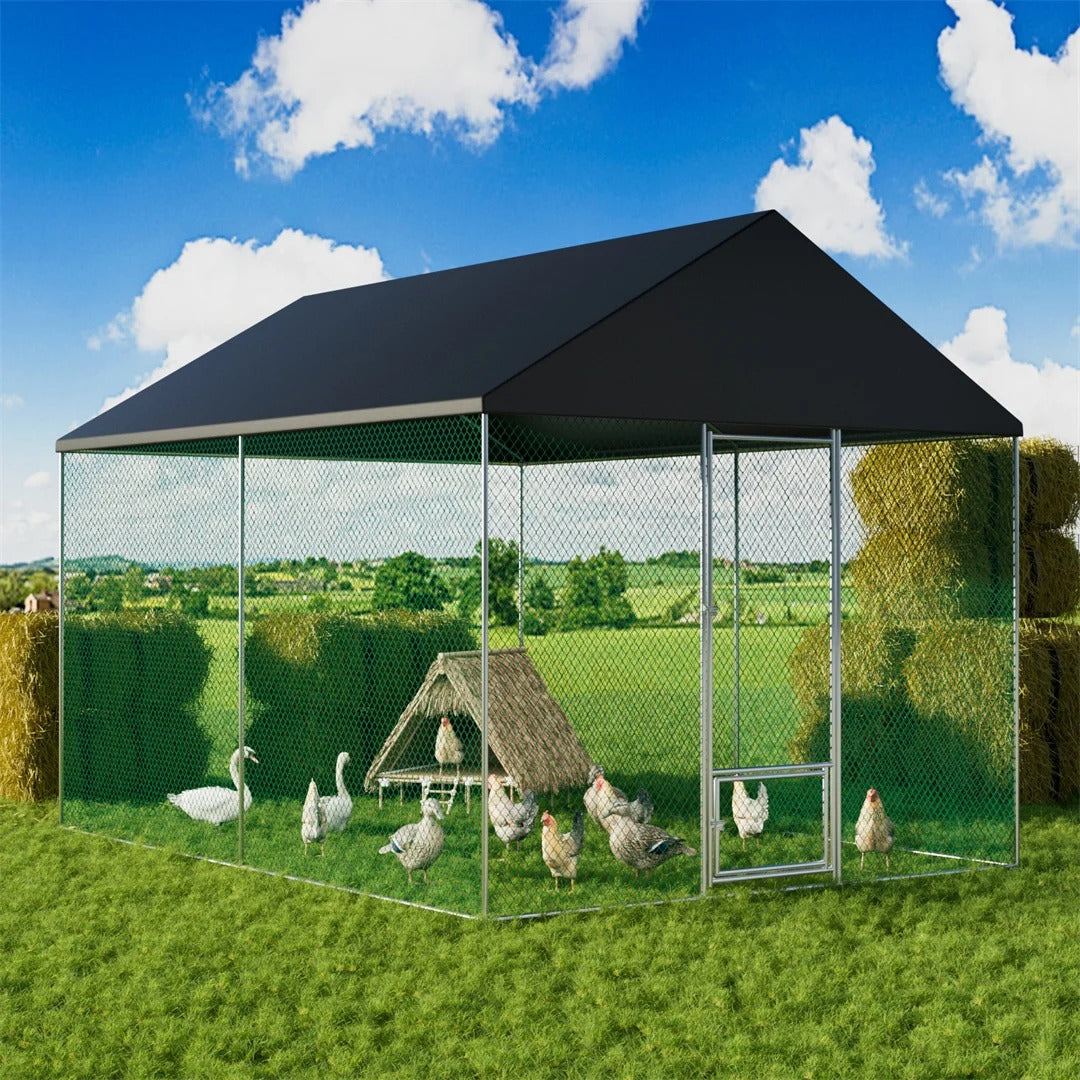
Our range of outdoor chicken coops and runs includes both timber and metal options, allowing keepers to assess which material suits their priorities and garden context. The large outdoor metal walk-in chicken coop with anti-UV covered run is a well-constructed option for keepers wanting a durable, low-maintenance structure built for year-round UK conditions, while the outdoor extra tall chicken coop pen for UK gardens and allotments offers a proportionate, manageable setup for smaller flocks with good internal height for ease of cleaning.
Rainwater Harvesting for Chicken Drinkers
Chickens need consistent access to fresh water, and in the UK, rainfall is rarely in short supply. Connecting a water butt to the coop roof is a straightforward way to collect rainwater for use in drinkers, reducing mains water consumption without any significant effort or expense.
A standard water butt with a tap at the base can be positioned adjacent to the coop and filled from a downpipe connected to the roof. The water can then be used to refill drinkers each morning. In dry spells, mains water serves as the backup.
A few practical points to keep in mind: collected rainwater should be used promptly rather than stored for long periods, as standing water can develop bacterial growth. Drinkers should still be emptied and rinsed daily, and the water butt itself should be cleaned periodically. In freezing temperatures, water butts can freeze solid, so this approach works best as a three-season system rather than a year-round solution.
Closing the Loop: Composting Coop Waste
One of the most genuinely circular aspects of keeping backyard chickens is that their waste, properly managed, becomes one of the most valuable inputs a UK kitchen gardener can have. Composted chicken manure is a high-nitrogen fertiliser that improves soil structure and feeds plants effectively.
The choice of bedding material affects how well it composts. Straw, softwood shavings, chopped cardboard, and hemp bedding all compost well. Sand, while useful as a run substrate for drainage reasons (and worth exploring further in our post on which floor surfaces work well inside a chicken run), does not compost and needs to be managed separately. A combination approach - sand in the run for drainage and organic bedding inside the coop for composting - is a practical middle ground many keepers use.
Natural Pest Management in an Eco-Friendly Setup
Keeping a coop as chemical-free as possible is both an environmental goal and a welfare consideration for the birds. Several natural approaches can reduce pest pressure without relying on synthetic treatments.
Diatomaceous earth is a naturally occurring silica-based powder derived from fossilised algae. It works as a physical rather than chemical agent, damaging the exoskeletons of insects and mites on contact. Food-grade diatomaceous earth can be applied to coop surfaces, into bedding, and in dust-bathing areas. It is not toxic to birds and does not accumulate in the environment in the way synthetic pesticides can.
Predatory mites (specifically Hypoaspis miles) are used in commercial and backyard settings to control red mite populations biologically. They are available from specialist poultry suppliers in the UK and can be introduced into coop bedding where they prey on red mite larvae. This approach requires some understanding of application timing and conditions to be effective.
Garlic-based products and essential oil preparations marketed for poultry are used by some keepers as deterrents, though the evidence base for their effectiveness against red mites is less established than for diatomaceous earth or predatory mites. They may have a supplementary role as part of a broader management approach.
For a fuller overview of red mite management options - including when natural approaches are sufficient and when more intervention may be needed - our guide on managing red mite infestations in a backyard coop is worth reading alongside any eco-friendly pest strategy.
Integrating the Coop into Your Garden Ecosystem
An eco-friendly coop design is not just about the materials it is made from - it is also about how it sits within the wider garden and contributes to the overall system.
Positioning for solar gain. Orienting the coop so that the main face and any windows receive morning sun helps dry out overnight moisture naturally and warms the interior during the day, reducing the need for supplemental heat in winter. The UK's predominantly south-westerly aspect means a south or south-east facing front is generally most effective.
Garden placement and separation distances. Positioning the coop thoughtfully in relation to neighbours, boundaries, and your own growing areas matters both for practical management and for maintaining good relations with those around you. Our post on how distance from property boundaries affects coop placement covers the specific considerations for UK gardens in detail.
Using chickens as garden workers. Chickens are natural scratchers and insect hunters. Rotating their run across different areas of the garden, or allowing supervised foraging in beds after harvest, lets them work as a natural pest control service - eating slugs, snails, and insect larvae in the process. This reduces the need for chemical pest treatments in the wider garden.
Planting around the coop. Hardy climbing plants on a south-facing coop wall can provide additional insulation and visual integration into the garden. Lavender, rosemary, and mint planted near the coop are also anecdotally associated with deterring flies and insects, though this should be treated as a supplementary measure rather than a primary pest management strategy.
Flexible Run Design for Rotational Grazing
One of the most effective eco-friendly practices for backyard chicken keeping is rotational grazing - moving birds between sections of the run or garden to allow ground to recover. This prevents any one area from becoming completely stripped and muddy, maintains better ground hygiene, and reduces the overall parasite burden in the soil.
A fixed run makes rotation more difficult, but using modular fencing panels alongside a secure base structure gives keepers the flexibility to define different grazing zones and rotate birds between them. Our outdoor heavy duty garden fence panels offer a robust and reconfigurable option for creating defined grazing sections within a larger outdoor space, and can be rearranged as needed without permanent installation.
For keepers who want more flexibility in how they define and manage their outdoor space, our collection of outdoor animal pen and enclosure options includes modular panel systems that can be adapted to different garden layouts and rotational grazing approaches.
Final Thoughts
Eco-friendly chicken keeping is less about any single feature or material and more about thinking holistically - choosing durable structures, managing waste productively, reducing chemical inputs, and designing the setup to work with the garden rather than against it. The principles are straightforward, and most of them save money or add value in the long run as well as reducing environmental impact.
If you would like guidance on which coop or setup would best suit your garden and sustainability goals, the Paw Comfort team is here to help. Get in touch with us here and we will give you honest, practical advice.
Final Verdict
An eco-friendly chicken coop uses durable repairable materials, safe finishes, good daylight, rainwater-aware drainage and a design that reduces bedding and cleaning waste. Sustainability must not compromise predator security, ventilation, cleanability or the hens’ usable space.
FAQ
What should you know about start with durability: the most sustainable coop is one that lasts?
Before getting into specific materials and features, it is worth establishing a foundational principle: the most eco-friendly coop is one that does not need replacing for a long time. A cheap coop that rots within three years and ends up in a skip has a far worse environmental footprint than a well-built structure - even one made from conventional…
What should you know about sustainable timber: the foundation of an eco-friendly build?
For keepers building their own coop or buying a timber structure, the source and treatment of the wood matters from an environmental perspective.
What should you know about metal coops: a case for longevity over raw materials?
Metal and powder-coated steel coops are sometimes overlooked by eco-minded keepers who associate sustainability with natural materials. However, a metal structure that lasts 15-20 years with minimal maintenance may have a lower overall environmental impact than a timber coop that requires regular retreatment and partial replacement over the same period.
What should you know about rainwater harvesting for chicken drinkers?
Chickens need consistent access to fresh water, and in the UK, rainfall is rarely in short supply. Connecting a water butt to the coop roof is a straightforward way to collect rainwater for use in drinkers, reducing mains water consumption without any significant effort or expense.
What should you know about closing the loop: composting coop waste?
One of the most genuinely circular aspects of keeping backyard chickens is that their waste, properly managed, becomes one of the most valuable inputs a UK kitchen gardener can have. Composted chicken manure is a high-nitrogen fertiliser that improves soil structure and feeds plants effectively.
What should you know about natural pest management in an eco-friendly setup?
Keeping a coop as chemical-free as possible is both an environmental goal and a welfare consideration for the birds. Several natural approaches can reduce pest pressure without relying on synthetic treatments.