

How to Choose Eco-Friendly Pet Products
Short Answer
Choose lower-impact pet products by prioritising durable, repairable and washable designs, transparent materials and realistic end-of-life options. Avoid vague green claims, and never trade away fit, hygiene, safety or animal welfare for recycled content alone.
Key Takeaways
- Adapt care to the individual animal’s age, health, behaviour and environment.
- Use reward-based training and introduce change gradually.
- Check product dimensions, materials and instructions rather than relying on labels.
- Monitor for pain, fear, appetite changes or other signs that need professional advice.
- Prioritise welfare and practical daily routines over quick fixes.
Quick Decision Checklist
| Check | What to look for |
|---|---|
| Purpose | A clear welfare-led use rather than punishment or convenience |
| Fit and setup | Enough room, safe materials, ventilation and a stable location |
| Behaviour | Loose body language, voluntary approach and normal eating |
| Daily needs | Water, toileting, movement, rest and social contact remain available |
| Warning signs | Pain, panic, repeated escape attempts or sudden behaviour change |
Why Durability Is the Most Underrated Sustainability Principle
Before getting into specific product categories, it is worth making one foundational point: durability is the single most important sustainability factor in most pet product categories.
The production of any physical product has an environmental cost. Manufacturing processes use energy and raw materials. Shipping generates emissions. Packaging creates waste. A product that lasts three years has a fundamentally lower environmental footprint per year of use than a product that lasts three months, regardless of what it is made from.
This means that buying a well-made, robustly constructed product, even at a higher upfront cost, is often the more environmentally responsible choice. Products designed to be repaired, with replaceable components or washable covers, extend that logic further.
Dog Beds and Cat Beds: What to Look For
Bedding is one of the most frequently purchased and most frequently replaced categories in pet ownership. A dog bed that degrades quickly, loses its shape, or cannot be properly cleaned is typically thrown away and replaced - contributing to waste that a better initial choice would have avoided.
When evaluating the sustainability credentials of a pet bed, consider:
Materials. Natural fibres such as cotton, wool, and bamboo have lower environmental impact during production than many synthetic materials, though recycled synthetic materials can also perform well. Solid wood legs or frames, from responsibly sourced timber, offer durability and a lower environmental footprint than plastic alternatives.
Washability. A bed with a removable, machine-washable cover can be cleaned properly and maintained over time without needing to replace the entire item. This extends the practical lifespan considerably. A bed that cannot be adequately cleaned will need to be replaced far sooner.
Repairability and replaceability. Some manufacturers offer replacement covers or inserts, which means the structural component of a product can continue in use even when surface wear occurs. This is a meaningful sustainability feature that is worth actively looking for.
Our L-shaped dog sofa bed with rubber wooden legs combines a solid wood leg construction with a fabric sleeping surface, offering durability alongside aesthetic appeal. The use of wood rather than plastic for the structural components reflects a more sustainable material choice.
For cats, our wooden cat cave bed with cushion pad uses solid wood construction for the main structure, a material that is biodegradable at end of life and, when sourced responsibly, carries a significantly lower environmental footprint than plastic equivalents. The cushion pad is removable for cleaning, extending the useful life of the product.
Across our full range of comfortable resting options for dogs, we have selected products that prioritise durability and practical maintainability, which we consider the most honest form of sustainable product design.
Dog Crates and Kennels: Wood Over Plastic Where Possible
Dog crates represent a significant purchase for most owners, and the materials and construction quality have a direct bearing on longevity. Wire crates, when robustly constructed from quality steel, are durable and largely recyclable at end of life. Plastic components, particularly lower-grade plastics used in cheaper crates, are typically less recyclable and degrade more quickly under regular use.
Wooden dog crates and furniture-style kennels made from solid wood or engineered wood are a genuine alternative for indoor use. Wood is a renewable material when sourced sustainably, has strong end-of-life disposal options, and can be refinished or repaired rather than simply discarded.
Our high-end wooden dog crate designed as an indoor furniture piece uses wood construction throughout, providing a product that is built for long-term use rather than short-term convenience. Furniture-style crates of this kind also serve a dual purpose as end tables or room features, which means they integrate more naturally into a home environment and are less likely to be discarded when owners redecorate or move home.
For owners considering the broader sustainability picture of crate use, our article on the environmental and practical case for eco-friendly choices in pet ownership provides a wider perspective on making considered decisions across all aspects of pet care.
Cat Litter: One of the Highest-Impact Choices
For cat owners, litter is arguably the single highest-impact consumable product in terms of waste generated. Clay-based clumping litter - the most widely used type in the UK - is typically mined from bentonite clay, a non-renewable resource, and is not biodegradable.
Alternative litter options with lower environmental footprints include:
Wood pellet litter made from compressed sawdust, typically a by-product of timber processing. Wood pellets are biodegradable and compostable (though cat waste itself should not be composted due to pathogen risk). They are widely available in the UK and accepted by many cats.
Paper-based litter made from recycled paper or cardboard. Highly absorbent and biodegradable, paper litters are a practical alternative for owners whose cats will accept the different texture.
Plant-based litters made from materials such as corn, wheat, or tofu. These are biodegradable and some are flushable, though owners should check local water company guidance before flushing any cat litter product.
The litter box itself also has sustainability implications. A well-made, durable litter tray that can be cleaned effectively and lasts for years is a better choice than a cheap tray replaced annually. Our front entry, top exit enclosed cat litter box with scoop and drawer is designed for thorough cleaning and practical maintenance, extending the useful life of the product significantly. The enclosed design also reduces litter scatter, which in turn reduces waste.
Pet Strollers and Travel Products: Invest Once, Use for Years
Travel accessories for pets, including strollers, car seats, and carriers, are categories where quality directly determines longevity. A cheaply made stroller that breaks within a year requires replacement; a well-constructed one used over many years represents a single manufacturing investment spread across a long period of use.
When selecting travel products with sustainability in mind, look for:
Robust frame construction. Steel or aluminium frames outlast plastic alternatives in most active use conditions. Joints and folding mechanisms should feel solid and tested for repeated use.
Washable fabric components. Stroller liners, car seat covers, and carrier padding should be removable and machine washable. Clean products last longer and are more hygienic throughout their use.
Repairability. Zips, buckles, and fabric components are the most common failure points on travel products. Choosing products from suppliers who can provide replacement parts, or whose construction makes repairs feasible, extends product life meaningfully.
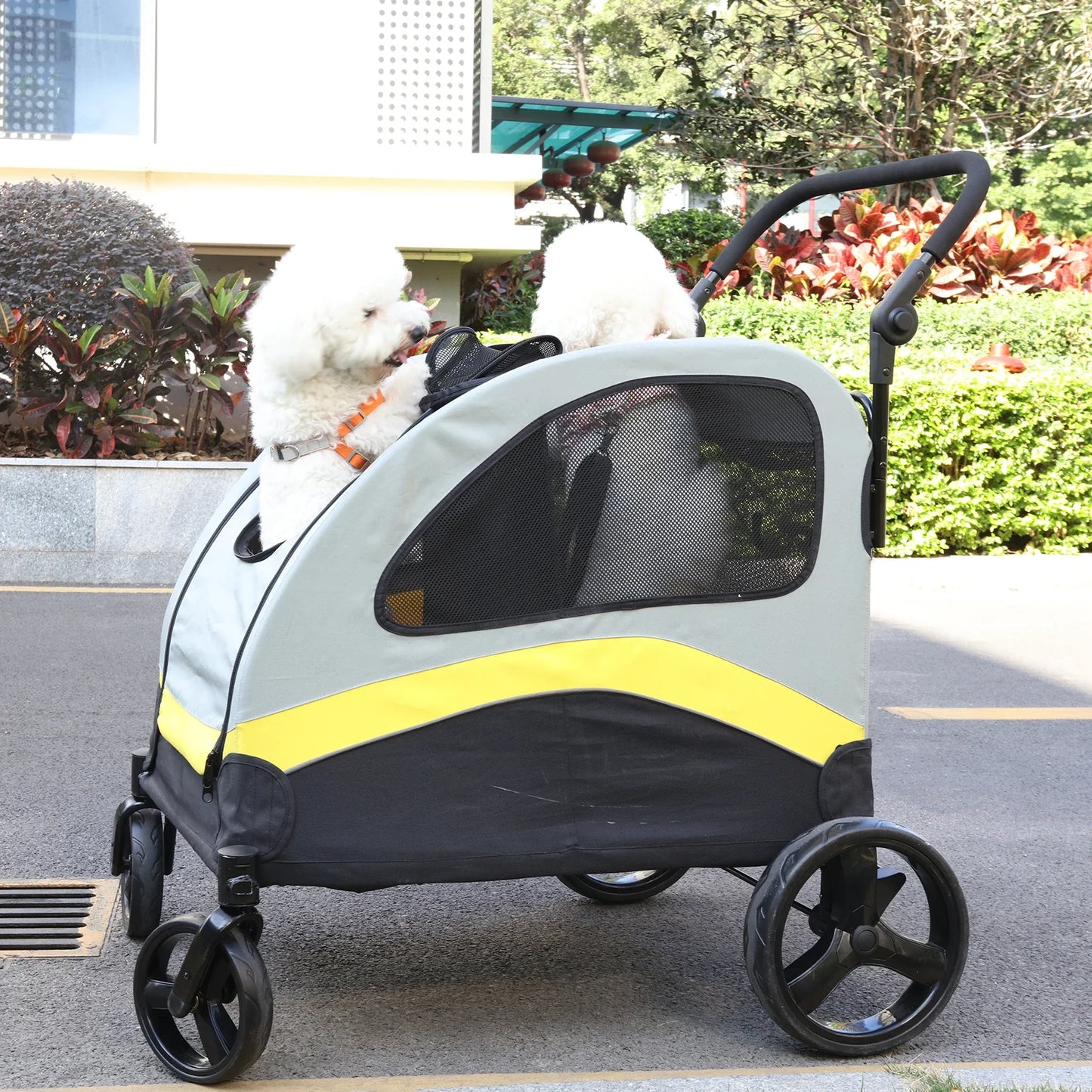
The stroller category is one where Paw Comfort has invested in products built for long-term use. Our one-click folding pet stroller with shock absorbers is engineered for durability with a robust folding mechanism and mesh ventilation panels designed to withstand regular outdoor use. Buying a stroller built to last is both better value and a more sustainable choice than cycling through cheaper alternatives.
Food and Waste: The Bigger Sustainability Picture
Products are one part of the sustainability picture for pet owners. Food and waste management are arguably more significant in terms of overall environmental impact.
Pet food has a substantial carbon footprint, largely driven by animal protein content. For dogs, some nutritionists consider high-quality, lower-meat diets - or those incorporating insect protein, which has a significantly lower environmental footprint than conventional meat - as a reasonable choice for generally healthy animals. Any dietary changes should be discussed with a vet, particularly for dogs with health conditions or specific nutritional needs.
Waste bags are a significant source of plastic waste in dog ownership. Biodegradable and compostable waste bags made from plant-based materials are now widely available in the UK and represent a straightforward swap from conventional plastic.
Packaging is worth considering when selecting any pet product or food. Brands that use minimal packaging, recycled materials, or packaging that is recyclable or compostable through standard UK kerbside collections are making more considered choices than those relying on multilayer plastic packaging.
How to Evaluate Sustainability Claims on Pet Products
Because "eco-friendly" and "sustainable" are not regulated terms in UK retail, it is worth knowing how to assess these claims with some scepticism.
Look for specifics. A product described as made from "recycled materials" should ideally specify what percentage is recycled and what type of material. Vague claims without supporting detail are a flag.
Consider the full picture. A product made from a natural material but shipped from the other side of the world with heavy packaging may not have a lower footprint than a locally produced alternative with conventional materials.
Prioritise longevity. As discussed throughout this guide, a product's lifespan is one of the most reliable sustainability indicators available to a consumer.
Check for certifications where relevant. For wood products, FSC (Forest Stewardship Council) certification indicates responsible sourcing. For textiles, GOTS (Global Organic Textile Standard) certification indicates organic material handling practices.
Our article on making sustainable everyday decisions in UK pet ownership covers this evaluative approach in more detail and is worth reading alongside any purchasing decision.
Building a More Sustainable Pet Ownership Routine
The most sustainable version of pet ownership is not about buying a set of products labelled green and considering the job done. It is about a general orientation towards buying less, buying better, maintaining what you have, and making considered choices across food, waste, travel, and home environment.
If you have questions about specific products, materials, or what might suit your pet's needs and your own sustainability priorities, we would be genuinely happy to help.
Final Verdict
Choose lower-impact pet products by prioritising durable, repairable and washable designs, transparent materials and realistic end-of-life options. Avoid vague green claims, and never trade away fit, hygiene, safety or animal welfare for recycled content alone.
FAQ
Why Durability Is the Most Underrated Sustainability Principle?
Before getting into specific product categories, it is worth making one foundational point: durability is the single most important sustainability factor in most pet product categories.
What should you know about dog beds and cat beds: what to look for?
Bedding is one of the most frequently purchased and most frequently replaced categories in pet ownership. A dog bed that degrades quickly, loses its shape, or cannot be properly cleaned is typically thrown away and replaced - contributing to waste that a better initial choice would have avoided.
What should you know about dog crates and kennels: wood over plastic where possible?
Dog crates represent a significant purchase for most owners, and the materials and construction quality have a direct bearing on longevity. Wire crates, when robustly constructed from quality steel, are durable and largely recyclable at end of life. Plastic components, particularly lower-grade plastics used in cheaper crates, are typically less recyclable…
What should you know about cat litter: one of the highest-impact choices?
For cat owners, litter is arguably the single highest-impact consumable product in terms of waste generated. Clay-based clumping litter - the most widely used type in the UK - is typically mined from bentonite clay, a non-renewable resource, and is not biodegradable.
What should you know about pet strollers and travel products: invest once, use for years?
Travel accessories for pets, including strollers, car seats, and carriers, are categories where quality directly determines longevity. A cheaply made stroller that breaks within a year requires replacement; a well-constructed one used over many years represents a single manufacturing investment spread across a long period of use.
What should you know about food and waste: the bigger sustainability picture?
Products are one part of the sustainability picture for pet owners. Food and waste management are arguably more significant in terms of overall environmental impact.