

Free-Range vs Enclosed-Run Chickens in the UK
Short Answer
Free-range access can support foraging and exploration, while a well-designed enclosed run offers more control over predators, disease and garden damage. The best setup for many UK homes combines secure housing and a generous enriched run with supervised or managed ranging where safe and permitted.
Key Takeaways
- Prioritise dry shelter, ventilation, hygiene, security and enough usable space.
- UK rainfall, wind, drainage and predator pressure should shape the setup.
- Inspect the flock and housing daily for changes in health, behaviour or damage.
- Avoid dusty, damp, sharp, toxic or difficult-to-clean materials.
- Check current local rules and seek veterinary advice for illness or welfare concerns.
Quick Decision Checklist
| Check | What good looks like |
|---|---|
| Dryness | No persistent leaks, pooling water or damp bedding |
| Ventilation | Fresh air above bird level without a direct draught |
| Security | No gaps, weak latches or exposed digging edges |
| Hygiene | Surfaces and fittings can be inspected and cleaned |
| Flock behaviour | Birds can feed, drink, rest and move without crowding |
What Do These Terms Actually Mean?
Before comparing the two approaches, it helps to be clear about what they mean in a backyard context.
Free-range in commercial egg production has a legal definition in the UK: hens must have continuous daytime access to outdoor space, with a minimum of 4 square metres per bird. In a backyard context, the term is used more loosely to mean birds that are allowed to roam the garden or a large outdoor area without being confined to a fixed run.
Coop-raised or run-confined refers to chickens that live in a coop and attached run, with the run forming the boundary of their outdoor space. The run may be large or small, covered or open, permanent or moveable - but the birds do not have access to the wider garden.
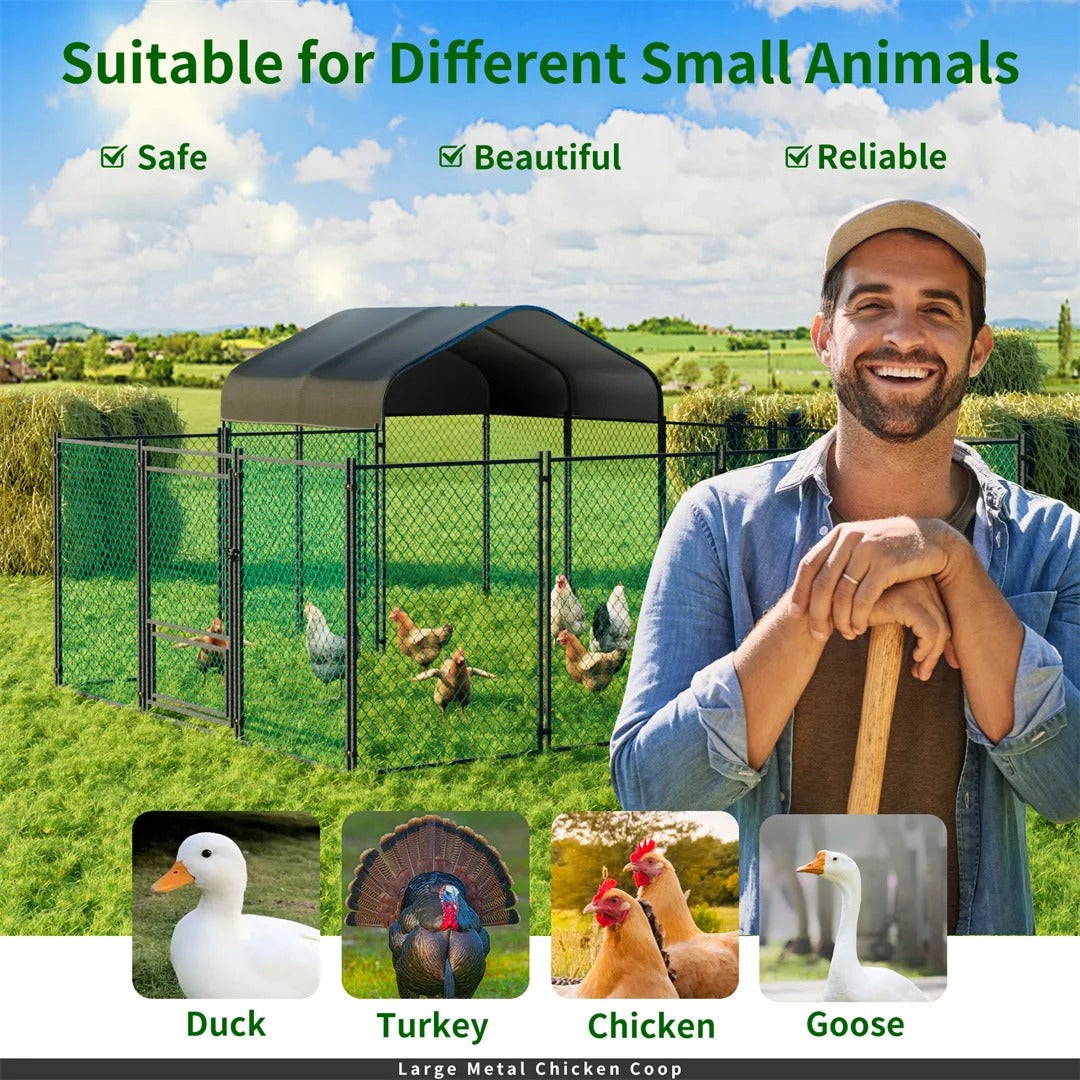
In practice, many UK backyard keepers operate somewhere between the two: birds have a secure coop and run as their base, but are let out to roam the garden for part of the day when someone is around to supervise. This hybrid approach is worth considering as a third option alongside the two main models.
The Case for Free-Range Keeping
Natural Behaviour and Welfare
Chickens are foraging animals. Given free access to outdoor space, they will spend their days scratching through soil and leaf litter, dust-bathing, searching for insects and grubs, and exploring. These behaviours are natural and important for both physical and psychological wellbeing.
Birds with more space and environmental variety tend to show fewer stress-related behaviours such as feather pecking, which is more commonly observed in confined, overcrowded conditions. A genuinely free-ranging flock in a large garden or smallholding will generally exhibit a broader, more natural behavioural repertoire than birds restricted to a small run.
Dietary Variety
Free-ranging birds supplement their feed with insects, worms, seeds, and plant matter, which contributes to a more varied diet. Many keepers report richer, more deeply coloured egg yolks in hens with regular access to pasture, which is consistent with the nutritional contribution of foraging. However, this is not a guarantee - the quality of the forage available, the season, and the proportion of the diet it makes up all affect outcomes.
Lower Feed Costs
Birds that forage actively eat somewhat less commercial feed, which can modestly reduce feed costs over time. The saving is rarely dramatic for a small backyard flock, but it is a real benefit for those keeping larger numbers.
The Challenges of Free-Range Keeping in UK Gardens
Predator Risk
This is the most significant practical concern for free-range keeping in the UK. Foxes are present in both rural and urban areas across the country and are active during daylight hours as well as at night, particularly in spring when they are feeding cubs. An unsupervised free-ranging flock is a realistic target.
Other predators including badgers, mink (in some areas), and birds of prey also pose risks depending on location. The risk is not theoretical - fox attacks on backyard flocks during the day are reported regularly, particularly in suburban areas where urban fox populations are dense.
Mitigation is possible but requires either constant supervision or robust perimeter fencing, which in most UK gardens is difficult to achieve completely.
Garden Damage
Chickens are highly effective at destroying gardens. They scratch through beds, eat seedlings, dig up bulbs, dust-bathe in freshly turned soil, and deposit droppings across lawns and patios. A small flock allowed unrestricted access to a garden will cause noticeable damage within weeks, and a larger flock can strip a lawn bare in a relatively short time.
For keepers who want both chickens and a productive or ornamental garden, unrestricted free-range is often not a practical long-term arrangement. Rotational grazing systems, temporary fencing, and supervised access are common ways of managing this tension.
Disease and Biosecurity
Free-ranging birds come into contact with wild bird droppings, which can carry disease. This is particularly relevant during periods when Avian Influenza (Bird Flu) is circulating - the UK has experienced several significant outbreaks in recent years, and during these periods the government has issued housing orders requiring all kept birds to be confined indoors. Keepers who rely on free-range access need to be prepared to restrict birds at short notice when such orders are in place.
The Case for a Well-Designed Coop and Run
Security and Predictability
A properly constructed coop and run with fox-proof wire, secure latches, and a solid base or apron wire provides a level of security that free-range access simply cannot match. Birds are contained, protected, and accounted for at all times. For keepers who are out at work during the day, or who simply cannot be present to supervise, a secure run is a practical necessity rather than a compromise.
Garden Preservation
Keeping birds within a defined run means the rest of the garden remains intact. For households where the garden serves multiple purposes - children's play space, vegetable growing, entertaining - this is a significant quality-of-life consideration.
Easier Management
Confined birds are easier to monitor for health issues, easier to catch when handling is needed, and produce waste in a predictable area that can be managed and composted systematically. Feed and water management is also more straightforward when birds are in a defined space.
Welfare in a Well-Designed Run
A common misconception is that a coop and run setup is inherently worse for welfare than free-range. This is not necessarily true. A spacious, well-maintained run with perches, dust-bathing areas, enrichment, and access to fresh grass or forage provides a genuinely good quality of life. The key is that the run is adequate for the number of birds and managed properly.
Thinking carefully about what your coop setup needs to function well before you buy or build pays dividends in both bird welfare and your own management experience.
The Hybrid Approach: Supervised Free-Ranging
For many UK backyard keepers, the most practical arrangement sits between the two extremes. Birds have a secure coop and run as their permanent base, and are let out into the wider garden for a few hours in the afternoon or evening when someone is present. This gives them the benefits of foraging and more varied outdoor space while limiting the window of predator exposure and allowing the garden to recover between sessions.
The main requirement for this approach is that someone is genuinely present and attentive when birds are out - not just at home, but actively aware of what is happening in the garden. A fox can take a bird very quickly, and being inside the house while birds are free in the garden is not the same as supervision.
Temporary garden fencing or moveable electric poultry netting can expand the supervised free-range area while providing an additional barrier, which is a practical middle ground for keepers with more space.
Choosing the Right Coop and Run for Your Approach
Whichever approach you choose, the coop itself forms the foundation of the setup. A bird that free-ranges during the day still needs a secure, well-ventilated, and comfortable place to roost at night. And a bird in a run setup spends its entire life within that space, which makes the quality and size of the structure even more important.
When evaluating options, look for secure construction, adequate internal height, easy-clean features, good ventilation, and a run size that comfortably accommodates your flock. Our range of backyard chicken coops includes options suited to different flock sizes and garden setups.
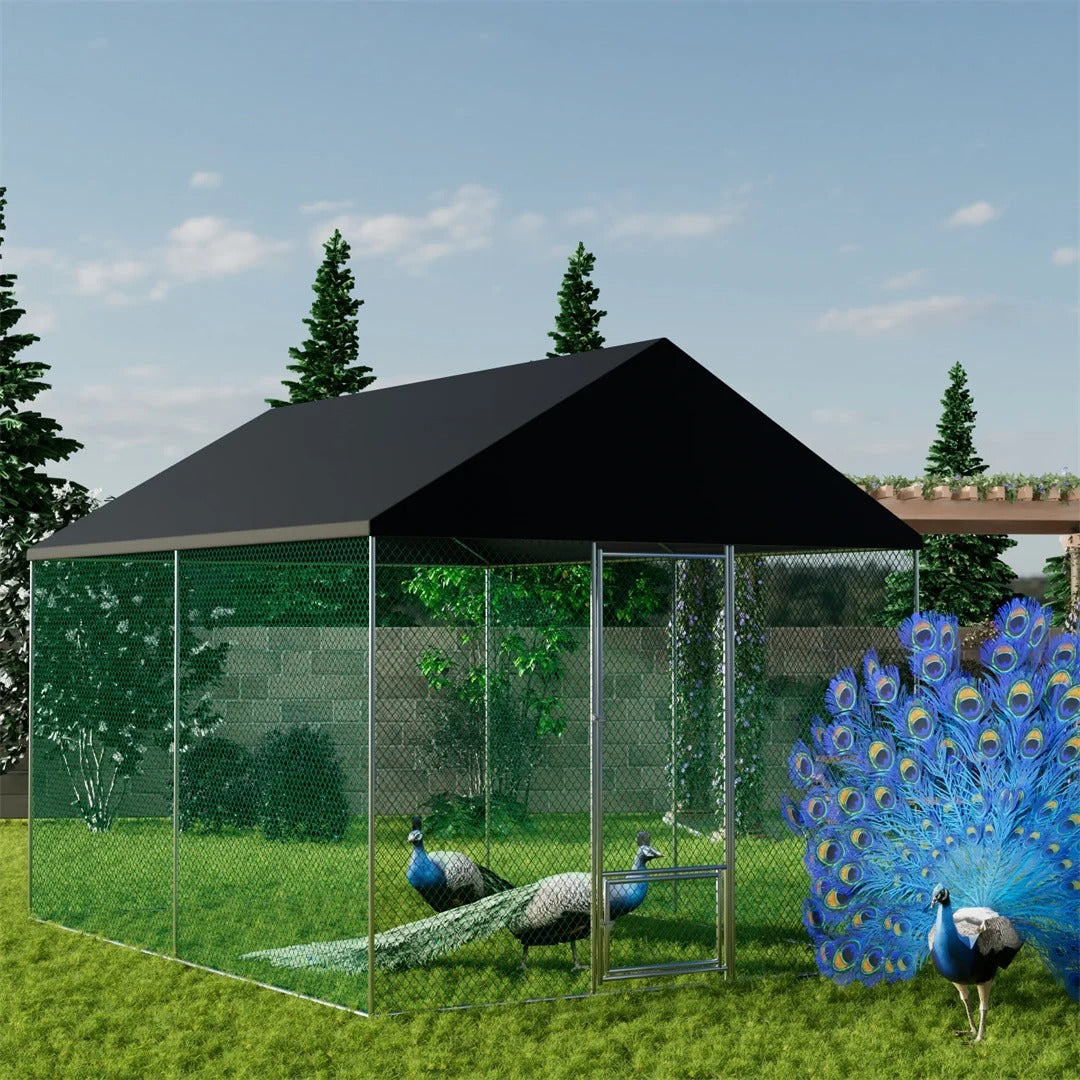
For keepers wanting a more substantial structure with a covered, walk-in run - particularly useful for those using a hybrid approach where the run serves as the birds' base between supervised free-range sessions - the large outdoor metal chicken coop with walk-in covered run is a well-built option designed for year-round UK use.
For smaller gardens or those keeping a compact flock, the outdoor extra tall chicken coop pen for UK gardens offers a practical footprint with enough internal height to make daily management comfortable.
If you are also thinking about how to secure the perimeter of a free-range area or create a defined foraging zone within your garden, the heavy duty iron garden fence panels offer a sturdy barrier option that can help define boundaries without permanent installation.
Factors to Weigh Up for Your Specific Situation
There is no formula that works for everyone, but these are the key questions worth asking before deciding on your approach.
How much outdoor space do you have? A small terraced garden with 20 square metres of usable space will be stripped bare quickly by a free-ranging flock. A larger plot with a dedicated area for the chickens changes the calculation considerably.
What is your local predator situation? In areas with high urban fox density, daytime predation is a real risk that needs to be factored in honestly.
How much time can you commit to active supervision? A hybrid approach requires someone to be present and attentive. If your household is out for most of the day, a secure run is more realistic.
Do you have a productive garden you want to protect? Vegetable beds and free-ranging chickens are largely incompatible without careful management.
How many birds are you keeping? A larger flock causes more garden impact and presents more logistical complexity in a free-range system.
For guidance on coop placement relative to boundaries and neighbours - which affects how you design your setup regardless of approach - our post on how far a chicken coop should be from property boundaries is worth reading before you finalise plans.
And if you are still in the early stages of thinking about costs and what the setup involves financially, our overview of the costs involved in setting up a chicken coop in the UK gives a realistic picture of what to budget for.
Final Thoughts
Free-range and coop-raised are not moral categories - they are practical approaches with different trade-offs. The right choice is the one that fits your garden, your time, your predator situation, and the number of birds you are keeping. A well-managed coop and run can provide excellent welfare outcomes. A poorly supervised free-range setup can result in stressed, predated birds and a ruined garden.
Whatever approach you decide on, the Paw Comfort team is here to help you think it through and find the right products for your setup. Get in touch with us here and we will give you straightforward, honest advice.
Final Verdict
Free-range access can support foraging and exploration, while a well-designed enclosed run offers more control over predators, disease and garden damage. The best setup for many UK homes combines secure housing and a generous enriched run with supervised or managed ranging where safe and permitted.
FAQ
What Do These Terms Actually Mean??
Before comparing the two approaches, it helps to be clear about what they mean in a backyard context.
What should you know about choosing the right coop and run for your approach?
Whichever approach you choose, the coop itself forms the foundation of the setup. A bird that free-ranges during the day still needs a secure, well-ventilated, and comfortable place to roost at night. And a bird in a run setup spends its entire life within that space, which makes the quality and size of the structure even more important.
What should you know about factors to weigh up for your specific situation?
There is no formula that works for everyone, but these are the key questions worth asking before deciding on your approach.
What should you know about final thoughts?
Free-range and coop-raised are not moral categories - they are practical approaches with different trade-offs. The right choice is the one that fits your garden, your time, your predator situation, and the number of birds you are keeping. A well-managed coop and run can provide excellent welfare outcomes. A poorly supervised free-range setup can result in…
How often should a chicken coop be checked?
Inspect birds, water, feed, litter, latches, mesh and weather protection every day, with deeper cleaning based on conditions and flock size.
Should a chicken coop be sealed in winter?
No. Keep the coop dry and weatherproof while maintaining high-level ventilation to control moisture and ammonia.