

How Long Can an Adult Dog Stay in a Crate?
Short Answer
For healthy crate-trained adult dogs, PDSA advises a maximum of three hours and notes that some dogs tolerate less. Puppies, senior dogs and dogs with medical or emotional needs require shorter periods. Treat published limits as ceilings, not targets, and use the dog’s behaviour and toilet needs to shorten them.
Key Takeaways
- Use crates and kennels as welfare-led management tools, never as punishment.
- Fit, ventilation, temperature, mobility and the dog’s behaviour matter more than product labels.
- Reward voluntary use and reduce difficulty at the first sign of distress.
- Normal access to water, toileting, movement, exercise and social contact must continue.
- Panic, sudden behaviour change or physical discomfort warrants veterinary or qualified behaviour support.
Quick Decision Checklist
| Check | What to look for |
|---|---|
| Purpose | A clear welfare-led use rather than punishment or convenience |
| Fit and setup | Enough room, safe materials, ventilation and a stable location |
| Behaviour | Loose body language, voluntary approach and normal eating |
| Daily needs | Water, toileting, movement, rest and social contact remain available |
| Warning signs | Pain, panic, repeated escape attempts or sudden behaviour change |
Why Crate Duration Matters
Before getting into specific timeframes, it is worth being clear about why this question matters at all.
A crate used well draws on a dog's natural instinct to seek a sheltered, enclosed space. A dog that chooses their crate voluntarily is expressing an instinct, not being confined. But that instinct has limits. Dogs are social animals that need physical movement, mental stimulation, and interaction with their environment and their people. Extended crating - for hours beyond what is appropriate for the individual dog - begins to work against welfare rather than supporting it.
Physical effects of excessive crating include muscle stiffness from lack of movement, discomfort from being unable to stretch or change position, and the distress of needing to eliminate but having no access to an appropriate area. Psychological effects can include heightened anxiety, frustration, and in some cases, the development of stereotypic behaviours associated with chronic stress.
The goal of understanding crate duration limits is not to restrict crate use unnecessarily. It is to ensure that crate use remains a welfare-positive tool rather than becoming harmful through overuse.
Crate Duration by Age
Puppies Under 10 Weeks
Very young puppies have minimal bladder control. At eight weeks, a puppy can typically hold for roughly one hour, and even this is an approximation that varies between individuals. Expecting a puppy this age to remain settled in a crate for longer than an hour during the day without a toilet break is setting both the puppy and the owner up for failure.
During the night, young puppies may sleep in a crate for longer stretches simply because they are genuinely asleep, but overnight periods for very young puppies often still require at least one toilet trip. Some owners find placing the crate near their bed during the early weeks allows them to hear the puppy waking and respond promptly.
Puppies 10 to 12 Weeks
The range extends slightly as the puppy grows, but daytime crating should still be limited to sessions of one to two hours maximum. Multiple short sessions across the day, interspersed with toilet breaks, feeding, supervised play, and social time, are far more appropriate than attempting to stretch one session.
This is also the period when crate introduction tends to be actively underway. Sessions should be short enough that the puppy does not become distressed, which both keeps the puppy comfortable and maintains the positive associations that make crate training effective in the longer term.
Puppies 3 to 6 Months
By three months, most puppies can manage two to three hours in a crate during the day, and by six months, up to three to four hours may be achievable for some puppies. These are upper limits, not targets. A puppy at the easier end of this range will show it clearly by settling calmly and not eliminating. A puppy pushed beyond their limit will eliminate in the crate, vocalise persistently, or show signs of distress that indicate the session has gone on too long.
Toilet training progress during this phase is closely tied to crate use. The instinct to avoid soiling the sleeping area is what makes the crate a useful toilet training aid. Keeping sessions within the puppy's capacity preserves this instinct; forcing sessions beyond it compromises it.
Our article on crate training puppies step by step, including how to manage the early weeks covers the practical timeline and common pitfalls in more detail for owners working through the puppy phase.
Adult Dogs (1 Year and Older)
For healthy adult dogs that are crate trained and comfortable in their crate, four hours is often cited as a reasonable upper limit for daytime crating. Some dogs manage closer to five hours, and some do better with shorter sessions. The individual dog's comfort, history, and routine all affect what is appropriate.
It is worth being clear about what "comfortable" means in this context. A dog that enters the crate willingly, settles without prolonged distress, and emerges calm and relaxed after a session is within appropriate limits. A dog that vocalises, attempts to escape, shows anxiety on entry, or emerges in a highly agitated state is either exceeding their personal limit or has not been adequately introduced to the crate.
For owners who work full-time and whose dogs would need to be crated for the full duration of a working day, a four-hour upper limit creates a practical challenge. Six, seven, or eight hours in a crate during the working day is not an appropriate arrangement for a dog's daily routine. Solutions that address this include dog walkers, doggy daycare, a trusted friend or neighbour checking in, or a combination of a crate and a safely enclosed room or playpen that gives the dog more space and the opportunity to move.
Senior Dogs
Older dogs often sleep more during the day, which might suggest they could manage longer crate periods. But senior dogs also frequently have joint discomfort, reduced bladder control, or health conditions that make extended crating more uncomfortable rather than more manageable.
A senior dog with arthritis, for example, may struggle significantly with the discomfort of remaining in one position for extended periods, even on comfortable bedding. The signs of discomfort in an older dog - reluctance to get up, stiffness on exiting, guarding behaviour around the crate entrance - are worth watching for and adjusting to.
The appropriate upper limit for a senior dog depends on their individual health and should be discussed with a vet, particularly if the dog has known conditions that affect mobility or continence.
Overnight Crating: Different Rules Apply
The question of overnight crating is genuinely different from daytime crating, and conflating the two creates unnecessary confusion.
During sleep, dogs generally need the toilet far less frequently than when awake and active. For adult dogs, sleeping through the night in a crate of seven to eight hours is typically manageable, provided they have been given adequate opportunity to toilet last thing before bed and first thing in the morning.
For puppies, overnight crating requires more management. Very young puppies often need at least one overnight toilet trip, particularly in the first few weeks at home. This typically reduces as the puppy grows, and by four to five months many puppies are sleeping through the night without needing to be taken out.
The distinction to hold onto is that overnight crating works because the dog is genuinely sleeping. Crating a dog for the same duration during the day, when they would normally be awake and active, is a very different proposition.
Signs That Crate Time Is Too Long
Knowing the general guidelines is useful, but reading your individual dog's responses to crate use is ultimately more informative. Dogs communicate their limits fairly clearly, though the signals are sometimes misread as stubbornness or bad behaviour rather than the genuine discomfort they represent.
Signs that crate duration has exceeded what is appropriate for your dog include:
Elimination inside the crate. A house-trained dog or a puppy that has previously held in the crate eliminating inside it is a clear signal that the session is beyond bladder capacity. This is information, not misbehaviour.
Persistent vocalisation throughout the session. Some settling sounds in the early stages of crate training are normal. A dog that vocalises consistently throughout a session without settling is indicating that the duration or the environment is not right.
Frantic behaviour on entry or exit. A dog that becomes very distressed when put into the crate, or that rushes out frantically and is highly dysregulated after a session, is likely spending too long inside. Well-managed crate use should produce a calm dog, not an agitated one.
Physical signs of stiffness or discomfort. Particularly relevant for older dogs or those with joint issues, stiffness on exiting the crate after an extended period suggests the duration and the sleeping surface need adjustment.
Destructive behaviour directed at the crate. Attempts to chew or scratch the way out of the crate are typically a stress response to overcrating or inadequate crate introduction.
Making Crate Time More Comfortable
Within appropriate time limits, the quality of the crate environment significantly affects how well a dog tolerates and benefits from time inside it.
Comfortable, supportive bedding is the starting point. A dog lying on an unsupported wire floor or inadequate surface will become physically uncomfortable far more quickly than one on properly cushioned bedding. For adult dogs, an orthopedic foam base provides the kind of consistent support that keeps joints comfortable during rest.
Our extra-large orthopedic dog bed with removable washable cover is sized to fit larger crate configurations and provides the foam support that helps dogs remain comfortable during extended rest. The removable cover makes post-accident cleaning straightforward, which is particularly practical during the puppy and toilet training phases.
A safe, appropriate chew or food-dispensing toy given at the start of a crate session provides mental occupation during the settling period and extends the positive association with being in the crate. This is particularly useful for dogs that are in the middle of the training process and still building their crate confidence.
Choosing the Right Crate for Extended Use
For crate use to remain comfortable over time, the crate itself needs to be appropriately sized, well-ventilated, and structurally suited to regular use.
A crate that is too small for the dog causes physical discomfort regardless of the duration. A dog that cannot stand, turn around, and lie in a natural position is not adequately accommodated. A crate that is too large during the toilet training phase can undermine training by giving a puppy space to eliminate away from their sleeping area.
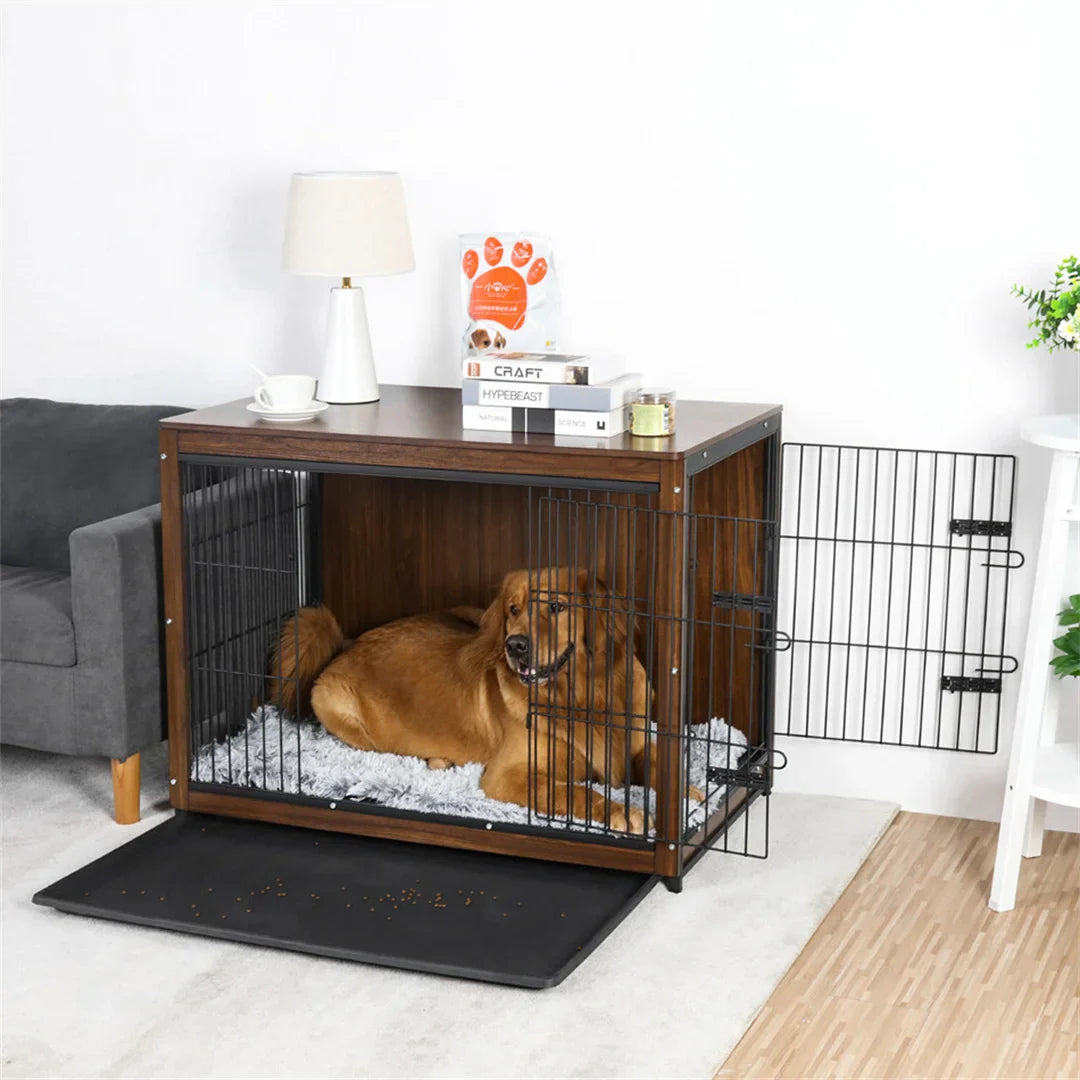
For owners wanting a crate that integrates well into the home environment and is suitable for regular, long-term use, our range of furniture-style and heavy-duty indoor dog crates includes options across multiple sizes, with solid construction suited to daily use. Our 2-in-1 large heavy-duty metal dog cage with removable divider provides the flexibility of an adjustable internal space via removable divider, alongside a cover to create the enclosed, settled environment that dogs find most comfortable during rest.
For owners interested in how crate use fits into the broader picture of a dog's daily routine and overall wellbeing, our guide on using the crate responsibly alongside walks, playtime, and structured rest provides a practical framework for the full day, not just crate sessions in isolation.
What to Do When Crating Exceeds Appropriate Limits
Not every owner's daily schedule allows for ideal crate management. Work commitments, family logistics, and other practical realities sometimes make the four-hour guideline difficult to maintain consistently.
The honest response to this situation is to look for solutions rather than simply exceeding the limit. A dog walker who visits mid-morning and mid-afternoon significantly reduces the duration of any single crating period. Doggy daycare on days with longer working hours removes the problem entirely for those days. A dog-safe room rather than a crate, with access to water and an appropriate indoor toilet option, provides more space and more welfare-friendly conditions for longer absences.
It is also worth considering whether the crate is genuinely the right long-term solution for your circumstances. A dog that is well-trained, house-safe, and non-destructive when left alone may not need a crate beyond the initial training phase. Our article on how and when to transition away from using a crate covers the gradual process of giving a dog more freedom as they demonstrate they are ready for it.
Final Verdict
For healthy crate-trained adult dogs, PDSA advises a maximum of three hours and notes that some dogs tolerate less. Puppies, senior dogs and dogs with medical or emotional needs require shorter periods. Treat published limits as ceilings, not targets, and use the dog’s behaviour and toilet needs to shorten them.
FAQ
Why Crate Duration Matters?
Before getting into specific timeframes, it is worth being clear about why this question matters at all.
What should you know about crate duration by age puppies under 10 weeks very young puppies have minimal bladder control. at eight weeks, a puppy can typically hold for roughly one hour, and even this is an approximation that varies between individuals. expecting a puppy this age to remain settled in a crate for longer than an hour during the day without a toilet break is setting both the puppy and the owner up for failure. during the night, young puppies may sleep in a crate for longer stretches simply because they are genuinely asleep, but overnight periods for very young puppies often still require at least one toilet trip. some owners find placing the crate near their bed during the early weeks allows them to hear the puppy waking and respond promptly. puppies 10 to 12 weeks the range extends slightly as the puppy grows, but daytime crating should still be limited to sessions of one to two hours maximum. multiple short sessions across the day, interspersed with toilet breaks, feeding, supervised play, and social time, are far more appropriate than attempting to stretch one session. this is also the period when crate introduction tends to be actively underway. sessions should be short enough that the puppy does not become distressed, which both keeps the puppy comfortable and maintains the positive associations that make crate training effective in the longer term. puppies 3 to 6 months by three months, most puppies can manage two to three hours in a crate during the day, and by six months, up to three to four hours may be achievable for some puppies. these are upper limits, not targets. a puppy at the easier end of this range will show it clearly by settling calmly and not eliminating. a puppy pushed beyond their limit will eliminate in the crate, vocalise persistently, or show signs of distress that indicate the session has gone on too long. toilet training progress during this phase is closely tied to crate use. the instinct to avoid soiling the sleeping area is what makes the crate a useful toilet training aid. keeping sessions within the puppy's capacity preserves this instinct; forcing sessions beyond it compromises it. our article on crate training puppies step by step, including how to manage the early weeks covers the practical timeline and common pitfalls in more detail for owners working through the puppy phase. adult dogs (1 year and older) for healthy adult dogs that are crate trained and comfortable in their crate, four hours is often cited as a reasonable upper limit for daytime crating. some dogs manage closer to five hours, and some do better with shorter sessions. the individual dog's comfort, history, and routine all affect what is appropriate. it is worth being clear about what "comfortable" means in this context. a dog that enters the crate willingly, settles without prolonged distress, and emerges calm and relaxed after a session is within appropriate limits. a dog that vocalises, attempts to escape, shows anxiety on entry, or emerges in a highly agitated state is either exceeding their personal limit or has not been adequately introduced to the crate. for owners who work full-time and whose dogs would need to be crated for the full duration of a working day, a four-hour upper limit creates a practical challenge. six, seven, or eight hours in a crate during the working day is not an appropriate arrangement for a dog's daily routine. solutions that address this include dog walkers, doggy daycare, a trusted friend or neighbour checking in, or a combination of a crate and a safely enclosed room or playpen that gives the dog more space and the opportunity to move. senior dogs older dogs often sleep more during the day, which might suggest they could manage longer crate periods. but senior dogs also frequently have joint discomfort, reduced bladder control, or health conditions that make extended crating more uncomfortable rather than more manageable. a senior dog with arthritis, for example, may struggle significantly with the discomfort of remaining in one position for extended periods, even on comfortable bedding. the signs of discomfort in an older dog - reluctance to get up, stiffness on exiting, guarding behaviour around the crate entrance - are worth watching for and adjusting to. the appropriate upper limit for a senior dog depends on their individual health and should be discussed with a vet, particularly if the dog has known conditions that affect mobility or continence. overnight crating: different rules apply?
The question of overnight crating is genuinely different from daytime crating, and conflating the two creates unnecessary confusion.
What should you know about signs that crate time is too long?
Knowing the general guidelines is useful, but reading your individual dog's responses to crate use is ultimately more informative. Dogs communicate their limits fairly clearly, though the signals are sometimes misread as stubbornness or bad behaviour rather than the genuine discomfort they represent.
What should you know about making crate time more comfortable?
Within appropriate time limits, the quality of the crate environment significantly affects how well a dog tolerates and benefits from time inside it.
What should you know about choosing the right crate for extended use?
For crate use to remain comfortable over time, the crate itself needs to be appropriately sized, well-ventilated, and structurally suited to regular use.
What to Do When Crating Exceeds Appropriate Limits?
Not every owner's daily schedule allows for ideal crate management. Work commitments, family logistics, and other practical realities sometimes make the four-hour guideline difficult to maintain consistently.