

Indoor vs Outdoor Dog Kennels: Which Is Better?
Short Answer
Indoor crates and outdoor kennels serve different purposes. An indoor crate can be an optional resting and training space; an outdoor kennel needs weather protection, drainage, ventilation, security and enough room for normal movement. Neither should isolate a dog from daily exercise and social contact.
Key Takeaways
- Use crates and kennels as welfare-led management tools, never as punishment.
- Fit, ventilation, temperature, mobility and the dog’s behaviour matter more than product labels.
- Reward voluntary use and reduce difficulty at the first sign of distress.
- Normal access to water, toileting, movement, exercise and social contact must continue.
- Panic, sudden behaviour change or physical discomfort warrants veterinary or qualified behaviour support.
Quick Decision Checklist
| Check | What to look for |
|---|---|
| Purpose | A clear welfare-led use rather than punishment or convenience |
| Fit and setup | Enough room, safe materials, ventilation and a stable location |
| Behaviour | Loose body language, voluntary approach and normal eating |
| Daily needs | Water, toileting, movement, rest and social contact remain available |
| Warning signs | Pain, panic, repeated escape attempts or sudden behaviour change |
Key takeaways
- Indoor and outdoor kennels serve different purposes and lifestyles
- The UK climate plays a major role in kennel suitability
- Dogs benefit most from kennels that support routine and supervision
- Comfort, safety, and interaction matter more than location alone
- Many households successfully use a mix of indoor and outdoor options
Understanding indoor dog kennels
Indoor dog kennels are designed to sit within the home and form part of your dog’s everyday environment. They are commonly used for sleeping, quiet time, crate training, and managing rest periods when the household is busy.
Because they are inside, these kennels allow dogs to remain close to their family. This proximity often helps dogs feel more secure, particularly those that are young, older, or sensitive to noise and change.
Benefits of indoor dog kennels
One of the biggest advantages of an indoor kennel is control. Temperature, lighting, and noise levels can all be managed more easily indoors, which is especially important in UK homes where weather can change quickly.
Indoor kennels also support training and routine. Dogs learn when it is time to rest and when it is time to engage with the household. For puppies and rescue dogs, this consistency can make a noticeable difference.
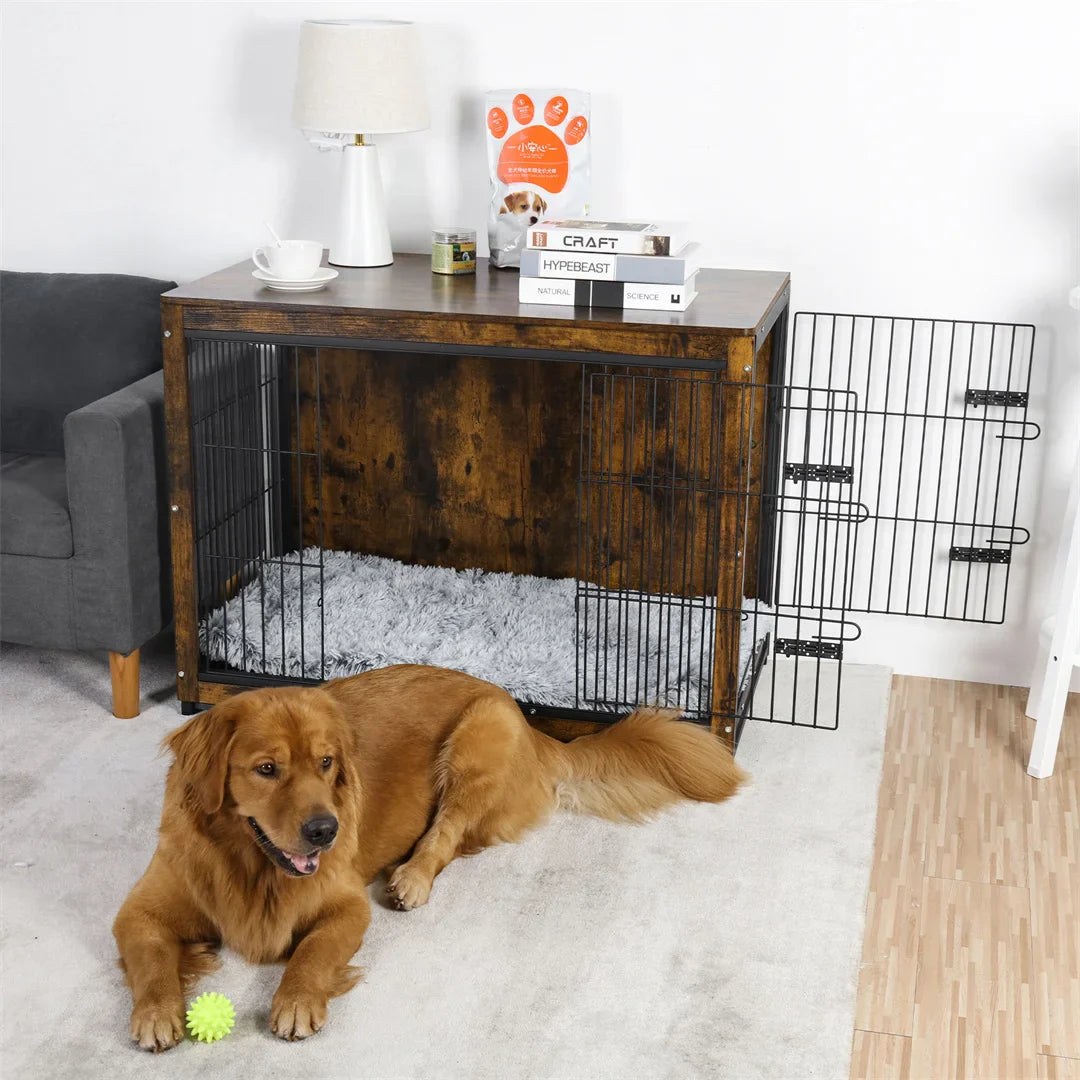
Key benefits include:
- Better protection from cold, heat, and damp conditions
- Easier supervision and interaction
- Stronger integration into daily family life
- Simpler cleaning and maintenance
For owners exploring indoor setups, our guide on when and how long dogs should stay in a crate provides helpful context around responsible kennel use.
Limitations of indoor dog kennels
Indoor kennels are not always the best fit for every home. Space constraints are common, particularly for large breeds or multi-dog households. A kennel that is too small or awkwardly placed can disrupt both comfort and household flow.
Noise and stimulation can also be an issue. Some dogs find busy living areas overwhelming and may struggle to settle if the kennel is positioned in a high traffic zone.
Choosing the right size and location is critical. A kennel should allow your dog to stand, turn, and lie down comfortably without feeling cramped.
If you are unsure about sizing, our article on choosing an appropriate crate size explains how to measure properly and avoid common mistakes.
What defines an outdoor dog kennel?
Outdoor dog kennels are designed for use in gardens, yards, or other outdoor spaces. They typically provide more room and may include a sheltered sleeping area alongside an open run.
These kennels are often chosen by owners with larger properties or dogs that enjoy spending time outdoors. When designed and used responsibly, outdoor kennels can be a useful addition to a dog’s daily routine.
Benefits of outdoor dog kennels
Outdoor kennels can offer dogs increased space and exposure to fresh air. For energetic breeds, this environment may feel more natural and stimulating, particularly during the day.
Additional benefits include:
- More room for movement
- Reduced impact on indoor space
- Suitable for short periods of outdoor rest
- Useful for managing muddy paws and shedding
Our dog kennel collection includes outdoor-capable options built with durability and weather resistance in mind for UK conditions.
Challenges of outdoor dog kennels
Outdoor kennels require careful planning and ongoing attention. Weather exposure is a major consideration, with rain, wind, and cold temperatures all posing potential risks if shelter and insulation are inadequate.
Dogs kept outdoors for long periods may also miss out on social interaction and mental stimulation. Without enrichment and regular engagement, boredom and frustration can develop.
Security is another concern. Outdoor kennels must be sturdy, escape resistant, and protected from other animals.
For many households, outdoor kennels work best as a supplementary space rather than a primary living area.
Indoor vs outdoor kennels for different dogs
Puppies
Puppies usually benefit from indoor kennels where training, supervision, and routine building are easier. Close proximity helps with house training and reassurance.
Senior dogs
Older dogs often need stable temperatures and easy access to their owners. Indoor kennels typically provide greater comfort and monitoring for age-related changes.
High energy breeds
Active dogs may enjoy time in outdoor kennels during the day, provided they also receive regular exercise and interaction. Outdoor space should never replace walks or play.
Dogs with anxiety
Dogs prone to anxiety often feel safer indoors where familiar sounds and smells are present. Gradual introduction is key.
If barking or distress is a concern, our article on reducing noise-related crate stress offers practical guidance.

Can indoor and outdoor kennels be combined?
Yes, many owners successfully use both. An indoor kennel may be used for sleeping and quiet time, while an outdoor kennel supports short, supervised periods during the day.
This approach allows flexibility without sacrificing comfort. The key is consistency and ensuring both spaces are associated with positive experiences.
Design and material considerations
Regardless of location, kennel quality matters. Materials should be durable, easy to clean, and appropriate for the environment.
Indoor kennels often focus on aesthetics and integration with home décor. Furniture-style designs are popular for blending function with appearance, such as the furniture-style dog crate side table.
Outdoor kennels prioritise strength and weather resistance. Larger enclosures like the heavy duty metal outdoor dog kennel and playpen can be suitable when combined with proper shelter and supervision.
How Paw Comfort supports informed choices
Our product range is selected to support comfort, safety, and long-term usability, whether you are setting up an indoor space, an outdoor enclosure, or both.
If you are unsure which option suits your dog, our team is always available to offer guidance.
Final thoughts
There is no universal answer to the indoor versus outdoor kennel question. The right choice depends on your dog, your home, and how you plan to use the kennel day to day.
A kennel should support rest, security, and wellbeing. When chosen thoughtfully and used responsibly, both indoor and outdoor kennels can have a positive place in a dog’s life.
If you would like personalised advice or help selecting the right kennel, we are here to help.
Contact the Paw Comfort team:
https://pawcomfort.co.uk/pages/contact
Final Verdict
Indoor crates and outdoor kennels serve different purposes. An indoor crate can be an optional resting and training space; an outdoor kennel needs weather protection, drainage, ventilation, security and enough room for normal movement. Neither should isolate a dog from daily exercise and social contact.
FAQ
What should you know about key takeaways indoor and outdoor kennels serve different purposes and lifestyles the uk climate plays a major role in kennel suitability dogs benefit most from kennels that support routine and supervision comfort, safety, and interaction matter more than location alone many households successfully use a mix of indoor and outdoor options understanding indoor dog kennels?
Indoor dog kennels are designed to sit within the home and form part of your dog’s everyday environment. They are commonly used for sleeping, quiet time, crate training, and managing rest periods when the household is busy.
What should you know about benefits of indoor dog kennels?
One of the biggest advantages of an indoor kennel is control. Temperature, lighting, and noise levels can all be managed more easily indoors, which is especially important in UK homes where weather can change quickly.
What should you know about limitations of indoor dog kennels?
Indoor kennels are not always the best fit for every home. Space constraints are common, particularly for large breeds or multi-dog households. A kennel that is too small or awkwardly placed can disrupt both comfort and household flow.
What defines an outdoor dog kennel??
Outdoor dog kennels are designed for use in gardens, yards, or other outdoor spaces. They typically provide more room and may include a sheltered sleeping area alongside an open run.
What should you know about benefits of outdoor dog kennels?
Outdoor kennels can offer dogs increased space and exposure to fresh air. For energetic breeds, this environment may feel more natural and stimulating, particularly during the day.
What should you know about challenges of outdoor dog kennels?
Outdoor kennels require careful planning and ongoing attention. Weather exposure is a major consideration, with rain, wind, and cold temperatures all posing potential risks if shelter and insulation are inadequate.