

How to Pet-Proof a Garden: Toxic Plant Safety
Short Answer
Pet-proof a garden by identifying every plant, removing or securely excluding known hazards, locking away fertilisers and pesticides, checking boundaries and providing shade and water. Plant toxicity varies by species and amount; contact a vet or poison service promptly after suspected ingestion.
Key Takeaways
- Adapt care to the individual animal’s age, health, behaviour and environment.
- Use reward-based training and introduce change gradually.
- Check product dimensions, materials and instructions rather than relying on labels.
- Monitor for pain, fear, appetite changes or other signs that need professional advice.
- Prioritise welfare and practical daily routines over quick fixes.
Quick Decision Checklist
| Check | What to look for |
|---|---|
| Purpose | A clear welfare-led use rather than punishment or convenience |
| Fit and setup | Enough room, safe materials, ventilation and a stable location |
| Behaviour | Loose body language, voluntary approach and normal eating |
| Daily needs | Water, toileting, movement, rest and social contact remain available |
| Warning signs | Pain, panic, repeated escape attempts or sudden behaviour change |
Why Garden Plant Safety Matters More Than Many Owners Realise
Plant poisoning in dogs and cats is more common than most owners expect. The RSPCA and the Animal Poison Line both report that plant ingestion is among the more frequent causes of pet poisoning calls in the UK. Part of the reason is that toxic plants are often beautiful, widely available, and commonly sold at garden centres with no indication of their potential harm to animals.
Dogs tend to chew and mouth things out of curiosity or boredom, which puts them at risk of ingesting plant material during garden exploration. Cats are more selective in what they consume, but they groom themselves thoroughly after outdoor contact, which means plant toxins that transfer to fur can be ingested later. Cats also have specific and serious vulnerabilities to certain plant families that dogs do not share to the same degree.
The level of toxicity varies considerably between plants. Some cause mild gastrointestinal upset. Others cause severe organ damage or can be life-threatening even in small quantities. Understanding the difference helps owners prioritise which risks to address first.
Common UK Garden Plants That Are Toxic to Dogs and Cats
The following plants are among the most significant concerns for UK pet owners. This is not an exhaustive list, and the RSPCA and Animal Poison Line both maintain more comprehensive resources. If you are unsure about a specific plant, checking with one of these resources or your vet is the sensible approach.
Foxglove (Digitalis purpurea)
Foxglove is a British garden classic and a common wildflower found across the UK countryside. Every part of the plant is toxic to both dogs and cats. It contains cardiac glycosides - compounds that affect heart rhythm and can cause serious cardiovascular effects even in small amounts. Symptoms of foxglove poisoning include vomiting, diarrhoea, lethargy, irregular heartbeat, and in severe cases, collapse.
Yew (Taxus baccata)
Yew is one of the most poisonous plants in the UK and is extremely toxic to dogs, cats, and most other animals. It is widely used in garden hedging and topiary. Almost all parts of the plant are toxic, including the leaves, bark, and seeds inside the berries. The berries themselves may attract curious dogs. Yew poisoning can cause rapid deterioration and is considered a veterinary emergency. If you have yew in your garden and pets with outdoor access, fencing off the plant entirely or removing it is worth serious consideration.
Rhododendron and Azalea
Both rhododendrons and azaleas are popular in UK gardens for their striking spring flowering. They contain grayanotoxins, which are harmful to dogs and cats. Ingestion can cause drooling, vomiting, low blood pressure, and in significant quantities, cardiac effects. Even small amounts of the leaves or flowers can cause noticeable symptoms.
Lily of the Valley (Convallaria majalis)
Lily of the valley is toxic to both dogs and cats, containing cardiac glycosides similar to those found in foxglove. It is a common spring garden plant and is also sometimes used in cut flower arrangements brought indoors. Symptoms include gastrointestinal upset, heart rhythm changes, and lethargy.
Lilies (Lilium and Hemerocallis species) - Critical Risk for Cats
True lilies and daylilies represent one of the most serious plant poisoning risks for cats in the UK. Even very small amounts of plant material from these species, including pollen, can cause acute kidney failure in cats. Vomiting is typically the first sign, followed by lethargy and loss of appetite. Without rapid veterinary treatment, lily poisoning in cats can be fatal.
It is worth noting that not all plants called "lily" carry the same risk. Peace lilies (Spathiphyllum), calla lilies, and lily of the valley are toxic but through different mechanisms. The species most dangerous to cats are the true lilies in the Lilium genus (including Easter lily, tiger lily, and Asiatic lilies) and daylilies (Hemerocallis). If you have cats with garden access or are in the habit of bringing cut flowers indoors, lilies of any kind are best avoided entirely.
Laburnum
Laburnum trees produce hanging yellow flowers that are attractive to look at but contain the alkaloid cytisine throughout the plant, which is toxic to dogs, cats, and humans. The seeds are particularly dangerous. Laburnum is not uncommon in older UK gardens. If you have a laburnum tree and pets with outdoor access, preventing access to fallen seeds and pods during the fruiting season is important.
Wisteria
Wisteria pods and seeds contain compounds that cause gastrointestinal symptoms in dogs and cats, including vomiting and diarrhoea. The attractive climbing plants are very common in UK gardens but worth being aware of, particularly in households with dogs that tend to chew or mouth plant material.
Autumn Crocus (Colchicum autumnale)
Autumn crocus is sometimes confused with spring crocus, which is less toxic, but autumn crocus is significantly more dangerous. It contains colchicine, which can cause severe gastrointestinal distress, organ damage, and in serious cases, bone marrow suppression. It flowers in autumn without leaves, making it look somewhat different from spring bulb plants.
Daffodils and Other Spring Bulbs
Daffodil bulbs, and to a lesser extent the flowers and leaves, are toxic to dogs and cats. Tulips, hyacinths, and alliums also carry varying degrees of toxicity, with the bulbs typically being the most concentrated source of harmful compounds. Dogs that dig are at particular risk of unearthing and chewing bulbs.
Garden Plants That Are Generally Considered Safer for Pets
Creating a pet-friendly garden does not mean giving up colour or variety. A range of plants are generally considered lower risk for dogs and cats, though individual pets may have sensitivities, and no plant should be considered completely risk-free in very large quantities.
Roses are generally considered non-toxic to dogs and cats, though thorns present a physical injury risk. Choosing thornless varieties or growing roses in areas where pets do not have direct access reduces this concern.
Sunflowers are generally considered safe for both dogs and cats and are a cheerful, easy-to-grow addition to a pet-friendly garden.
Snapdragons (Antirrhinum) are widely considered non-toxic to pets and work well as border plants.
Herbs including basil, rosemary, thyme, and dill are generally safe for dogs and cats and are practical as well as decorative. Note that some herbs, including oregano in larger quantities and chives or any allium-family plants, are not safe for pets.
Marigolds (Calendula officinalis) are generally considered non-toxic, though they may cause mild skin irritation in some pets. Note that French marigolds (Tagetes) can cause more significant irritation and should be approached with more caution.
Fuchsia is widely considered non-toxic to dogs and cats and is a popular choice for hanging baskets and borders in UK gardens.
If you are replanting or redesigning a garden with pets in mind, cross-referencing your planned plant list with the RSPCA's toxic plant database or the Animal Poison Line's resources is a sensible step before purchasing.
Practical Steps for Creating a Safer Garden Environment
Identifying which plants are present in your garden is the starting point, but physical management of the space matters just as much.
Fencing and Zoning
Creating clearly defined zones within a garden, with appropriate fencing or raised beds for plants that carry higher risk, is one of the most effective approaches. A dog or cat cannot come into contact with a plant they cannot reach.
For owners with dogs that spend significant time outdoors, a dedicated, safely fenced area of the garden gives them space to move and explore without access to the full planted border. Our article on setting up a safe outdoor space for pets in a smaller garden covers this kind of spatial planning in more detail.
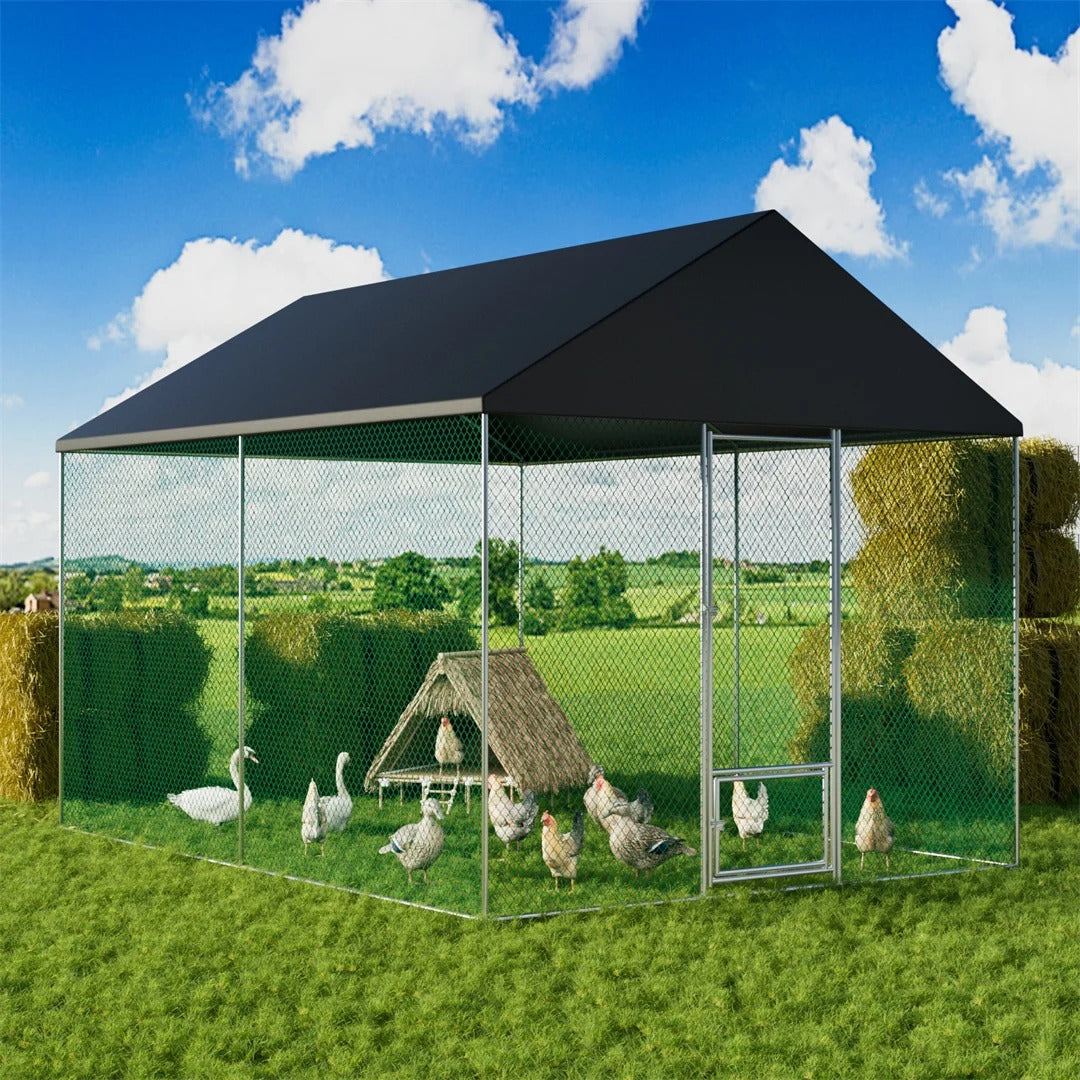
Outdoor dog pens and kennels can also provide a structured, safe outdoor space during periods when your garden is not fully supervised. Our heavy-duty metal dog kennel designed for outdoor use gives dogs a secure, spacious area outdoors without requiring you to fence off the entire garden. Our 8-panel heavy-duty metal dog playpen is a flexible option that can be configured to suit different garden layouts and is suitable for both indoor and outdoor use.
For those looking at broader outdoor containment options, our range of outdoor and garden-suitable dog kennels and enclosures offers a range of sizes and configurations suited to different garden setups.
Supervised Access
For cats particularly, who are harder to contain than dogs, supervised garden access during periods when you are present to monitor them is a practical middle ground. Cats allowed out only when an owner is nearby and can observe their behaviour are less likely to have prolonged access to toxic plants unnoticed.
Removing the Highest-Risk Plants
For plants that carry serious toxicity risk, particularly yew, lilies, and laburnum, removing them entirely from a garden with pet access is the most straightforward solution where that is practical. This is a more significant decision for established trees or hedging, but for smaller plants and bulbs, removal is often the simplest and most reliable risk reduction.
Checking for Neighbours' Plants
In UK gardens, particularly those with low or open fencing, overhanging branches, dropped berries, or seed dispersal from a neighbour's garden can introduce plant material from plants you do not grow yourself. Being aware of what is immediately adjacent to your garden, and managing boundary areas where material may land, is a worthwhile step.
Signs of Plant Poisoning in Dogs and Cats
Knowing what to look for helps owners act quickly when it matters. Common signs that a pet may have ingested something toxic include:
- Vomiting or diarrhoea, sometimes with blood
- Excessive drooling or pawing at the mouth
- Lethargy or sudden weakness
- Tremors or seizures
- Dilated pupils or unusual eye appearance
- Difficulty breathing
- Collapse
If you suspect your pet has ingested a toxic plant, contact your vet or the Animal Poison Line (24-hour service available in the UK) without delay. If possible, note the plant involved, the approximate quantity consumed, and the time of ingestion. Do not wait to see whether symptoms develop before seeking advice - with some plant toxins, early intervention is significantly more effective than treatment once symptoms are established.
A well-planned garden can be both beautiful and safe for pets. The effort of knowing which plants carry risk, making considered choices about what to grow, and managing access thoughtfully is repaid in the confidence that comes from having an outdoor space your dog or cat can genuinely enjoy without unnecessary hazard.
Final Verdict
Pet-proof a garden by identifying every plant, removing or securely excluding known hazards, locking away fertilisers and pesticides, checking boundaries and providing shade and water. Plant toxicity varies by species and amount; contact a vet or poison service promptly after suspected ingestion.
FAQ
Why Garden Plant Safety Matters More Than Many Owners Realise?
Plant poisoning in dogs and cats is more common than most owners expect. The RSPCA and the Animal Poison Line both report that plant ingestion is among the more frequent causes of pet poisoning calls in the UK. Part of the reason is that toxic plants are often beautiful, widely available, and commonly sold at garden centres with no indication of their…
What should you know about common uk garden plants that are toxic to dogs and cats?
The following plants are among the most significant concerns for UK pet owners. This is not an exhaustive list, and the RSPCA and Animal Poison Line both maintain more comprehensive resources. If you are unsure about a specific plant, checking with one of these resources or your vet is the sensible approach.
What should you know about foxglove (digitalis purpurea)?
Foxglove is a British garden classic and a common wildflower found across the UK countryside. Every part of the plant is toxic to both dogs and cats. It contains cardiac glycosides - compounds that affect heart rhythm and can cause serious cardiovascular effects even in small amounts. Symptoms of foxglove poisoning include vomiting, diarrhoea, lethargy,…
What should you know about yew (taxus baccata)?
Yew is one of the most poisonous plants in the UK and is extremely toxic to dogs, cats, and most other animals. It is widely used in garden hedging and topiary. Almost all parts of the plant are toxic, including the leaves, bark, and seeds inside the berries. The berries themselves may attract curious dogs. Yew poisoning can cause rapid deterioration and…
What should you know about rhododendron and azalea?
Both rhododendrons and azaleas are popular in UK gardens for their striking spring flowering. They contain grayanotoxins, which are harmful to dogs and cats. Ingestion can cause drooling, vomiting, low blood pressure, and in significant quantities, cardiac effects. Even small amounts of the leaves or flowers can cause noticeable symptoms.
What should you know about lily of the valley (convallaria majalis)?
Lily of the valley is toxic to both dogs and cats, containing cardiac glycosides similar to those found in foxglove. It is a common spring garden plant and is also sometimes used in cut flower arrangements brought indoors. Symptoms include gastrointestinal upset, heart rhythm changes, and lethargy.