

Dog Strollers for Senior Dogs: Benefits and Limits
Short Answer
A stroller can help a senior dog continue enjoying fresh air, scents and family outings when stamina is limited. It should supplement vet-approved gentle activity, not replace all walking, and any new pain, weakness or mobility loss needs veterinary assessment.
Key takeaways
- Dog strollers help senior pets stay active without putting strain on ageing joints.
- They provide a safe, comfortable way to enjoy fresh air and family routines.
- Strollers can reduce fatigue, pain flare ups, and recovery time after walks.
- Purpose designed dog strollers offer better support than improvised carriers.
- Choosing the right stroller improves mobility while protecting long term wellbeing.
A dog stroller is not about giving up on walks. It is about adapting them. When used thoughtfully, a stroller allows older dogs to stay connected to daily routines while protecting their comfort and health.
In this guide, we explain the practical benefits of using a dog stroller for senior pets, when it makes sense to introduce one, and how to choose an option that truly supports ageing dogs.
Understanding mobility changes in senior dogs
Ageing affects dogs differently depending on breed, size, and lifestyle. Some develop joint stiffness or reduced stamina. Others may experience balance issues or slower recovery after exercise. These changes do not mean dogs want to stop exploring. They simply need more support.
Senior dogs often benefit from shorter walks combined with periods of rest. A stroller allows them to walk part of the way, then ride comfortably when fatigue sets in. This balance helps maintain muscle tone without pushing joints beyond their limits.
Reducing joint strain without limiting enrichment
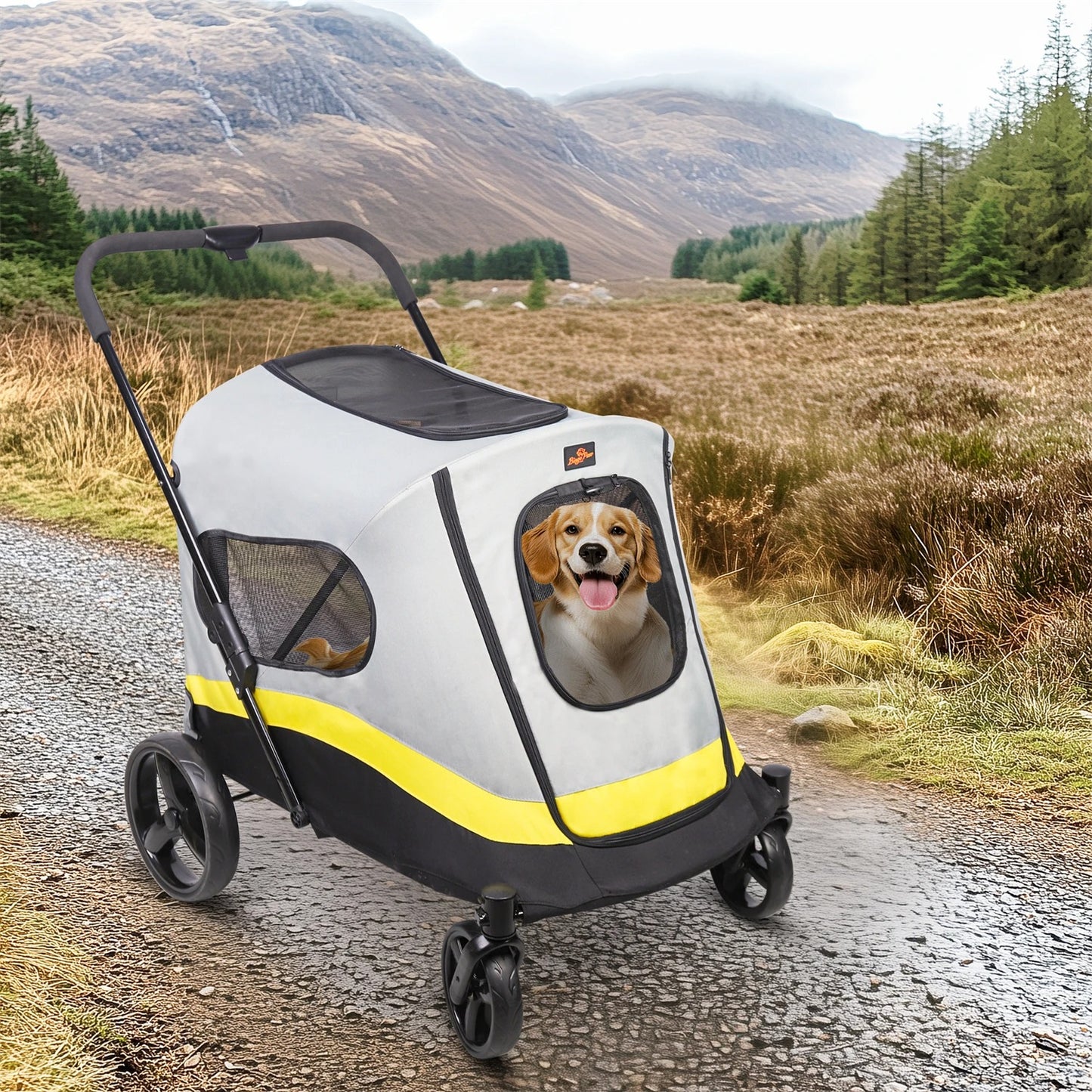
One of the biggest benefits of a dog stroller is joint protection. Hard surfaces, uneven pavements, and long distances can aggravate conditions such as arthritis or general joint wear. A stroller reduces impact while still allowing dogs to:
- Smell new environments
- Watch everyday activity
- Stay mentally stimulated
Mental enrichment remains important throughout a dog’s life. Being outside, even while resting, helps prevent boredom and isolation, especially for dogs who were previously very active.
By alternating between walking and riding, senior dogs can enjoy outings without the after effects of overexertion.
Supporting recovery and medical management
Many senior dogs are managing ongoing health conditions or recovering from procedures. While strollers are not medical devices, they can support veterinary advice by reducing unnecessary strain during recovery phases.
A stroller can be useful when:
- A dog is regaining strength after surgery
- Long rest periods are advised but gentle exposure to outdoor environments is encouraged
- Movement needs to be controlled and predictable
For dogs transitioning away from crate rest or limited mobility periods, combining short walks with stroller use can make outings less stressful. Our guide on crate training an older dog explains how controlled spaces and gradual routines help senior pets feel secure, which aligns closely with stroller use.
Maintaining routine and emotional wellbeing
Dogs thrive on routine. Senior dogs often find comfort in familiar patterns such as morning walks or trips to the park. Removing these routines entirely can lead to anxiety or low mood.
A dog stroller allows owners to maintain:
- Daily walking schedules
- Family outings and social exposure
- Consistent sensory experiences
From a behavioural perspective, this continuity matters. Even when physical ability declines, emotional needs remain.
Many Paw Comfort customers tell us that strollers help their dogs feel included rather than left behind. That sense of normality can be just as valuable as physical comfort.
Safer outings for dogs with limited stamina
Senior dogs may struggle with sudden changes in energy levels. What starts as an enthusiastic walk can quickly turn into fatigue. A stroller provides a built in safety option.
Instead of carrying a tired dog home or cutting outings short, owners can:
- Allow the dog to rest immediately
- Avoid overexertion
- Keep the experience calm and positive
This is especially helpful in urban areas where distances between rest points can be unpredictable.
Improved stability and balance
Balance issues are common in older dogs, particularly on uneven ground or crowded pavements. A well designed dog stroller offers stability that manual carrying cannot.
Purpose built strollers feature:
- Secure cabins
- Low centres of gravity
- Smooth rolling wheels
Compared to improvised carriers, strollers reduce the risk of slips or sudden movements that could cause discomfort or injury.
For owners who frequently travel by car, our article on fitting a dog and pram in the car safely provides useful guidance when planning outings with a stroller.
Choosing a stroller designed for senior dogs
Not all pet strollers are suitable for ageing dogs. Senior pets benefit most from designs that focus on comfort, stability, and ease of access.
When browsing options such as our dog pushchair and buggy collection or the wider pet stroller range, it is worth prioritising:
- Low entry points for easy access
- Smooth suspension to reduce vibration
- Adequate internal space for lying down comfortably
The right stroller should feel like a moving resting place rather than a tight carrier.
Practical examples of senior friendly stroller features
Different senior dogs require different features depending on size and temperament.
For larger or heavier dogs, models such as the one click folding pet stroller with shock absorbers help reduce impact while remaining practical for everyday use.
Owners with more than one senior dog may find options like the pet stroller for two dogs with divider and heavy wheels useful for shared outings without compromising individual comfort.
For dogs transitioning between walking and riding, thecompare this 2-in-1 convertible pet stroller, dog car seat with your requirements offers flexibility while maintaining stability.
Supporting owners as well as pets
Dog strollers do not just benefit pets. They also support owners who want to continue caring confidently for ageing dogs.
A stroller can:
- Reduce physical strain from lifting
- Make longer outings manageable
- Provide peace of mind during travel
This is particularly important for owners managing their own mobility concerns or caring for large senior dogs.
When a dog stroller may not be suitable
While dog strollers offer many benefits, they are not the right choice in every situation. Dogs who experience anxiety in enclosed spaces may need gradual introduction. Others may prefer very short outings only.
In these cases, pairing limited walks with supportive home routines can still help. Understanding how long dogs can comfortably rest in confined spaces is also important. Our article on how long a dog can be in a crate safely provides useful context when planning rest and movement balance for senior pets.
Introducing a stroller gradually
Senior dogs benefit from calm, predictable introductions. Start by:
- Allowing your dog to explore the stroller indoors
- Using familiar bedding to create comfort
- Taking short, slow trips at first
Over time, most dogs learn to associate the stroller with positive experiences rather than restriction.
A thoughtful approach to ageing with dignity
Ageing does not mean stopping. It means adapting with care. A dog stroller is one of many tools that can help senior pets continue enjoying life while respecting their changing bodies.
Need help choosing the right stroller?
If you are unsure which stroller suits your senior dog’s needs, our team is here to help. We can talk through size, lifestyle, and comfort considerations so you can make an informed decision.
Visit our contact page to speak with us directly and get personalised guidance for your pet.
Contact Paw Comfort
Frequently Asked Questions
How can a stroller help an older dog enjoy a walk?
It can provide rest periods so the dog can stay involved in an outing. Combine it with comfortable walking and sniffing opportunities suited to the dog's condition.
What features matter for a senior dog?
Look at entry height, stable handling, supportive bedding and enough cabin room to change position. Ask your vet about new pain, weakness or changes in stamina.