
-
Curved Foam Dog Stairs for Small Dogs – 3, 4 or 5 Steps
Regular price From £48.00 GBPRegular priceUnit price per£75.00 GBPSale price From £48.00 GBPSale -
Foam Dog Stairs & Ramp for Beds and Sofas – 3 or 4 Steps
Regular price From £45.00 GBPRegular priceUnit price per£70.00 GBPSale price From £45.00 GBPSale

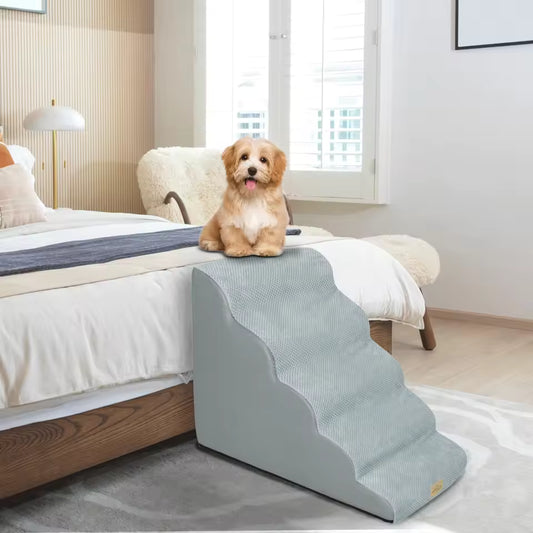


Choose dog stairs and pet ramps by measuring the floor-to-furniture height, the space available in front of the bed or sofa and your dog's comfortable step length. Our foam options provide a softer indoor route for puppies, small dogs and older pets that find repeated jumping difficult.
How to choose dog stairs for a bed or sofa
Start with the landing height. The top step should finish close to the mattress or cushion without leaving one large final jump. Then check the total floor length, width and each step rise. A gradual curved profile may suit a cautious small dog, while a longer stepped ramp uses more floor space but creates shallower transitions.
- 3 steps: suited to many lower sofas and chairs after measurement.
- 4 steps: adds height for taller sofas and some beds.
- 5 steps: provides the tallest option but needs more clear floor space.
Foam, grip and washable covers
High-density foam is lighter and softer than a rigid wooden staircase. Place it on a clean, dry and level floor, use the non-slip base as intended and allow vacuum-packed foam to expand fully before use. Removable covers simplify routine cleaning, but the foam core should remain dry.
Introduce the steps safely
Place the stairs squarely against stable furniture and introduce them during calm, supervised sessions. Never force a dog to climb. Stop if the dog slips, repeatedly hesitates or shows discomfort. Stairs are an access aid rather than a medical device; ask a vet or animal physiotherapist for advice if your dog has pain, weakness or balance problems.
Complete a comfortable resting setup
Pair the correct access height with a suitably sized dog bed, and measure every product in centimetres because size labels are not standard.
Dog stairs FAQs
Are dog stairs better than a ramp?
It depends on the dog, landing height and room layout. A ramp can offer a continuous slope; compact steps may fit a smaller space. Use the exact dimensions and your dog's movement, not the product name alone.
Can foam dog steps be used outdoors?
These foam designs are primarily for dry indoor use. Keep the foam and cover away from rain, standing water and persistent damp.