

Dog-Walking Etiquette in UK Parks and Cities
Short Answer
Good dog-walking etiquette means keeping the dog under control, following local lead and access rules, preventing unwanted approaches, picking up waste and giving people, livestock and other dogs space. Recall should be reliable before off-lead access.
Key Takeaways
- Good dog walking etiquette keeps both pets and people safe in shared spaces
- Control, awareness, and respect are more important than distance or duration
- Not all dogs or people are comfortable with interaction
- Consistency in behaviour makes walks calmer and more predictable
- Preparation before the walk often determines how smooth it will be
Walking your dog in a busy UK city or park is very different from walking in a quiet rural area. There are more people, more dogs, more distractions, and more situations that require quick decisions.
For many owners, the goal is simple. A calm, enjoyable walk where their dog feels relaxed and under control. Achieving that consistently comes down to understanding etiquette, not just training.

Why Dog Walking Etiquette Matters
Dog walking etiquette is not about strict rules. It is about creating a shared environment where everyone feels comfortable.
In busy areas, this includes:
- Other dog owners
- People who may not be comfortable around dogs
- Children, cyclists, and runners
A well-managed dog reduces the likelihood of stress, conflict, or accidents.
Keep Your Dog Under Control at All Times
Control does not always mean keeping your dog on a short lead, but it does mean being able to manage their behaviour quickly.
In busy environments:
- Use a lead where required or appropriate
- Avoid letting your dog approach others without permission
- Stay aware of your surroundings
Even friendly dogs can cause problems if they approach another dog or person unexpectedly.
For dogs that need more structured support, a secure setup at home can help reinforce calm behaviour. Our guide on creating a controlled and practical dog pen setup explains how boundaries influence behaviour outside the home as well.
Always Ask Before Letting Dogs Interact
One of the most common mistakes is assuming all dogs want to socialise.
In reality:
- Some dogs are anxious or in training
- Others may be recovering from injury
- Some owners simply prefer to avoid interaction
A simple pause and a quick question can prevent unnecessary stress.
Respect Personal Space in Public Areas
Busy parks and city paths often become crowded, especially during peak hours.
Good practice includes:
- Giving space when passing others
- Moving to the side when needed
- Avoiding blocking narrow paths
This is particularly important for dogs that are easily distracted or reactive.
Clean Up and Stay Prepared
Cleaning up after your dog is a basic expectation, but preparation goes beyond that.
Carry:
- Waste bags
- Water for your dog
- A towel or cloth if needed
Being prepared helps you manage unexpected situations without stress.
Manage Your Dog’s Energy Before the Walk
A dog that starts a walk already overstimulated is more likely to react to everything around them.
Before heading out:
- Allow a few minutes of calm time
- Avoid building excitement
- Use a consistent routine
As we explain in our guide on how structured routines support calmer dogs, behaviour often starts before the situation itself.
Use the Right Equipment for Safety and Comfort
The right setup can make a significant difference in how your dog behaves during a walk.
For travel to parks or city locations, a secure setup like this foldable waterproof dog car seat with safety support and storage helps your dog arrive calm rather than overstimulated.
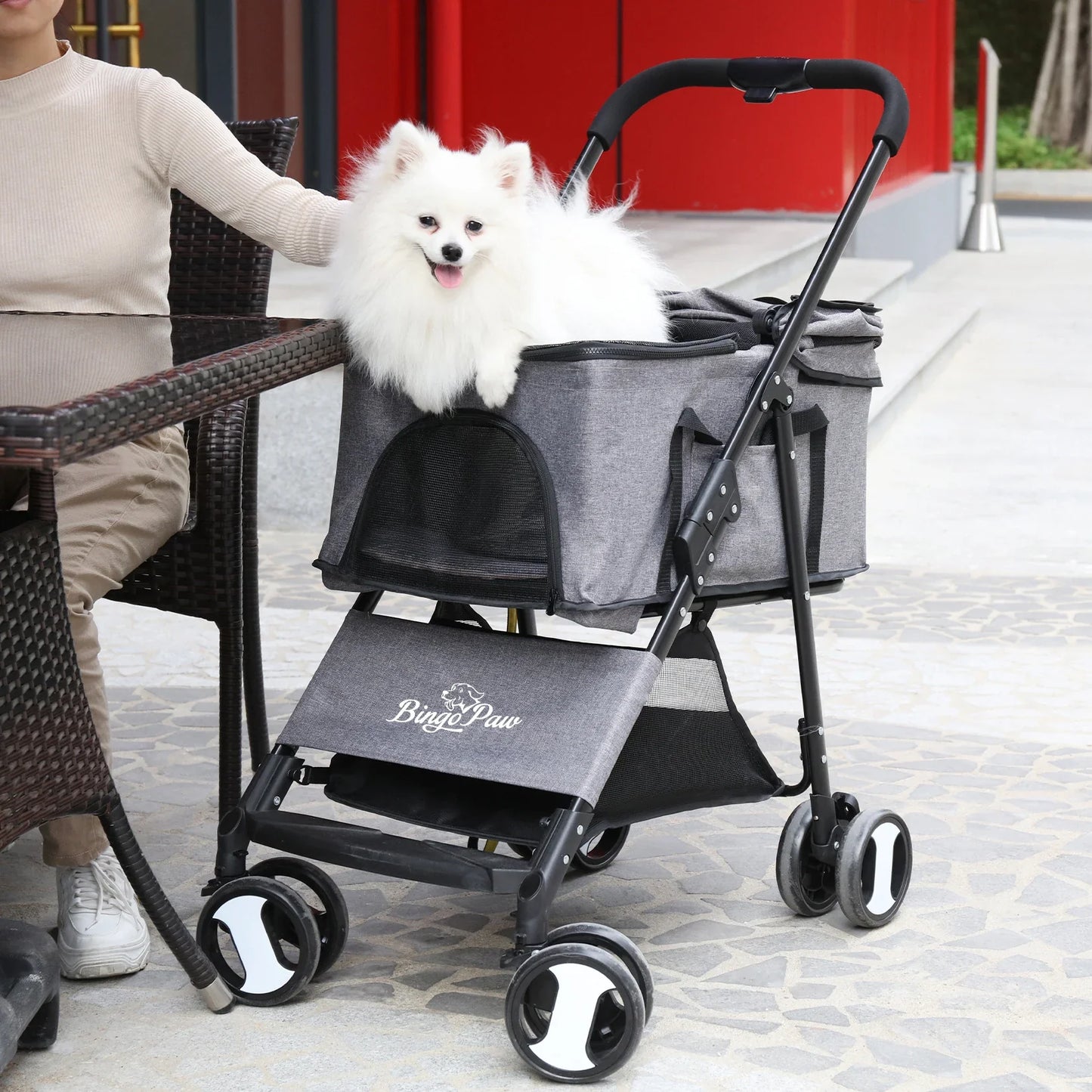
For smaller or older dogs, mobility support may also be useful. Options like this convertible dog stroller for comfortable and controlled outings allow pets to rest when needed while still being part of the experience.
We explore how travel setup affects behaviour in our guide on choosing safe and suitable car travel solutions for dogs.
Be Mindful of Lead and Off-Lead Areas
Not all parks allow off-lead walking, and even where they do, it is not always appropriate.
Consider:
- Your dog’s recall ability
- The number of people and dogs nearby
- The environment and potential distractions
Keeping your dog on a lead is often the safer choice in busy areas.
Understand That Not Everyone Likes Dogs
While many people enjoy seeing dogs, not everyone is comfortable around them.
Good etiquette includes:
- Preventing your dog from jumping up
- Keeping distance from people who appear unsure
- Respecting boundaries without needing explanation
This helps create a more positive experience for everyone.
Support Calm Behaviour After the Walk
What happens after the walk also matters.
A structured return home helps your dog:
- Settle more quickly
- Avoid restlessness
- Maintain a balanced routine
A comfortable resting space plays a role here. A product like this luxury cat bed with soft plush fabric and raised design can support calm behaviour for smaller pets or cats after activity.
For dogs, maintaining a consistent resting area is equally important. Options within our dog cage collection for secure indoor spaces can help reinforce structure at home.
Build Consistency Over Time
Good etiquette is not about perfection. It is about consistency.
Over time, your dog learns:
- What to expect during walks
- How to respond to distractions
- When to stay calm
Consistency makes walks easier, safer, and more enjoyable.
At Paw Comfort, We Support Everyday Routines
By combining preparation, structure, and the right environment, you can create a walking experience that feels calm and manageable, even in busy settings.
Speak to the Paw Comfort Team
If you would like help choosing products that support safer walks and a more structured routine, we are here to help.
👉 Contact our team here
Frequently Asked Questions
Should I let my dog approach another dog without asking?
Ask first and respect the answer. Give space to dogs on leads, working dogs and anyone who prefers not to interact.
What should I check before allowing off-lead exercise?
Check local rules and ensure the dog can return reliably around distractions. Use a lead where needed around roads, livestock and other sensitive areas.