

How to Pet-Proof Your Home for Crates, Kennels and Pens
Short Answer
Pet-proof the area around a crate, kennel or pen by removing cables, toxic substances, unstable furniture, heat sources and items that can be pulled through bars. Check flooring, gaps, latches and ventilation from the animal’s height before every unsupervised use.
Key Takeaways
- Use crates and kennels as welfare-led management tools, never as punishment.
- Fit, ventilation, temperature, mobility and the dog’s behaviour matter more than product labels.
- Reward voluntary use and reduce difficulty at the first sign of distress.
- Normal access to water, toileting, movement, exercise and social contact must continue.
- Panic, sudden behaviour change or physical discomfort warrants veterinary or qualified behaviour support.
Quick Decision Checklist
| Check | What to look for |
|---|---|
| Purpose | A clear welfare-led use rather than punishment or convenience |
| Fit and setup | Enough room, safe materials, ventilation and a stable location |
| Behaviour | Loose body language, voluntary approach and normal eating |
| Daily needs | Water, toileting, movement, rest and social contact remain available |
| Warning signs | Pain, panic, repeated escape attempts or sudden behaviour change |
Key Takeaways
- Pet-proofing should happen before you set up any crate, kennel, or pen, not after
- Placement is one of the most overlooked factors in whether a dog accepts their space
- Hazards around and inside the containment area matter as much as the product itself
- Flooring, cables, temperature, and household chemicals all need reviewing
- A well-placed, properly prepared setup supports training outcomes and reduces anxiety
Most people think about pet-proofing when they bring a new dog or puppy home. They move a few things off the floor, tuck away some cables, and call it done. What gets overlooked more often is the specific preparation that needs to happen around a crate, kennel, or pen before it is ever used.
This guide walks through the practical steps of pet-proofing your home specifically in preparation for setting up a crate, kennel, or pen.
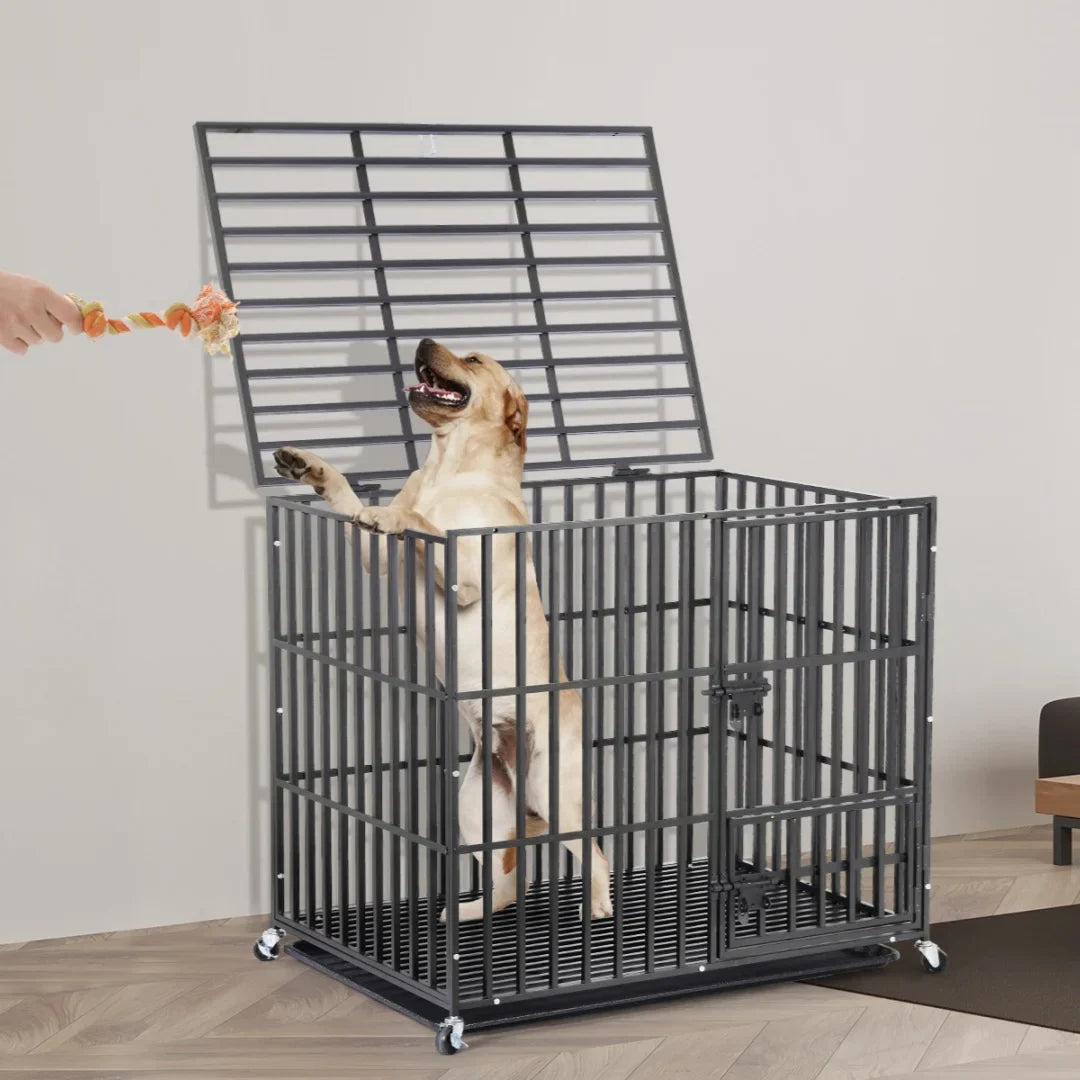
Why the Setup Environment Matters as Much as the Product
A dog that refuses to settle in a crate is not always refusing the crate itself. Sometimes the issue is where it has been placed, what is happening around it, or what the dog can see, smell, and hear from inside it.
Dogs are sensitive to their immediate environment in ways that are easy to underestimate. A crate positioned next to a radiator may become uncomfortably warm. One placed near a front door means constant noise and movement that disrupts rest. A pen set up on a slippery floor creates instability every time a dog shifts position.
Before any containment product goes into a room, it is worth thinking through these factors rather than finding them out through trial and error.
Step One: Choose the Right Location in Your Home
Location is the starting point for everything else. A poorly chosen spot undermines even a well-made crate.
Avoid High-Traffic and High-Noise Areas
Dogs in crates or pens need to be able to rest without constant disturbance. Hallways, areas next to washing machines, and spots directly beside televisions are generally poor choices. The dog can hear and feel activity but cannot move to respond to it, which can build frustration over time.
A quieter corner of a living room or a low-traffic bedroom tends to work better. The dog should still feel connected to the household, not isolated, but the immediate environment should be calm enough to support rest.
Consider Natural Light and Temperature
Direct sunlight through a window can heat a crate significantly during the day, particularly in conservatories or south-facing rooms. This is a real concern for dogs left in crates during warmer periods, even in the UK's milder climate.
The opposite applies in winter. Stone or tiled floors near external walls can become cold, which makes the crate floor significantly cooler than the surrounding room. Positioning a crate or kennel away from draughts and external walls helps manage temperature more consistently.
Our guide on keeping dogs safe from overheating in crates during warmer months covers temperature management in more detail, including practical steps for UK homes.
Give the Space Enough Room
A crate or kennel shoved into a tight corner is difficult to clean, difficult to access, and often restricts airflow around the unit. Leaving a reasonable gap on at least two sides makes daily maintenance easier and helps with ventilation.
For pens and playpens, ensure the area is large enough that the dog is not immediately against walls or furniture when the pen is set up. Dogs inside a pen should be able to move comfortably without constantly brushing against barriers.
Step Two: Remove Hazards Within Reach
Once you know where the crate or pen is going, work outward from that point and assess what a dog could access from inside or immediately around it.
Cables and Electrical Items
A dog in a crate cannot reach most cables, but a dog in a pen or playpen often can. Cables running near pen panels are a chewing hazard that owners sometimes do not notice until the damage is done. Securing cables with cable management clips or routing them behind furniture before the pen goes up is the simplest fix.
This also applies to power strips, phone chargers, and anything plugged in at floor level near the setup area.
Cleaning Products and Chemicals
Household cleaning products stored in low cupboards near the setup area need to be relocated or secured with childproof locks. Dogs in pens can sometimes nudge cupboard doors open, and the products inside can cause serious harm if accessed.
This applies equally to any products stored under kitchen sinks or in utility areas where pens are sometimes placed.
Small Objects on the Floor
Before setting up a pen or playpen, do a floor-level check of the entire area. Small objects including rubber bands, coins, hair ties, children's toys, and food items dropped under furniture all become swallowing hazards. A dog in a pen may not have access to the rest of the room, but anything that can be reached through the panels or is already inside the setup area is fair game.
Step Three: Prepare the Floor Surface
Flooring inside and around the containment area affects both safety and comfort.
Non-Slip Surfaces
Hard flooring such as laminate, tiles, or polished wood can be slippery, particularly for puppies and older dogs. A dog that slips when standing or turning inside a crate or pen can develop anxiety around that space. Adding a non-slip mat under or inside the setup prevents this.
For crates specifically, a mat under the entire unit also protects flooring from scratching and keeps the crate more stable during movement.
Floor Cleanliness
Before setting up, clean the floor area thoroughly, including underneath where the unit will sit. Pet hair, dust, and debris accumulate quickly under furniture and can make a crate or pen base difficult to maintain if not addressed before installation.
Step Four: Assess What the Dog Can See and Hear
This one sounds straightforward but gets overlooked. A dog inside a crate or pen is in a fixed position and cannot choose to move away from what is bothering them.
Other Pets
If you have cats, other dogs, or small animals, consider whether they have access to the area where a crate or pen is being set up. A cat that sits on top of a crate and stares inside can be a significant stress source for the dog within. A pen that other pets can press against or peer into may prevent the dog inside from ever feeling settled.
Introductions should be gradual and managed rather than left to proximity alone.
Windows and External Views
A crate or pen positioned directly in front of a window gives dogs a constant view of the street, other animals, and passing movement. For some dogs this is stimulating in a way that prevents rest. For others it can trigger reactive behaviour. Positioning the setup so the dog has the option to look away, or using a partial cover on one side, helps manage this.
Step Five: Choose Products That Fit the Space
Pet-proofing also means making sure the containment product itself is appropriate for the space it is going into.
Crate and Kennel Sizing
A crate that is too large for the space it sits in creates problems practically, not just aesthetically. It blocks movement around the room, can interfere with doors, and makes the den effect less effective for the dog inside. Measure the space before choosing a size and leave enough clearance around the unit.
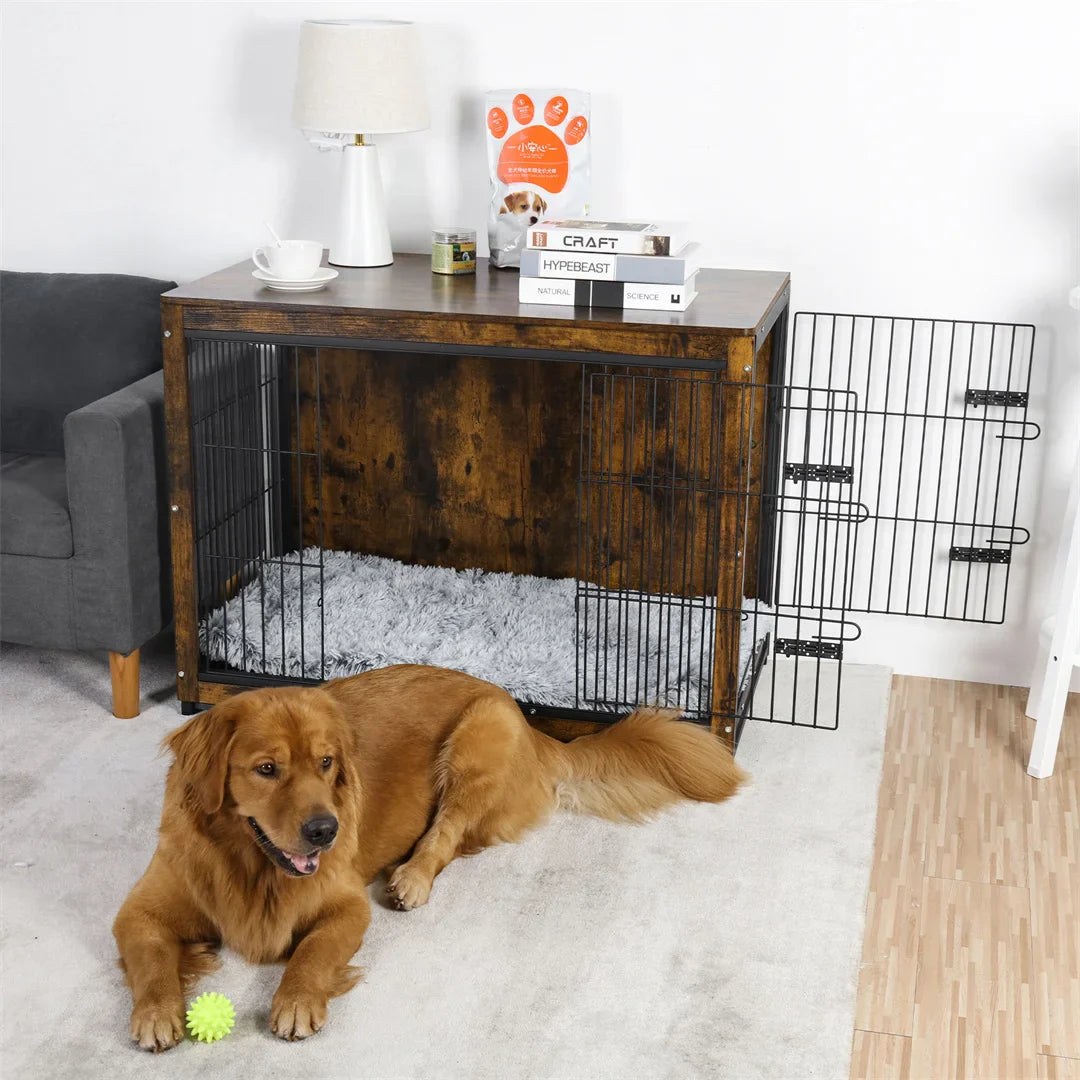
Our heavy duty furniture-style dog cage with four doors and divider is designed to work within home environments rather than against them, with a layout that fits alongside existing furniture more naturally than standard wire crates.
For homes with more than one dog, a well-placed 2-in-1 large metal dog cage with removable divider for two dogs can simplify the setup significantly, reducing the number of separate units needed in the same space.
Pen and Playpen Configuration
Pens are more flexible than crates because they can be shaped around the room. This is an advantage, but it also means the configuration needs to be thought through. A pen that blocks a doorway, sits against a gas heater, or creates a pinch point in a narrow room is less safe than one that has been positioned with the room layout in mind.
Our 8-panel heavy duty metal dog playpen with waterproof pad allows for flexible configuration, which is useful when working around existing furniture or fitting an awkward room shape.
You can browse our full range of indoor dog pens and playpens to find options suited to different room sizes and household setups.
Step Six: Think About Outdoor Kennels Separately
If you are setting up a kennel outdoors rather than inside, pet-proofing takes a different shape.
Ground Surface and Drainage
Muddy or waterlogged ground beneath an outdoor kennel creates hygiene problems and makes the kennel floor cold and damp. A firm, level base with adequate drainage is worth prioritising before installation. Gravel, compacted hardcore, or a concrete base are common options depending on budget and permanence.
Perimeter Security
An outdoor kennel area needs to be assessed for what a dog could access beyond the immediate structure. Gaps in fencing, garden chemicals stored nearby, ponds or water features, and toxic plants within reach are all worth addressing before the kennel is used.
Our article on outdoor kennel flooring options suited to the UK climate covers ground preparation in more practical detail for outdoor setups.
Building a Setup That Supports Your Dog From Day One
The work that goes into preparing the environment before a crate, kennel, or pen is introduced pays off in the training period that follows. Dogs that are placed into a well-considered setup tend to adjust more quickly and experience less anxiety than those introduced to a space that has not been properly prepared.
If you are setting up for the first time or reviewing an existing arrangement that is not working as well as you hoped, it is often worth starting with the environment before assuming the product is the issue.
For guidance on which setup suits your home and your dog, our team is happy to help.
Useful reading before you set up: our article on what makes a crate feel like a comfortable, positive space for dogs covers the training side of the equation in practical terms.
Talk to the Paw Comfort Team
If you have questions about choosing the right crate, kennel, or pen for your home, or you want advice on setting up your space before your new dog arrives, we are here to help.
Get in touch with Paw Comfort
Final Verdict
Pet-proof the area around a crate, kennel or pen by removing cables, toxic substances, unstable furniture, heat sources and items that can be pulled through bars. Check flooring, gaps, latches and ventilation from the animal’s height before every unsupervised use.
FAQ
What should you know about key takeaways pet-proofing should happen before you set up any crate, kennel, or pen, not after placement is one of the most overlooked factors in whether a dog accepts their space hazards around and inside the containment area matter as much as the product itself flooring, cables, temperature, and household chemicals all need reviewing a well-placed, properly prepared setup supports training outcomes and reduces anxiety most people think about pet-proofing when they bring a new dog or puppy home. they move a few things off the floor, tuck away some cables, and call it done. what gets overlooked more often is the specific preparation that needs to happen around a crate, kennel, or pen before it is ever used. this guide walks through the practical steps of pet-proofing your home specifically in preparation for setting up a crate, kennel, or pen. why the setup environment matters as much as the product?
A dog that refuses to settle in a crate is not always refusing the crate itself. Sometimes the issue is where it has been placed, what is happening around it, or what the dog can see, smell, and hear from inside it.
What should you know about step one: choose the right location in your home?
Location is the starting point for everything else. A poorly chosen spot undermines even a well-made crate.
What should you know about avoid high-traffic and high-noise areas?
Dogs in crates or pens need to be able to rest without constant disturbance. Hallways, areas next to washing machines, and spots directly beside televisions are generally poor choices. The dog can hear and feel activity but cannot move to respond to it, which can build frustration over time.
What should you know about consider natural light and temperature?
Direct sunlight through a window can heat a crate significantly during the day, particularly in conservatories or south-facing rooms. This is a real concern for dogs left in crates during warmer periods, even in the UK's milder climate.
What should you know about give the space enough room?
A crate or kennel shoved into a tight corner is difficult to clean, difficult to access, and often restricts airflow around the unit. Leaving a reasonable gap on at least two sides makes daily maintenance easier and helps with ventilation.
What should you know about step two: remove hazards within reach?
Once you know where the crate or pen is going, work outward from that point and assess what a dog could access from inside or immediately around it.