

How to Prevent Overheating in Dog Crates During UK Summers
Short Answer
Prevent crate overheating by moving the crate out of direct sun, maintaining airflow, providing water and monitoring the room temperature and the dog. Covers can trap heat. Never leave a dog in a hot vehicle, conservatory or poorly ventilated crate, and seek urgent veterinary help for suspected heatstroke.
Key Takeaways
- Use crates and kennels as welfare-led management tools, never as punishment.
- Fit, ventilation, temperature, mobility and the dog’s behaviour matter more than product labels.
- Reward voluntary use and reduce difficulty at the first sign of distress.
- Normal access to water, toileting, movement, exercise and social contact must continue.
- Panic, sudden behaviour change or physical discomfort warrants veterinary or qualified behaviour support.
Quick Decision Checklist
| Check | What to look for |
|---|---|
| Purpose | A clear welfare-led use rather than punishment or convenience |
| Fit and setup | Enough room, safe materials, ventilation and a stable location |
| Behaviour | Loose body language, voluntary approach and normal eating |
| Daily needs | Water, toileting, movement, rest and social contact remain available |
| Warning signs | Pain, panic, repeated escape attempts or sudden behaviour change |
Key takeaways
- Dog crates can trap heat if airflow and placement are not adjusted
- Bedding choice plays a major role in temperature regulation
- Crate location inside the home matters as much as the crate itself
- Summer crate routines often need small but important changes
- Overheating risks can usually be reduced with simple adjustments
Why crates can overheat in warm weather
Crates are enclosed by design. While this helps dogs feel secure, it can also limit air movement. When temperatures rise, heat can build up quickly inside a crate, particularly if it is placed near windows, appliances, or in poorly ventilated rooms.
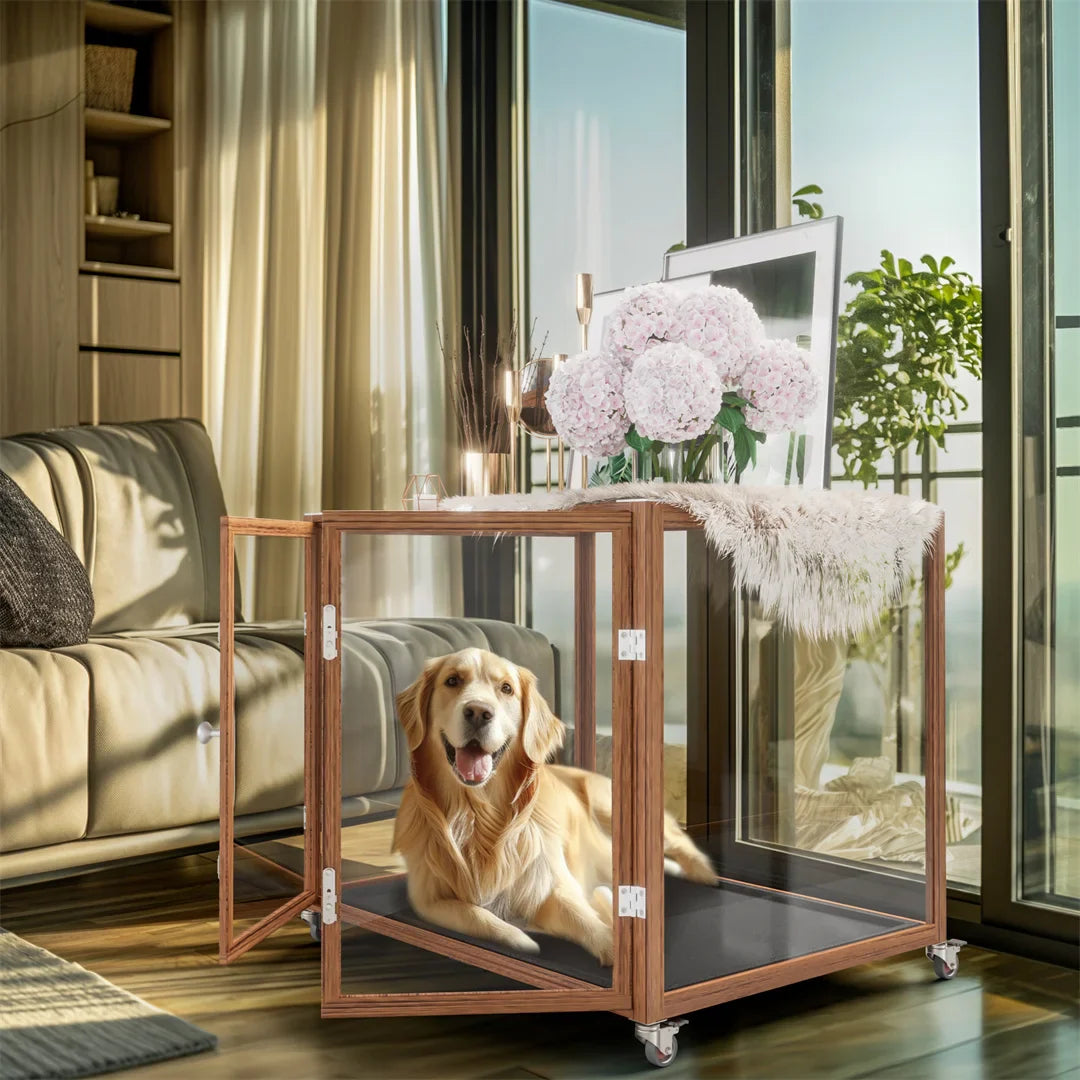
Metal crates can absorb warmth, while fabric or covered crates may restrict airflow. Even wooden crate furniture can retain heat if positioned incorrectly.
Dogs regulate body temperature primarily through panting rather than sweating. In confined, warm spaces, this process becomes less effective, which is why crate management is so important during summer.
Recognising early signs of overheating
Before discussing prevention, it is important to recognise early warning signs. Dogs experiencing heat stress may show:
- Excessive panting or drooling
- Restlessness or difficulty settling
- Seeking cooler surfaces
- Lethargy or reduced responsiveness
If you notice these signs, your dog should be moved to a cooler area immediately and allowed to rest with access to fresh water. This article focuses on prevention, which is always the safer approach.
Choosing the right crate for summer use
Not all crates behave the same in warm conditions. Ventilation and material matter.
Wire crates generally allow better airflow than fully enclosed designs, making them a popular choice in summer. If you already use a solid-sided crate, additional steps such as increased room ventilation become more important.
For owners reviewing their setup, our dog crate collection includes options designed with airflow and everyday comfort in mind, suitable for year-round use when positioned correctly.
Crate size is also relevant. A crate that is too small limits movement and airflow, while one that is appropriately sized allows dogs to shift position to find cooler spots.
Rethinking crate placement in the home
Where a crate sits inside your home can significantly affect temperature. During summer, small changes in placement often make a noticeable difference.
Avoid placing crates:
- Near direct sunlight from windows
- Next to radiators or heat-producing appliances
- In rooms that trap heat during the day
Instead, choose a shaded, well-ventilated area with consistent airflow. Rooms with tiled or wooden flooring tend to stay cooler than carpeted spaces.
Some owners rotate crate locations seasonally, which can be a practical solution if your home layout allows it.
Adjusting bedding for warmer temperatures
Bedding choice is one of the most important factors in summer crate comfort. Thick, plush bedding that feels cosy in winter can trap heat in warmer months.
During summer, consider lighter, breathable materials that allow air circulation. Raised or mesh-style surfaces can help heat dissipate more effectively than dense foam.
For dogs that still need joint support, lighter orthopaedic options with breathable covers can offer balance. Our dog bed collection includes styles suitable for crate use that prioritise comfort without excessive heat retention.
Some dogs prefer resting directly on cooler crate trays during hot weather. This is normal, as long as the surface is safe and smooth.
Using cooling products responsibly
Cooling accessories can support temperature regulation when used correctly. Cooling mats and elevated beds allow dogs to lie on surfaces that do not retain body heat.
An example is the elevated dog lounger bed with detachable bolster, which promotes airflow underneath and can be used near or inside larger crate setups where appropriate.
Cooling mats should be placed flat and checked regularly for wear. They should never restrict movement or ventilation within the crate.
Always observe how your dog responds. Not all dogs enjoy cooling products immediately, and gradual introduction is often helpful.
Managing crate covers and airflow
Crate covers are useful for reducing stimulation, but they require extra attention during summer. Fully covering a crate can significantly restrict airflow and increase internal temperature.
If you use a cover:
- Leave multiple sides uncovered
- Use lightweight, breathable fabrics
- Remove covers entirely during the hottest parts of the day
Air circulation is essential. A crate should never feel stuffy or warm to the touch inside.
Fans can help circulate air in the room, but they should not blow directly into the crate, as this can cause discomfort.
Hydration and crate time management
Access to water is particularly important in warm weather. If your dog spends time in a crate during the day, ensure fresh water is always available unless advised otherwise by a professional.
Clip-on bowls that attach securely to crate panels help reduce spills while maintaining access.
Crate duration should also be reviewed in summer. Dogs may need more frequent breaks, shorter crate periods, or alternative rest areas during peak heat.
Our article on safe crate use and daily limits explains how to adjust routines responsibly.
Night-time crate comfort in warm weather
UK summer nights can remain warm, especially in well-insulated homes. Dogs that usually sleep comfortably in crates may struggle to settle if temperatures stay high.
Night-time adjustments may include:
- Moving the crate to a cooler room
- Removing covers completely
- Using lighter bedding or no bedding
- Increasing ventilation overnight
Some dogs benefit from sleeping closer to floor level where temperatures are cooler.
If night-time rest becomes unsettled, our guide on supporting calm crate sleep offers practical suggestions that can be adapted for warmer conditions.
When crate furniture needs extra attention
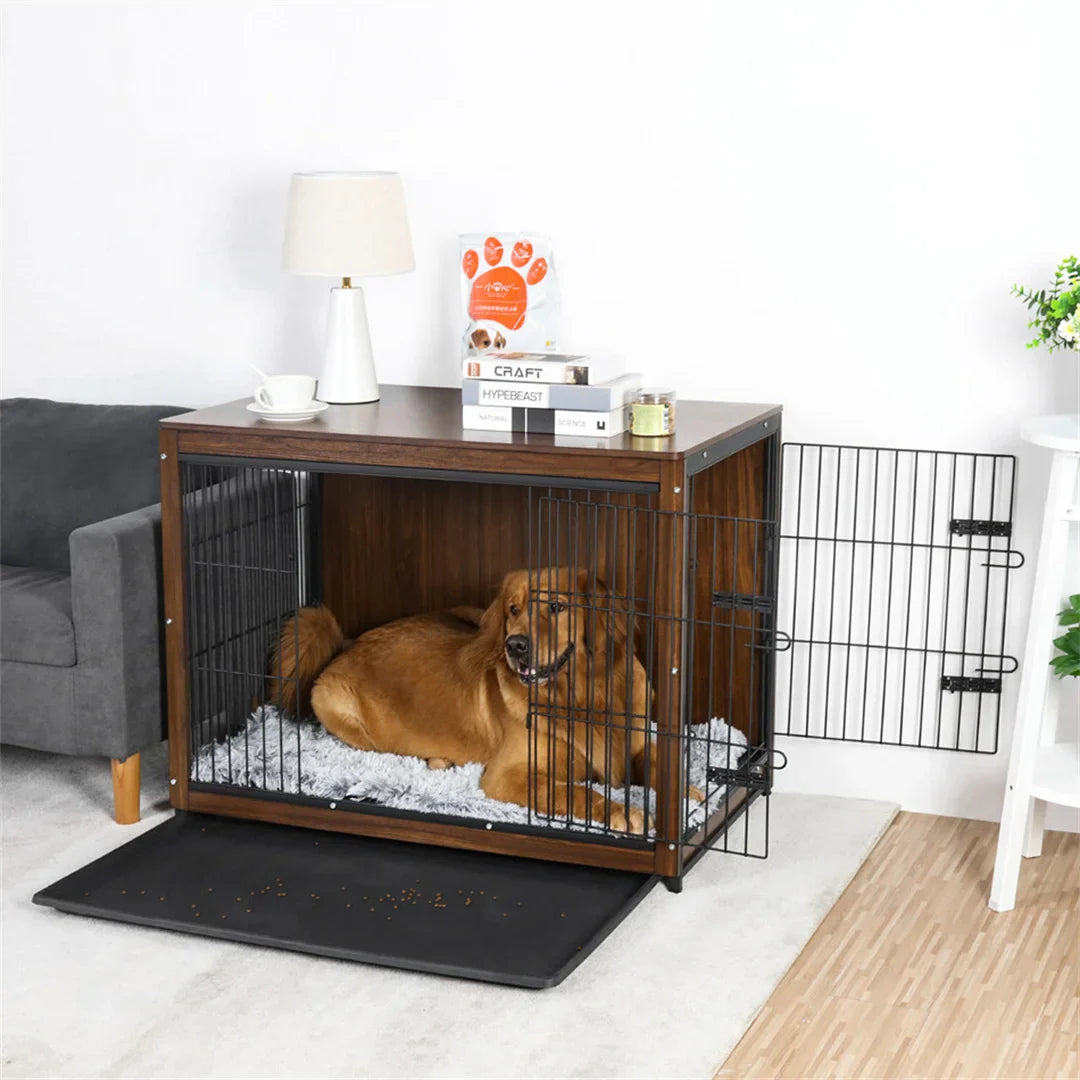
Furniture-style crates are popular for blending into home interiors, but they require careful summer management. Solid panels can reduce airflow compared to wire designs.
If you use crate furniture, ensure ventilation panels are unobstructed and the crate is positioned away from heat sources.
Products like the furniture-style dog crate side table are designed with access points that support airflow, but placement and bedding choice remain critical.
Knowing when not to use a crate
There may be times during extreme heat when crate use should be reduced or avoided altogether. If indoor temperatures rise significantly and airflow cannot be improved, alternative safe resting areas may be more appropriate.
Crates are tools for comfort and safety, not rigid requirements. Adjusting routines during heatwaves is a responsible choice, not a failure of training.
For a broader view on safe crate practices, our article on crate safety for UK dog owners provides helpful context.
How Paw Comfort approaches summer crate safety
We encourage dog owners to think of crates as flexible spaces that evolve with weather, age, and routine. Small changes often have the biggest impact on comfort and wellbeing.
If you are unsure whether your current setup is suitable for warmer weather, our team is always happy to help you think it through.
Final thoughts
Preventing overheating in dog crates during UK summers does not require dramatic changes. It comes down to awareness, observation, and thoughtful adjustments.
By choosing breathable bedding, improving airflow, reviewing crate placement, and adapting routines, most dogs can continue to enjoy their crates safely throughout the warmer months.
If you would like personalised advice or help selecting summer-appropriate crate solutions, we are here to support you.
Speak to the Paw Comfort team:
Contact Paw Comfort
Final Verdict
Prevent crate overheating by moving the crate out of direct sun, maintaining airflow, providing water and monitoring the room temperature and the dog. Covers can trap heat. Never leave a dog in a hot vehicle, conservatory or poorly ventilated crate, and seek urgent veterinary help for suspected heatstroke.
FAQ
What should you know about key takeaways dog crates can trap heat if airflow and placement are not adjusted bedding choice plays a major role in temperature regulation crate location inside the home matters as much as the crate itself summer crate routines often need small but important changes overheating risks can usually be reduced with simple adjustments why crates can overheat in warm weather?
Crates are enclosed by design. While this helps dogs feel secure, it can also limit air movement. When temperatures rise, heat can build up quickly inside a crate, particularly if it is placed near windows, appliances, or in poorly ventilated rooms.
What should you know about recognising early signs of overheating?
Before discussing prevention, it is important to recognise early warning signs. Dogs experiencing heat stress may show:
What should you know about choosing the right crate for summer use?
Not all crates behave the same in warm conditions. Ventilation and material matter.
What should you know about rethinking crate placement in the home?
Where a crate sits inside your home can significantly affect temperature. During summer, small changes in placement often make a noticeable difference.
What should you know about adjusting bedding for warmer temperatures?
Bedding choice is one of the most important factors in summer crate comfort. Thick, plush bedding that feels cosy in winter can trap heat in warmer months.
What should you know about using cooling products responsibly?
Cooling accessories can support temperature regulation when used correctly. Cooling mats and elevated beds allow dogs to lie on surfaces that do not retain body heat.