

Pet First-Aid Kit Checklist for UK Owners
Short Answer
A useful pet first-aid kit contains dressings, sterile saline, gloves, a digital thermometer, tick remover, emergency blanket and your vet’s details, but it does not replace veterinary treatment. Learn how to use every item and never give human medication unless a vet directs you.
Key Takeaways
- Highway Code Rule 57 says dogs should be suitably restrained in vehicles.
- Check product, vehicle, dog-size and installation compatibility before travel.
- Introduce equipment and vehicle movement gradually using reward-based training.
- Plan ventilation, water, toilet breaks and safe entry and exit.
- Never leave a dog unattended in a vehicle.
Quick Decision Checklist
| Check | Before travel |
|---|---|
| Restraint | Correctly fitted and installed according to its instructions |
| Fit | Suitable for the dog’s current measurements and weight |
| Driver safety | The dog cannot reach or distract the driver |
| Comfort | Ventilation, temperature, water and breaks are planned |
| Training | The dog has been introduced gradually and remains relaxed |
Key Takeaways
- Every UK pet owner benefits from having a dedicated first aid kit at home and a smaller version in the car
- A pet first aid kit is a preparation tool, not a substitute for veterinary care
- Home kits and travel kits serve different purposes and should be stocked accordingly
- Knowing your vet's emergency number before an incident occurs is as important as any physical item in the kit
- Reviewing and restocking your kit regularly keeps it genuinely useful when it is needed
Most pet owners spend a lot of time thinking about what their dog or cat eats, where they sleep, how much exercise they get, and which products make their daily life more comfortable. First aid preparation tends to get less attention, often because it is associated with worst-case scenarios that feel unlikely until they happen.
The reality is that minor incidents are common. Cuts from rough terrain on walks, splinters, insect stings, vomiting during car journeys, small wounds from encounters with other animals, and overheating during summer outings are all situations that UK pet owners encounter with reasonable regularity. Having a kit ready does not mean expecting disaster. It means being prepared to respond calmly and effectively when something does happen, and to stabilise the situation while getting to a vet.
What a Pet First Aid Kit Is and What It Is Not
Before getting into specifics, it is worth being clear about what a pet first aid kit is designed to do.
A first aid kit for pets is a collection of supplies that allows you to provide immediate, basic care in the period between an incident occurring and veterinary treatment being received. It is not a replacement for professional veterinary attention. It does not allow you to diagnose conditions, administer prescription medications, or treat serious injuries beyond temporary stabilisation.
This distinction matters because some owners either over-rely on first aid supplies or avoid preparing one at all because they assume only a vet can help. The reality sits in between. There is a meaningful role for basic supplies and calm first response, and understanding that role makes the kit more useful.
Always contact your vet or an emergency veterinary service as quickly as possible in any situation involving injury, illness, or distress. The first aid kit helps you manage the time before that contact is made or before you arrive at the practice.
The Home Pet First Aid Kit
A home kit can be more comprehensive than a travel version because storage space is not a limiting factor. Keeping it in a clearly labelled, accessible container that all members of the household know the location of is a practical starting point.
Wound Care Supplies
Minor cuts, grazes, and puncture wounds are among the most common reasons owners need to provide basic first aid. The following supplies support initial wound management:
Sterile gauze pads and bandages. These are used to apply gentle pressure to a wound to slow bleeding and to cover an injury before it can be examined by a vet. Non-stick sterile dressings are useful for wounds that should not have material adhering to them.
Cohesive bandage (self-adhesive). Often referred to by brand names such as Vetrap, this type of bandage sticks to itself rather than to fur or skin, making it easier to apply and remove without causing additional discomfort.
Saline solution or sterile eye wash. Used to gently rinse wounds, eyes, or areas where a foreign substance may have come into contact with skin or mucous membranes. Do not use tap water as a substitute for sterile saline in wound irrigation.
Blunt-ended scissors. For cutting bandages or carefully trimming fur around a wound area to allow better access and visibility.
Tweezers. Useful for removing splinters or visible surface debris from wounds, though deeper or embedded objects should always be left for veterinary removal.
Monitoring and Assessment Tools
Digital rectal thermometer. A normal temperature range for dogs is approximately 38 to 39.2 degrees Celsius, and for cats approximately 38 to 39.5 degrees Celsius. Any reading significantly outside this range warrants prompt veterinary contact. Always use a purpose-made pet thermometer and follow the manufacturer's instructions.
Pen torch or small torch. Useful for examining the mouth, ears, eyes, and other areas in low-light conditions.
Magnifying glass. Helpful when trying to identify small wounds, thorns, or foreign objects on areas with dense fur.
Restraint and Handling Supplies
Injured animals may react unpredictably, including biting or scratching when in pain. This is not aggression in the usual sense. It is a stress response. Having supplies that reduce the risk of injury to you during handling protects both of you.
A spare lead or slip lead. Useful for securing a dog in an unfamiliar or open environment following an incident.
A soft muzzle (correctly sized for your dog). A muzzle should only be used on a breathing dog and should be removed immediately if vomiting begins. It should never be used on a brachycephalic (flat-faced) breed without specific guidance. A muzzle prevents biting during examination or transport but does not address the underlying distress. Introduce your dog to a muzzle calmly before any emergency so it is not an entirely unfamiliar object when needed.
Thick gloves. When handling a cat or dog in significant distress, thick protective gloves reduce the risk of bites and scratches to the handler.
Other Useful Additions
A blanket or emergency foil blanket. Useful for warmth following shock, or as a stretcher to move a larger dog that cannot walk. A rigid board or tray can serve a similar purpose for dogs that may have spinal injuries and should not be flexed during movement.
Disposable gloves. Single-use gloves should be worn when treating wounds to reduce contamination risk.
A syringe (without needle) or turkey baster. Useful for flushing wounds with saline or for administering water to a dehydrated animal under veterinary guidance.
A copy of your vet's contact details and the nearest emergency veterinary service. This sounds basic, but in a stressful moment, having a physical copy of contact details rather than relying on a phone is genuinely useful.
A record of your pet's medical history, current medications, and known allergies. Particularly relevant if you are attending an emergency vet who does not hold your regular vet's records.
The Car Pet First Aid Kit
A car kit needs to be compact enough to store practically but stocked with the items most relevant to travel-related incidents. A small, sealed container or zip bag works well. It should be stored where it will not move around during journeys but is accessible if needed at a stop.
Priority Items for the Car Kit
Sterile gauze and cohesive bandage. The same wound care logic applies on the road as at home. These take up minimal space and cover a wide range of minor injury scenarios.
Saline solution (small bottle). For wound flushing and eye irrigation. Travel-sized sterile saline pods are available and take up very little space.
Disposable gloves.
A slip lead. If a dog becomes distressed or needs to be secured outside the vehicle unexpectedly, a spare lead is important.
A small torch.
Vet contact details and the name and address of a nearby emergency veterinary service along your regular travel routes. In the UK, the PDSA and many private practices have out-of-hours emergency services. Knowing which service is closest to your most frequently travelled routes before an incident occurs saves significant time.
A collapsible water bowl and a bottle of fresh water. Dehydration, particularly in warm weather or following physical exertion, is a common situation on journeys. Water is as much a first aid item as a bandage in this context.
An emergency foil blanket. Compact and useful for warmth following shock or for a dog that has become cold unexpectedly.
Keeping Your Kit Maintained
A first aid kit that has expired supplies, missing items, or contents you cannot remember the purpose of is significantly less useful than a current, organised one. A simple approach is to review the kit every six months, replace any items that have been used or are past their expiry date, and check that all supplies are in usable condition.
If you travel with your pet frequently, the car kit may need more regular restocking than the home version.
First Aid Knowledge Alongside the Kit
Supplies alone are only half of the preparation. Knowing how to use them, and knowing the signs that indicate a veterinary emergency, matters just as much.
Several organisations in the UK offer pet first aid courses, including in-person and online options. These courses typically cover how to assess a pet's condition, how to apply basic wound care, how to respond to choking, how to recognise signs of shock, and when to seek emergency veterinary care. We would encourage any owner who has not done so to consider completing one.
Connecting Kit Preparation to Everyday Pet Safety
First aid preparation does not sit in isolation. It is part of a broader approach to pet safety that includes how dogs travel, how they are contained during outings, and how they are managed in different environments.
For owners who travel regularly with dogs, thinking about how your dog is secured in the vehicle is directly connected to first aid readiness. A dog that is properly restrained is less likely to be injured in an incident and easier to manage if something does go wrong. Our dog car seats and travel accessories collection includes options for different vehicle types and dog sizes, supporting safer travel as a baseline.
For dogs transported in a crate during car journeys, a well-chosen crate adds a layer of physical protection as well as behavioural containment. Our article on what UK pet owners should know about dog car safety rules covers the relevant guidance around restraint and containment during travel.
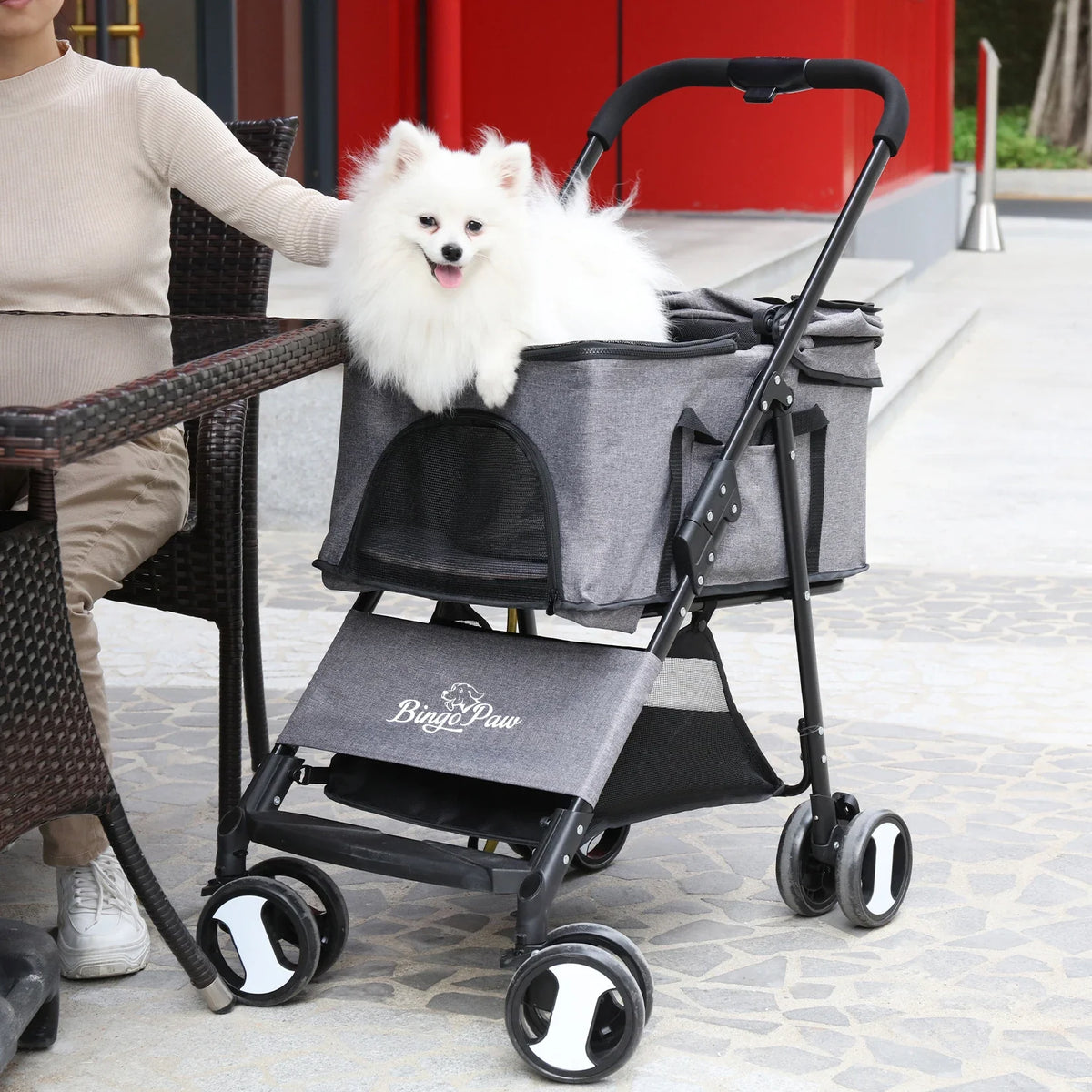
For owners who use prams or strollers during outings with dogs that have limited mobility or are recovering from injury, having first aid supplies within the pram's storage section is a practical addition. Our foldable double pet stroller with four heavy wheels includes under-basket storage that can accommodate a compact first aid kit alongside water and other outing essentials.
For longer journeys specifically, preparation extends beyond the kit itself to route planning, rest stops, and knowing where emergency veterinary services are located along your route. Our article on essential planning and gear for long-distance dog travel in the UK covers the broader travel preparation side of things in practical detail.
For dogs with a history of anxiety during travel, or those using a crate for the first time during a longer journey, our article on practical crate safety tips for UK dog owners is a useful companion read when thinking about the overall safety setup for journeys.
A Note on What Not to Include
Some items that owners commonly consider including in pet first aid kits should be avoided or used only under veterinary guidance:
Human pain medications. Ibuprofen, paracetamol, and aspirin are toxic to both dogs and cats. They should never be administered to a pet unless a vet has explicitly prescribed them in a veterinary-appropriate formulation and dose.
Antiseptic creams or solutions containing certain chemicals. Some antiseptics safe for human use are harmful to pets, particularly when ingested through licking. Seek veterinary guidance before using any topical antiseptic on a pet wound.
Prescription medications belonging to another pet. Medications prescribed for one animal should not be administered to another without direct veterinary instruction.
If you are unsure whether a particular item is safe or appropriate to include, contacting your vet for guidance is the right approach.

We Are Here to Help
Final Verdict
A useful pet first-aid kit contains dressings, sterile saline, gloves, a digital thermometer, tick remover, emergency blanket and your vet’s details, but it does not replace veterinary treatment. Learn how to use every item and never give human medication unless a vet directs you.
FAQ
What should you know about key takeaways every uk pet owner benefits from having a dedicated first aid kit at home and a smaller version in the car a pet first aid kit is a preparation tool, not a substitute for veterinary care home kits and travel kits serve different purposes and should be stocked accordingly knowing your vet's emergency number before an incident occurs is as important as any physical item in the kit reviewing and restocking your kit regularly keeps it genuinely useful when it is needed most pet owners spend a lot of time thinking about what their dog or cat eats, where they sleep, how much exercise they get, and which products make their daily life more comfortable. first aid preparation tends to get less attention, often because it is associated with worst-case scenarios that feel unlikely until they happen. the reality is that minor incidents are common. cuts from rough terrain on walks, splinters, insect stings, vomiting during car journeys, small wounds from encounters with other animals, and overheating during summer outings are all situations that uk pet owners encounter with reasonable regularity. having a kit ready does not mean expecting disaster. it means being prepared to respond calmly and effectively when something does happen, and to stabilise the situation while getting to a vet. what a pet first aid kit is and what it is not?
Before getting into specifics, it is worth being clear about what a pet first aid kit is designed to do.
What should you know about the home pet first aid kit?
A home kit can be more comprehensive than a travel version because storage space is not a limiting factor. Keeping it in a clearly labelled, accessible container that all members of the household know the location of is a practical starting point.
What should you know about wound care supplies?
Minor cuts, grazes, and puncture wounds are among the most common reasons owners need to provide basic first aid. The following supplies support initial wound management:
What should you know about monitoring and assessment tools?
Digital rectal thermometer. A normal temperature range for dogs is approximately 38 to 39.2 degrees Celsius, and for cats approximately 38 to 39.5 degrees Celsius. Any reading significantly outside this range warrants prompt veterinary contact. Always use a purpose-made pet thermometer and follow the manufacturer's instructions.
What should you know about restraint and handling supplies?
Injured animals may react unpredictably, including biting or scratching when in pain. This is not aggression in the usual sense. It is a stress response. Having supplies that reduce the risk of injury to you during handling protects both of you.
What should you know about other useful additions?
A blanket or emergency foil blanket. Useful for warmth following shock, or as a stretcher to move a larger dog that cannot walk. A rigid board or tray can serve a similar purpose for dogs that may have spinal injuries and should not be flexed during movement.