

How to Introduce a Rescue Dog to a Crate
Short Answer
Introduce a rescue dog to a crate as though their confinement history is unknown: secure the door open, reward approaches and let the dog leave freely. An open crate can be the final goal. Do not close in a dog who freezes, panics, drools or attempts to escape.
Key Takeaways
- Use crates and kennels as welfare-led management tools, never as punishment.
- Fit, ventilation, temperature, mobility and the dog’s behaviour matter more than product labels.
- Reward voluntary use and reduce difficulty at the first sign of distress.
- Normal access to water, toileting, movement, exercise and social contact must continue.
- Panic, sudden behaviour change or physical discomfort warrants veterinary or qualified behaviour support.
Quick Decision Checklist
| Check | What to look for |
|---|---|
| Purpose | A clear welfare-led use rather than punishment or convenience |
| Fit and setup | Enough room, safe materials, ventilation and a stable location |
| Behaviour | Loose body language, voluntary approach and normal eating |
| Daily needs | Water, toileting, movement, rest and social contact remain available |
| Warning signs | Pain, panic, repeated escape attempts or sudden behaviour change |
Key takeaways
- Rescue dogs may need a slower, more flexible crate training approach
- Crates should be introduced as safe spaces, not confinement tools
- Routine, consistency, and observation are essential
- Comfort and crate setup matter as much as training steps
- Progress looks different for every rescue dog
Why crate training can feel difficult for rescue dogs
Rescue dogs often come from environments where predictability was limited. Some may have experienced long periods of confinement, while others may never have encountered a crate at all. Because their past is not always known, reactions to crates can vary widely.
For some dogs, a crate triggers anxiety or panic. For others, it can feel confusing rather than comforting. These reactions are not signs of stubbornness or failure. They are normal responses to unfamiliar or previously stressful situations.
Reframing the purpose of a crate
Before introducing a crate, it helps to reset expectations. A crate is not a solution to behaviour challenges on its own. It is a management and comfort tool that works best alongside training, enrichment, and routine.
For rescue dogs, the crate should function as:
- A quiet retreat
- A predictable resting space
- A place where nothing bad happens
When a crate is associated with calm and safety, dogs are far more likely to use it willingly.
Choosing the right crate for a rescue dog
The crate itself plays a major role in how easily a rescue dog adapts. Size, material, and placement all matter.
A crate should be large enough for your dog to stand, turn, and lie down comfortably. Oversized crates can feel insecure, while cramped crates increase stress.
Many rescue dog owners start with designs from our dog crate collection, which includes options suited to indoor use and gradual crate training.
For dogs that feel overwhelmed by open spaces, crates with partial coverage or furniture-style designs can feel more den-like when used correctly.
Crate placement inside the home
Location matters as much as the crate itself. Rescue dogs benefit from being close to their people, especially during the early adjustment period.
Ideal crate locations are:
- Quiet but not isolated
- Away from direct foot traffic
- Free from sudden noises or draughts
Avoid placing crates in areas where dogs are left alone for long periods during early training. Proximity builds reassurance and trust.
Introducing the crate gradually
For many rescue dogs, the crate introduction phase should be slow and pressure-free. The crate should always be optional at first.
Helpful early steps include:
- Leaving the crate door open
- Allowing the dog to explore at their own pace
- Placing treats or toys just inside the entrance
- Feeding meals near the crate before moving them inside
There is no need to close the door immediately. Comfort with the space comes before containment.
Using comfort to build positive associations
Comfort plays a significant role in crate acceptance. A hard or cold crate base can make the space uninviting, especially for dogs already feeling unsettled.
Soft, supportive bedding helps dogs relax physically, which in turn supports emotional calm. Many owners choose breathable, easy-to-clean options from our dog bed collection that fit neatly inside crates.
For dogs that seek enclosed spaces, a familiar blanket or item carrying household scent can provide reassurance. Avoid overwhelming the crate with too many objects at once.
Managing separation anxiety sensitively
Some rescue dogs struggle most when the crate is associated with being left alone. This is common in dogs with separation anxiety or attachment challenges.
If your dog vocalises, paces, or becomes distressed when confined, the focus should shift from crate duration to emotional regulation.
Our guide on crate training older dogs with separation anxiety explains how to slow the process and avoid reinforcing fear responses.
In these cases, short crate sessions while you remain nearby can be more effective than leaving the dog alone immediately.
Avoiding common crate training mistakes
Rescue dogs are particularly sensitive to negative associations. Certain mistakes can set training back even when intentions are good.
Avoid:
- Using the crate as punishment
- Forcing the dog inside
- Closing the door before the dog is ready
- Ignoring signs of stress or fear
If crate time consistently leads to distress, it is a sign that adjustments are needed rather than persistence alone.
Night-time crate training for rescue dogs
Sleep routines can be challenging for newly adopted dogs. Some rescue dogs settle more easily in crates at night, while others struggle.
Placing the crate near your sleeping area can help reduce anxiety and promote rest. Dogs often feel calmer when they can hear familiar sounds.
If night-time crate use is difficult, our article on supporting peaceful crate sleep offers guidance that can be adapted for rescue dogs.
Night-time crate training should prioritise rest rather than strict confinement.
Using structure without rigidity
Rescue dogs benefit from predictable routines, but rigidity can create pressure. Crate use should fit naturally into daily patterns rather than dominate them.
Short, positive crate sessions throughout the day often work better than long periods of confinement. Over time, duration can increase naturally as comfort improves.
If you are unsure how much crate time is appropriate, our article on age-appropriate crate use provides useful context.
Product features that support rescue dogs
Certain crate features can make adjustment easier for rescue dogs. Dividers allow you to adjust space gradually, while multiple doors improve accessibility and reduce pressure during entry.
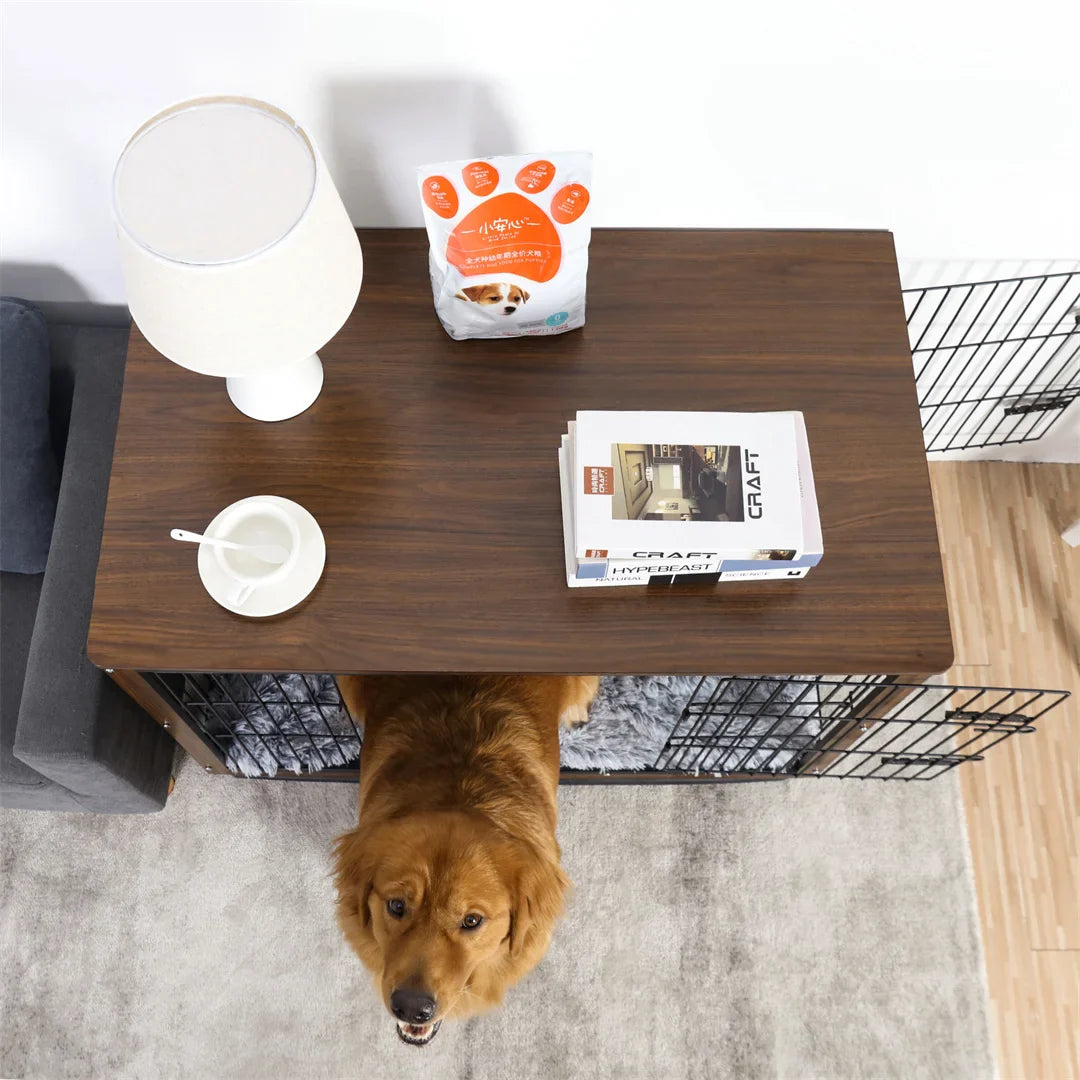
Products like the furniture-style dog crate side table with divider combine structure with a home-friendly design that feels less intimidating.
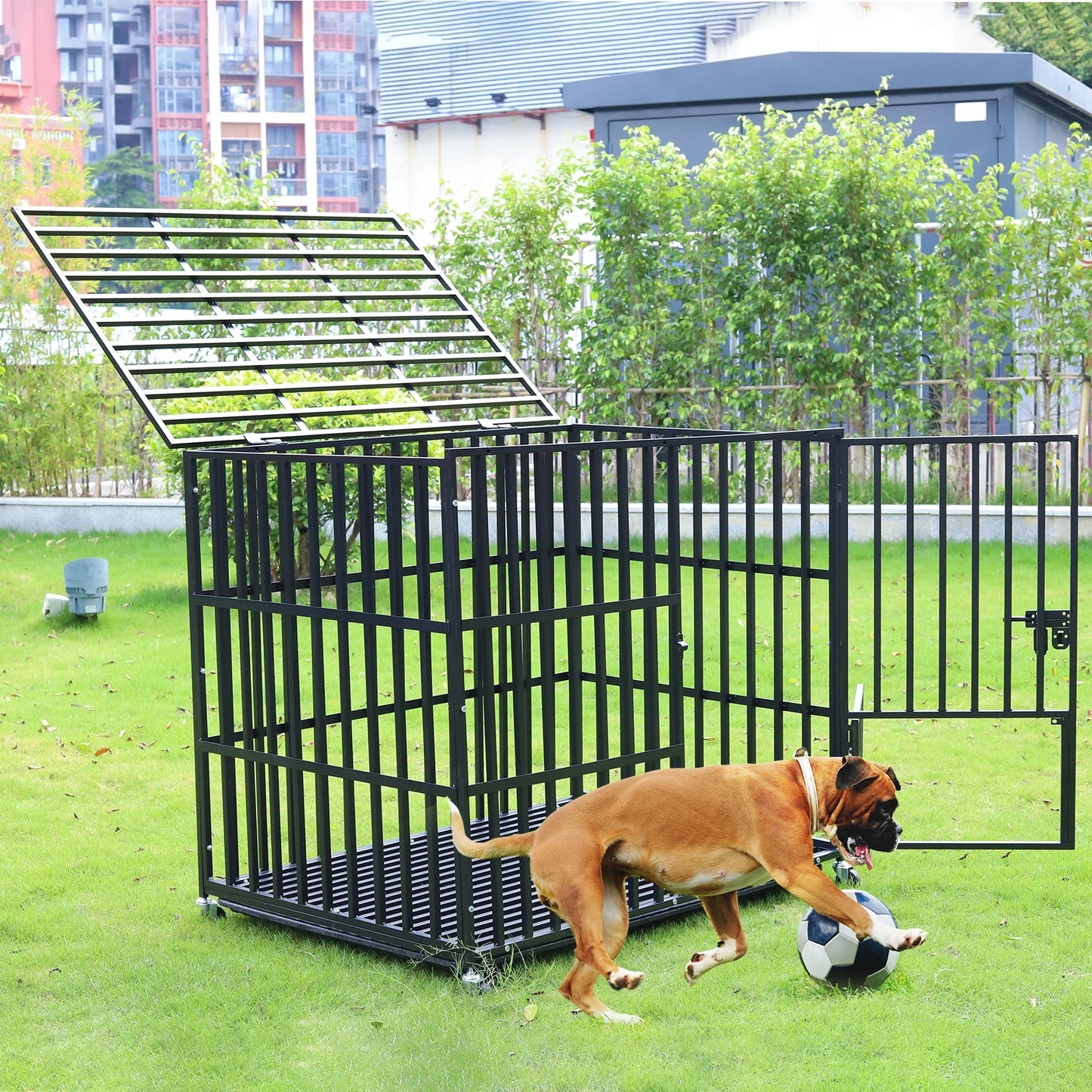
For dogs that need extra security or durability, options such as the mobile heavy-duty metal dog crate with locks may provide peace of mind while still allowing gradual training.
Comfort-focused bedding like the orthopaedic crate mattress with washable cover supports relaxation and joint comfort during rest.
Knowing when to pause or adapt
Not every rescue dog will adjust to crate training in the same way or at the same pace. Some dogs may need weeks or months before feeling comfortable. Others may always prefer open resting areas.
Crate training should never be forced. Pausing, adjusting the setup, or seeking professional guidance is a responsible choice.
If crying or distress continues, our article on reducing crate-related vocalisation may help identify next steps.
How Paw Comfort supports rescue dog owners
We believe crate training should support a dog’s emotional recovery, not rush it. That belief shapes how we guide owners and design our collections.
If you are unsure how to approach crate training with your rescue dog, our team is always available to talk through your situation.
Final thoughts
Helping a rescue dog adjust to crate training is not about ticking boxes. It is about building trust, creating safety, and respecting your dog’s individual pace.
When introduced thoughtfully, a crate can become a place of rest and reassurance rather than stress. With patience, consistency, and the right setup, many rescue dogs learn to see their crate as a positive part of home life.
If you would like personalised guidance or support choosing the right crate setup, we are here to help.
Speak to the Paw Comfort team:
Contact Paw Comfort
Final Verdict
Introduce a rescue dog to a crate as though their confinement history is unknown: secure the door open, reward approaches and let the dog leave freely. An open crate can be the final goal. Do not close in a dog who freezes, panics, drools or attempts to escape.
FAQ
What should you know about key takeaways rescue dogs may need a slower, more flexible crate training approach crates should be introduced as safe spaces, not confinement tools routine, consistency, and observation are essential comfort and crate setup matter as much as training steps progress looks different for every rescue dog why crate training can feel difficult for rescue dogs?
Rescue dogs often come from environments where predictability was limited. Some may have experienced long periods of confinement, while others may never have encountered a crate at all. Because their past is not always known, reactions to crates can vary widely.
What should you know about reframing the purpose of a crate?
Before introducing a crate, it helps to reset expectations. A crate is not a solution to behaviour challenges on its own. It is a management and comfort tool that works best alongside training, enrichment, and routine.
What should you know about choosing the right crate for a rescue dog?
The crate itself plays a major role in how easily a rescue dog adapts. Size, material, and placement all matter.
What should you know about crate placement inside the home?
Location matters as much as the crate itself. Rescue dogs benefit from being close to their people, especially during the early adjustment period.
What should you know about introducing the crate gradually?
For many rescue dogs, the crate introduction phase should be slow and pressure-free. The crate should always be optional at first.
What should you know about using comfort to build positive associations?
Comfort plays a significant role in crate acceptance. A hard or cold crate base can make the space uninviting, especially for dogs already feeling unsettled.